Here's what four potential 2028 presidential candidates had to say in Las Vegas

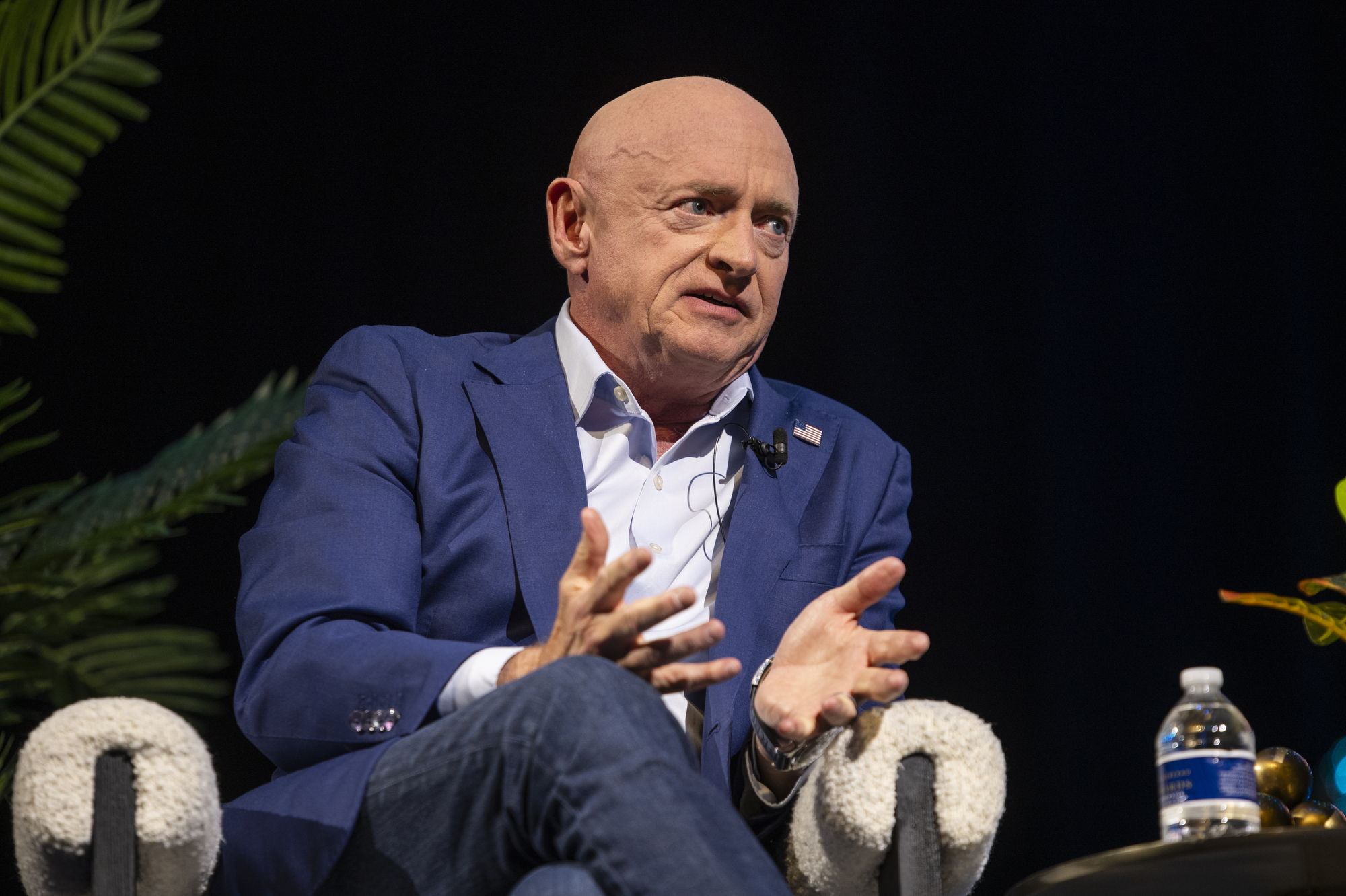
Four potential 2028 presidential candidates visited Las Vegas Thursday for The Nevada Independent's annual IndyFest conference. In a series of live interviews, they outlined what sets them apart from the competition and shared often blunt perspectives on a variety of topics such as whether to use the word "genocide" to describe Israel's actions in Gaza, the need to regulate artificial intelligence and the policy views of California Gov. Gavin Newsom (D).
The conversations moderated by The Nevada Independent CEO Jon Ralston and D.C. Correspondent Mini Racker precede a presidential election in which swingy Nevada will play a critical role in choosing both the Democratic nominee and the eventual president. The state will be the second to host a 2028 Democratic presidential primary.
"I'm not going to be the most charismatic guy — I'm not going to be the person doing the most fun TikToks," said Rep. Ro Khanna (D-CA), " if this country, after a showboat and showman, wants substance, if they actually want a substantive plan for how to have economic security and success across America, then I would submit that if I run, then I should be considered."
Khanna has been to Nevada more than any other potential presidential candidate. He and the three other Democrats who joined IndyFest — Sen. Mark Kelly (D-AZ), Kentucky Gov. Andy Beshear (D) and former Chicago Mayor Rahm Emanuel (D) — said they were mulling bids but stopped short of making any announcements.
"I haven't made a decision," said Kelly.
"I don't have an announcement today," said Beshear.
Emanuel was more candid about his ambitions, saying he didn't care that he's polling near zero in current surveys of the Democratic field. "The last place I would want to be, two years out, is a frontrunner. ... You name me the last frontrunner that has ever won the nomination, ever."
Who's running in 2028? Everybody and nobody
Beshear said a Democratic governor should be the party's nominee, saying governors need to prove they're effective leaders who can win votes from all sorts of people.
He said after winning his 2023 Kentucky gubernatorial re-election, he never thought he'd run again. Now he's reconsidering that position, after witnessing what he described as disastrous and cruel actions under President Donald Trump (R).
Khanna said he was weighing a presidential bid because he believes he understands the future economy, especially AI and technology, and has a vision for how to make it work better for the people.
He described himself as a New Deal Democrat who wanted to hold wealthy corporations accountable, saying he's not anti-capitalism but believes the U.S. economic system needs a leader willing to make billionaires pay their fair share.
Khanna said he wants to tax billionaires to help pay for free childcare, free college and Medicare for All — topics that the other potential candidates didn't directly answer.
Kelly echoed that his priority is the midterm elections and he's still deciding whether to run.
"I would have to be convinced I'm the right option for the country at that time," he said. "I don't have a typical background of somebody who would be in this job as a United States senator."
Emanuel said he would be a good fit for the presidency because of his track record of taking on "the failed status quo," citing his work as Chicago mayor to boost high school graduation rates. He said he'd be most focused on fighting corruption as president, including banning politicians from trading on the stock market or in prediction markets.
Asked about other potential 2028 Democratic nominees, Emanuel said he would support whoever becomes the party's pick.
"That's called a dodge in the answer book," he joked.

Democrats in disarray?
Democratic divisions came up often Thursday at IndyFest.
Beshear, who chairs the Democratic Governors Association (DGA), defended the organization's investment decisions following criticisms from Latino leaders and other Democrats who said that the group should give more than the $1 million it's pledged to Texas state Rep. Gina Hinojosa (D), the party's gubernatorial nominee in the Lone Star State.
Beshear said the DGA is competing in too many races this cycle, describing it as a good problem to have, but it has limited resources.
"We have the best-looking map that we have had in our recent history, and what it means is we have a size 10 budget and a size 16 map," he said, adding that the DGA first and foremost has to protect its incumbents.
The group came in late to the Nevada governor's race but is now investing significantly through an affiliated PAC.
Khanna, meanwhile, came out swinging against more moderate Democrats.
"I'm not a Chuck Schumer Democrat," he said, although he declined to criticize House Speaker Hakeem Jeffries (D-NY). But he did criticize his own state's governor, Newsom, for opposing a ballot measure that would impose a "wealth tax" on billionaires' net worth.
"Gavin Newsom should stop shilling for his billionaire donors," said Khanna.
Emanuel defended his view that the Democratic Socialists of America (DSA) is a separate political organization from the Democratic Party, noting that the national DSA held its own party convention in Chicago.
He added that he believes young men and women are not, as a whole, socialists, but they are "massively" angry at a system that has lengthened retirement timelines, made it harder to buy a home and raised education costs.
"You are a separate party, and your positions on defunding the police, open borders, open prisons, and letting prisoners out is not Democratic Party positions," he said. "Now if you're confident that people want that, I'll see you in November."
Israel and genocide
The Indy asked candidates about their views on Israel's actions in Gaza, which are increasingly a cause of division within the Democratic Party as Israel grows more unpopular among the Democratic electorate.
Khanna has long been critical of Israel's actions in Gaza and the West Bank and was one of the earliest Democrats to refuse to accept money from the American Israel Public Affairs Committee. Pressed by the moderators over use of the term, Khanna cited a United Nations commission's finding that Israel has committed genocide but said he believed reasonable people could disagree with his view.
Beshear was more cautious, declining to call the situation a genocide but saying Israel was responsible for unnecessary suffering in Gaza.
"We can be critical, and even very critical of the Netanyahu regime," he said, "but if we are anti-Israel in the long run, we will lose a critical ally that is trying to exist as a democratic state and as an Israeli state."
Kelly said the way that Israel conducted the campaign against Hamas was "reckless," adding that it should have better targeted its military operations, even if it meant a longer war.
"My hope is we have a reckoning here next Tuesday at the ballot box on Israel," he said.
Pressed on whether he thought it was a genocide, he said, "I think it was a colossal failure in leadership and a disregard for civilian life and collateral damage and civilian casualties in a way that I've never seen before."
Israel didn't arise during The Indy's conversation with Emanuel, who is a supporter of the U.S.-Israel relationship. But Emanuel recently gave a speech in Tel Aviv where he criticized Prime Minister Benjamin Netanyahu and said Israel must reaffirm its commitment to the peace process and the U.S. needs to place stricter conditions on aid to Israel.

Oversight of artificial intelligence
As artificial intelligence (AI) has gained prominence in politics, candidates said strong federal regulation is necessary.
Beshear said AI could solve genetic diseases and other conditions but could also displace jobs and create national security issues.
"We absolutely have to have strong federal oversight of AI," he said, noting that a patchwork of state laws will not effectively govern it in the long term.
The governor also discussed an executive order he implemented that regulated data centers by requiring them to pay for their own power and pay more taxes.
Khanna, who represents a Silicon Valley district with many AI tech giants, said it's critical to ensure wealth isn't concentrated in one region.
He added that the country should ban self-improving AI and create an independent agency to regulate it.
"I know these tech billionaires. I've been in the room with these tech billionaires. You can't trust tech billionaires to protect our jobs or keep us safe, including, by the way, Mr. Gates," Khanna said.
Emanuel described AI as "a double-edged sword" and proposed safeguards such as a kill switch to immediately shut down dangerous actions, an investigative body, a cross-government and industry group to establish guardrails and a surcharge to fund education.
"Response is more expensive than being proactive, and right now, we're none of that," Emanuel said.
While the conversation with Kelly didn't get into AI, he has been a leader on AI policy in the Senate. He introduced the Make AI Work for Americans Act in September, which aims to protect workers through the AI transition.

Is Medicare for All the answer?
As healthcare costs have risen nationally, attention has grown on a push to make the federal Medicare health insurance program universal.
Medicare serves people aged 65 or older and younger people with disabilities. State-run Medicaid programs serve low-income families.
Beshear demurred on whether he supports Medicare for All, saying he had concerns about potential mass layoffs numbering in the millions and describing himself as a more "practical candidate," who would focus instead on a push to negotiate lower drug prices through Medicaid and Medicare.
Khanna said his call for economic renewal requires Medicare for All. He said it would reduce overall healthcare costs and give people more freedom in choosing jobs and making other healthcare-related decisions.
Kelly didn't take a direct stance on Medicare for All, but said he supported "fixing the system and getting more people covered."
He said that includes options such as expanding public options and getting people to buy in earlier, noting that rising spending and poor outcomes are not solutions. Obamacare might have worked for some people, he said, but when subsidies ended this January, it became unaffordable.
Emanuel wasn't asked about healthcare Thursday, but he was chief of staff in the Obama administration when the Affordable Care Act passed. During an interview on MSNOW in September, Emanuel said that Medicare for All "just will not happen" and that Democratic leaders who tell voters that it is attainable are setting up unrealistic expectations. Instead of Medicare for All, he said, "I want to build Obamacare up."
The nation at a turning point
The potential future presidential candidates agreed that the Democratic Party needs to offer new solutions to voters who feel disillusioned with the political system, the affordability crisis and what they view as corruption infecting every level of government.
Khanna said that this sense of despair is why the Democratic Socialists of America has grown so rapidly in popularity among voters nationwide.
"What they're saying is, 'we can't get a job; we are in debt,'" he said.
Emanuel described both major parties as "brain dead" for failing to address voters' concerns.
"The country's broken. Both morally, spiritually, financially and politically," he said.
If all four men run in 2028, they'll almost certainly make more stops in Nevada. But they're drawn to the state for reasons beyond the politicking.
"It's a wonderful state that has a lot of the same issues as other states," said Beshear. "I also like blackjack."
Support Independent Elections Coverage and Journalism in Nevada
You’ve enjoyed unlimited access to our reporting because we’re committed to providing independent, accessible journalism for all Nevadans.
But sustaining this work — informing communities, holding leaders accountable, and strengthening civic life — depends on readers like you.
Nevada needs strong, independent journalism. Will you join us?
A gift of any amount helps keep our reporting free and accessible to everyone across our state and funds our elections coverage.
Choose an amount or learn more about membership