Here's how Nevada's mail and in-person voting works

In case you hadn't heard, it's election season in Nevada.
Tens of thousands of Nevadans have already voted — check out The Indy's early voting blog for the latest numbers — and thousands of more votes will come in before, on and after Election Day.
Read below to learn more about how Nevada's voting processes work.
Who gets a mail ballot and how do they vote?
Under Nevada law, voters can opt out of receiving a mail ballot, but the deadline to do so has passed. Mail ballots are not sent to voters who are inactive, which are people whose actions (or inactions) spur questions about their residency.
Inactive voters are supposed to be people who did not vote in the last election and did not return a mailed postcard seeking residency confirmation within 33 days. However, sometimes lapses happen — something election officials are hoping to change. Moving forward, with the introduction of the state's new election management system, officials will send postcards to anyone with no election activity for the prior cycle, including updating registration or voting records.
A voter can also be considered inactive if officials obtain information that they had moved outside the county. Inactive voters are still eligible to vote even though they're not sent a mail ballot.
It's possible for a person to receive a mail ballot for someone that no longer lives at that address. This can happen when election officials do not have a record of someone moving. If that happens, election officials say the current resident should return the mail with "Not at this address" written on the envelope to kick off the process of potentially removing the person from the voter rolls.
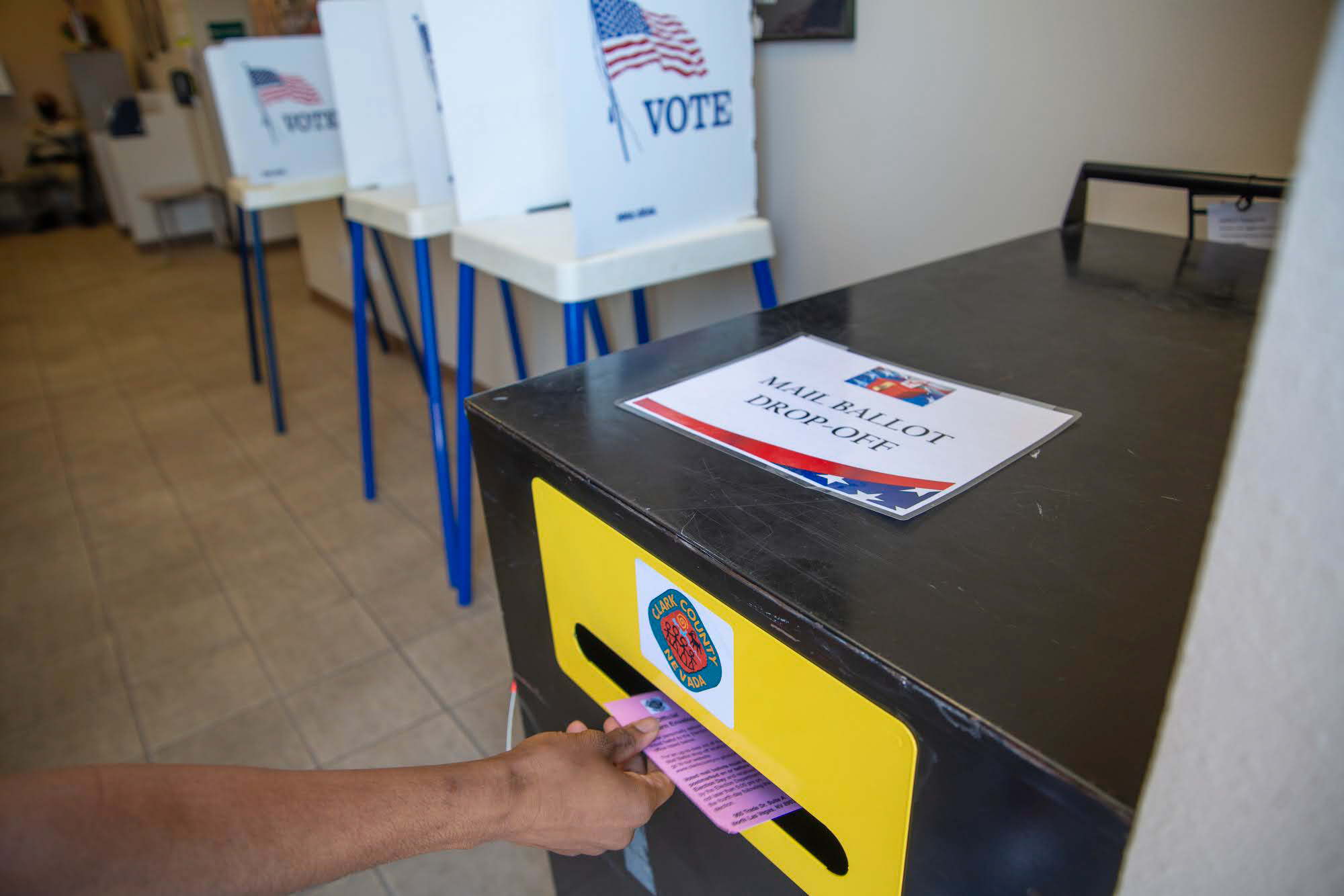
In addition to putting their ballot in the mail, voters can drop their ballot off at a drop box during early voting or on Election Day. Click here to view the locations of all ballot drop boxes during early voting. All Election Day polling sites also have a ballot drop box.
How does the state verify the identity of a person voting by mail?
When filling out their mail ballot, a voter must include a signature that matches the one on their voter file. Election officials check electronically — and if needed, manually — to make sure the signatures match. If at least two election workers determine there are "multiple, significant and obvious" differences between the signatures, they will contact the voter.
In the 2024 election, about 9,000 ballots were not counted because voters did not fix their signatures.
Signature verification happens when the ballot is received. About 2,300 ballots needed a signature cure through the first six days of early voting in this year's general election.
Can problems arise in mail voting?
Errors can happen, though election officials have said they are exceptionally rare and that anyone with questions should reach out to local or state election offices.
For example, in the June primary, more than 30 mail ballots in rural Lyon County were not counted because they were erroneously sent to the state election office rather than the local one, despite all of them having the correct address.
State election officials blamed the mistakes on the U.S. Postal Service.
When are mail ballots counted and accepted?
Officials can start counting mail ballots 15 days before an election and can continue doing so for a week after Election Day. However, election results are not available until after the final person in line at an Election Day polling site has voted.
Additionally, mail ballots can be legally counted up to four days after Election Day as long as they are postmarked by Election Day. Ballots can also be counted up to three days after Election Day if there is an unclear or missing postmark.
The Postal Service recently adopted a policy of postmarking mail when it reaches a processing facility, not when it goes into a mailbox. That means ballots dropped in a mailbox on Election Day might not be postmarked that day, which would invalidate the vote. If voters choose to send their ballot through the mail, election officials recommend they do so at least one week before Election Day.
How does in-person voting work?
Up until four days before Election Day, Nevadans can vote in person at an early voting site. If someone does not participate in early voting but wants to vote in person, they can do so on Election Day.
People can vote at any voting site as long as it is in their county of residence. Voters can find a map of locations from the secretary of state's website, linked here.
At a voting site, if someone is already registered to vote, an election worker is supposed to ask for your name, address and signature for verification. Once they verify this information, they hand the voter a card to insert in the voting machine.
Once a voter inserts their card into the machine, they select their preferences. Afterward, the device prints out a copy of their selections. The vote does not count unless this printout is inserted into a ballot scanner on site.
Any voting machine used in Nevada must be tested to ensure it meets federal election security standards. The state has also long taken various security measures related to voting machines, such as logic and accuracy testing before the election and at postelection audits.
What is the same-day voter registration process?
Nevadans can register to vote at a polling site during early voting or on Election Day. To do so, they must provide a valid driver's license or Nevada ID card. Other ID types, such as a passport, are not accepted. If the person's ID does not have their current address, they must provide another document to establish proof of residency. Click here for a list of accepted documents to prove residency.
People who use same-day voter registration cast provisional ballots. This is because election officials may require additional time to verify a person's eligibility and ensure they have not already voted.
The provisional ballot process is similar to the one for already-registered voters. However, after making selections on a voting machine, the voter does not insert their ballot in a ballot scanner. If they do, the scanner is supposed to reject the ballot.
Instead, they seal it in a provisional ballot envelope and place it in a drop box for provisional ballots. Once an election official verifies the voter's eligibility, the ballot will be removed from the provisional envelope and counted.
Officials can begin to release the results of these provisions ballots on the day after Election Day. All provisional ballots must be counted or resolved when local election officials certify the results, which must happen within 10 days of Election Day.
What is the election results process?
The first election results will be available once the final person in line has voted at an Election Day polling site, but the final tallies will not be known until much later.
Nevada law allows ballots postmarked by Election Day to be counted as long as they are received by 5 p.m. on the Saturday following Election Day. Ballots with an unclear or missing postmark will count if received before 5 p.m. on the Friday after Election Day. These make up a small percentage of overall votes, but they can still swing close races.
Although mail ballot counting can last until a week after Election Day, there is often enough information for media outlets to project the winner of races sooner, either on election night or in the days after Election Day. The results are also not considered final until local officials canvass the results, which must happen within 10 days of Election Day.
Support Independent Elections Coverage and Journalism in Nevada
You’ve enjoyed unlimited access to our reporting because we’re committed to providing independent, accessible journalism for all Nevadans.
But sustaining this work — informing communities, holding leaders accountable, and strengthening civic life — depends on readers like you.
Nevada needs strong, independent journalism. Will you join us?
A gift of any amount helps keep our reporting free and accessible to everyone across our state and funds our elections coverage.
Choose an amount or learn more about membership