What will Nevada's next governor do for education? Top candidates explain.

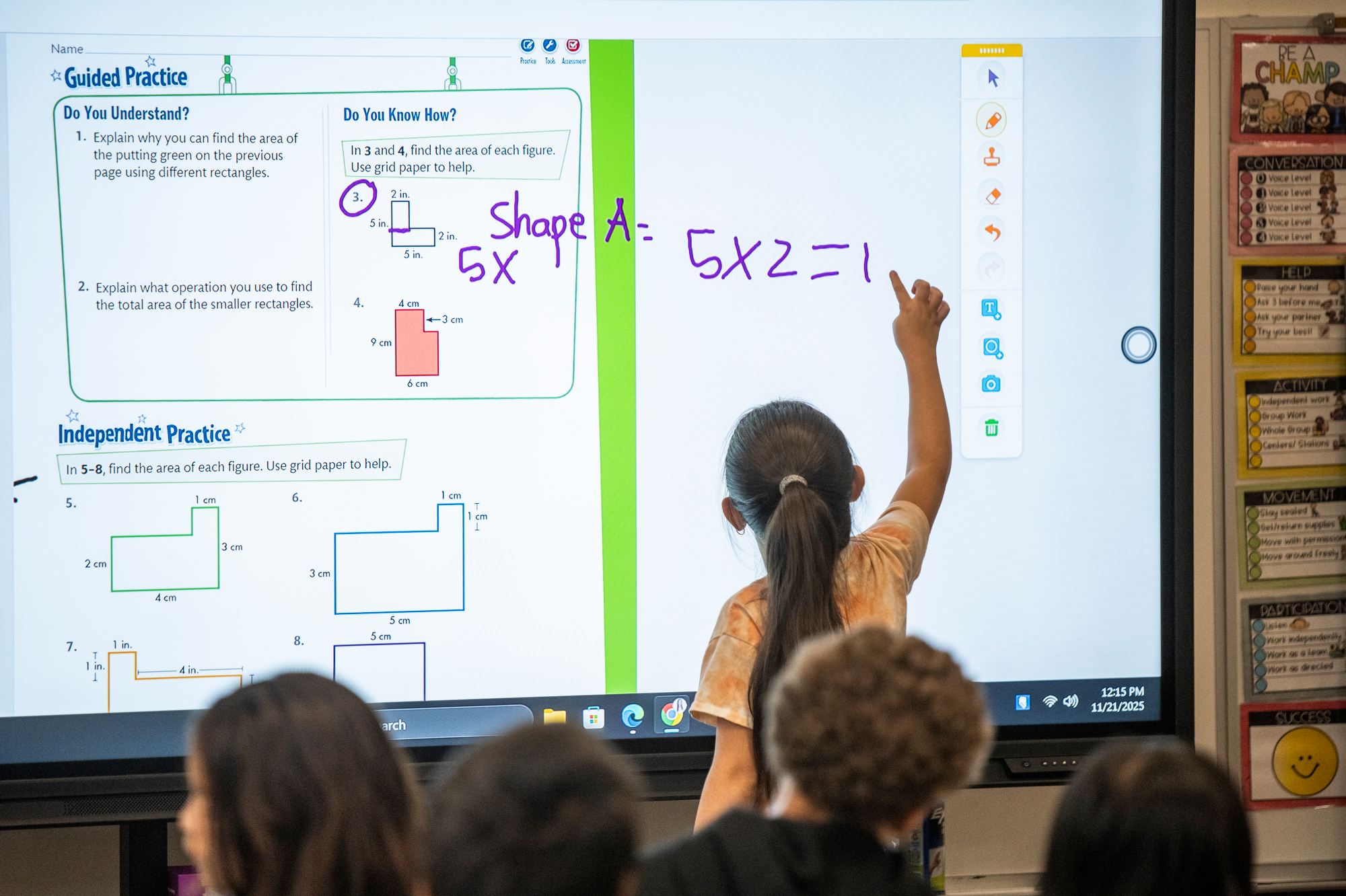
There's arguably no other area in the Nevada budget where governor decisions hold greater sway than over K-12 schools — more general fund money goes to education than any other agency in the state.
So what are top governor candidates planning to do with all that power?
Republican Gov. Joe Lombardo made K-12 education a pillar of his 2022 gubernatorial campaign and particularly pushed for greater school choice, reforming student disciplinary practices and bringing back a policy to hold back students who can't read by the end of third grade.
But so far, his re-election campaign has focused more on the last four years than promoting a new K-12 education vision.
Lombardo did not grant The Nevada Independent an interview on his education priorities, with his campaign instead sending an emailed statement on May 14 focused on his education accomplishments from the past four years, including a historic 26 percent K-12 education funding increase passed in 2023. It's similar to results he touts on his website.
Education leaders including Clark County Superintendent Jhone Ebert have credited that funding boost with markedly lower teacher vacancy rates and higher student academic achievement.
However, the campaign for one of his Democratic gubernatorial opponents argues that those additional dollars fell into Lombardo's lap after the state experienced unexpected tax revenue growth amid a period of high inflation and cast doubt on whether K-12 education has really improved much under Lombardo.
Both major Democrat gubernatorial candidates, Attorney General Aaron Ford and Washoe County Commission Chair Alexis Hill, say they support increasing K-12 education funding so the state's per-pupil funding can reach the national average — a move that would require billions of dollars of new revenue — but they differ on how specific and aggressive their plans are.
Despite the 2023 funding boost, Nevada's per pupil funding for the 2024-2025 school year, about $14,000, is about $3,500 less than the national average, according to the latest state and federal data.
Lombardo has touted his work on education in the last four years, writing in a May 12 statement that the state had lowered its chronic absenteeism rate, which remains higher than its prepandemic level, reduced teacher vacancies within the Clark County School District and increased the statewide graduation rate.
He said in the statement that over the next four years, he wants to continue building upon this progress by "by strengthening accountability, supporting teachers, improving school safety, expanding opportunity for families, and ensuring every student receives the quality education they deserve."
Lombardo's campaign did not provide specifics on what legislation the governor would propose to accomplish these goals.
Read on for more on how each top candidate for governor would tackle K-12 funding and other major education policy issues.
K-12 funding
Hill's website lists plans to improve school funding through legislation that would reset depreciation for a property upon sale to ensure properties are assessed on their actual value.
She also proposes taxing corporate-owned properties at higher rates than owner-occupied properties.
She said these reforms could bring $3 billion into K-12 education by 2030, more than the $2 billion that the Legislature-created Commission on School Funding has called for to get Nevada's per-pupil funding up to or past the national average.
"The reason I'm running is I'm just so sick of Democrats saying 'I believe in education' and doing nothing to invest in it," Hill said in a May 13 interview.
Lombardo in the past has said he's against new taxes and called the commission's recommendation advice rather than a mandate. Lombardo's spokesman Drew Galang previously stated that Lombardo has no plans to decrease education funding — the possibility of funding going down has been floated as the state sees declining enrollment — but he didn't answer whether the governor supported further increasing education funding for the next two years.
Lombardo's campaign spokeswoman Elizabeth Ray said specific proposals would be evaluated after the Economic Forum solidifies its tax revenue projections for the upcoming budget cycle and the end of the fiscal year.
Ford has said he's opposed to resetting property tax values and putting more strain on Nevadans already hurting from "an affordability crisis" created by Lombardo and President Donald Trump.
"We cannot, in good conscience, add additional financial turmoil," he said in an interview. Instead, he'd add to the budget "something that moves the ball, even if only incrementally, to improve" education.
Ford added that he wanted to supplement K-12 education funding by rooting out "fraud, waste, and abuse" in the state budget.
During a May 14 interview, he said there are hundreds of millions of dollars of taxes that have not been collected under the Lombardo administration, and if elected, he plans to work to collect those dollars so they can go toward schools. His campaign pointed to a June 2025 report from the state controller's office that showed Nevada had more than $500 million in unpaid taxes and fees on the books that it deemed to be receivable (often, much of this debt is eventually declared uncollectable).
Money from collected debts typically goes into a separate account that helps pay for collection services but is rarely tapped into, deputy state controller James Smack previously told The Indy.
Hill said Ford's plan to find waste, fraud and abuse would only bring in one-time funding, and it's not sustainable.
"We're talking about trying to fill a $2 billion hole for school funding. That's not going to do it," she said.
Ford also said he wants to grow the tax base by recruiting new industries and good-paying jobs to Nevada. One idea he shared was creation of a financial district, which includes attracting more businesses as a way to diversify the economy. Ford did not have an estimate on how much revenue this could generate.
Megan Griffard, a UNLV assistant professor in educational policy and leadership, said in a May 15 interview that any potential new revenue that would be brought into schools could be reduced by tax incentives used to attract new industries to the state.
"There's always hidden costs with new revenue streams that need to be factored in," Griffard said.
Griffard adds that Ford and Hill's ideas will take time to implement and see a return on, while voters want to see an immediate change.
"As important as the work is, I don't know that necessarily in terms of electability and favorability how well some of these things will work," she said.
Office furniture
Ford, a former teacher, also criticized Lombardo for a 2023 budget amendment requesting $25 million for furniture, fixtures and equipment for a capital improvement project for executive branch state office buildings.
"We're going to not spend $25 million on office furniture instead of feeding our kids," Ford said. "I would sit on the floor if it meant my kids could eat."
Lombardo's team defended those expenditures. Ray said in a May 27 statement that the office furniture project was part of the relocation of 6,000 state employees to newly purchased state office buildings that are more cost effective than the leased office space they were previously using.
"It takes a remarkable level of cluelessness — or outright dishonesty — for Aaron Ford to attack a state modernization project that saved taxpayers hundreds of millions of dollars while upgrading the workspaces of 6,000 state employees, including his own," Ray said in a May 27 statement.
Wilfred Lewis, who leads the state's public works division, said in a May 21 email the 2023 funding approved by the Legislature also included $571,000 for furniture for the governor and his staff as well as $811,000 for furniture for the attorney general and his staff. In a second email, Lewis added that Ford's previous office furniture was in very poor condition.
Ford's campaign spokeswoman Prerna Jagadeesh said in a May 22 statement that funding for furniture was not among Ford's legislative requests for the 2023 session.

School meals
Lombardo vetoed 2023's AB319, which would have appropriated $43 million to provide universal free breakfast and lunch for Nevada public school students for the 2024-25 school year. It would have continued a practice implemented during the pandemic, when school meals for all students — not just those considered low income — were covered through a combination of state and federal COVID relief funding.
Ray said Lombardo was open to considering new funding proposals for school meals during the 2025 legislative session, but Democrats chose not to advance one such bill, AB268.
Hill and Ford want to revive free school breakfast and lunch to all students — an indication that Democrats see Lombardo's 2023 veto of that bill as a key vulnerability.
In his veto message, Lombardo cited a study on school lunch food waste and an existing federal school meals funding program — Community Eligibility Provision (CEP) — as reasons against funding universal school meals with state dollars and returning to prepandemic policies.
Read more: Fact brief: Do up to 73 percent of school meals end up in the trash?
But researchers warn that fewer students could be covered by CEP, a federal program that allows school districts including Clark County to serve free meals to all students without requiring them to submit an application. That's because a school's eligibility is tied to how many student households are receiving benefits such as food stamps, and the Trump administration's cuts could reduce that number.
During the 2025-26 school year, nearly 80 percent of the 660 Nevada schools that participate in the lunch program are eligible for the CEP status, according to the Nevada Department of Agriculture.
Students at non-CEP schools can submit an application to determine whether their household meets the income eligibility criteria for the National School Lunch Program and School Breakfast Program.
His campaign's website claims that providing free school meals will save families nearly $1,000 per student.
Hill said she's concerned that some immigrant families aren't filling out the forms over deportation fears, even if they have legal status.
"I'm hearing from parents in Washoe County who are packing two lunches for their kid and for their kid's friend whose parents, for whatever reason, won't fill out the paperwork," Hill said.
This school year, about half of the Carson City School District's schools have CEP designation, but Director of Nutrition Service Elizabeth Martinez said three schools — Bordewich, Fremont and Fritsch — are losing that status next year, bringing the district's CEP schools down to 22 percent.
Meanwhile, the school lunch debt for the district of about 10,000 students has grown to more than $80,000 since the funding for universal school meals ran out, despite support from donors.
Martinez said some families with the debt make too much to get free meals, but not enough to pay for meals, which can cost as much as $4.25 each for high schoolers.
"It's just a humanitarian issue, honestly and when we're … asking kids to step up and to meet the moment with all the testing and to make our state proud, and yet we can't feed them, it's just unacceptable," Hill said.
Reporter Eric Neugeboren contributed to this story.
This story was updated on 6/2/26 at 5:48 p.m. to clarify that Attorney General Aaron Ford did not request state funding for furniture.
Support Independent Elections Coverage and Journalism in Nevada
You’ve enjoyed unlimited access to our reporting because we’re committed to providing independent, accessible journalism for all Nevadans.
But sustaining this work — informing communities, holding leaders accountable, and strengthening civic life — depends on readers like you.
Nevada needs strong, independent journalism. Will you join us?
A gift of any amount helps keep our reporting free and accessible to everyone across our state and funds our elections coverage.
Choose an amount or learn more about membership