A Las Vegas Assembly seat has historically been a nail-biter. Are its swing days really over?

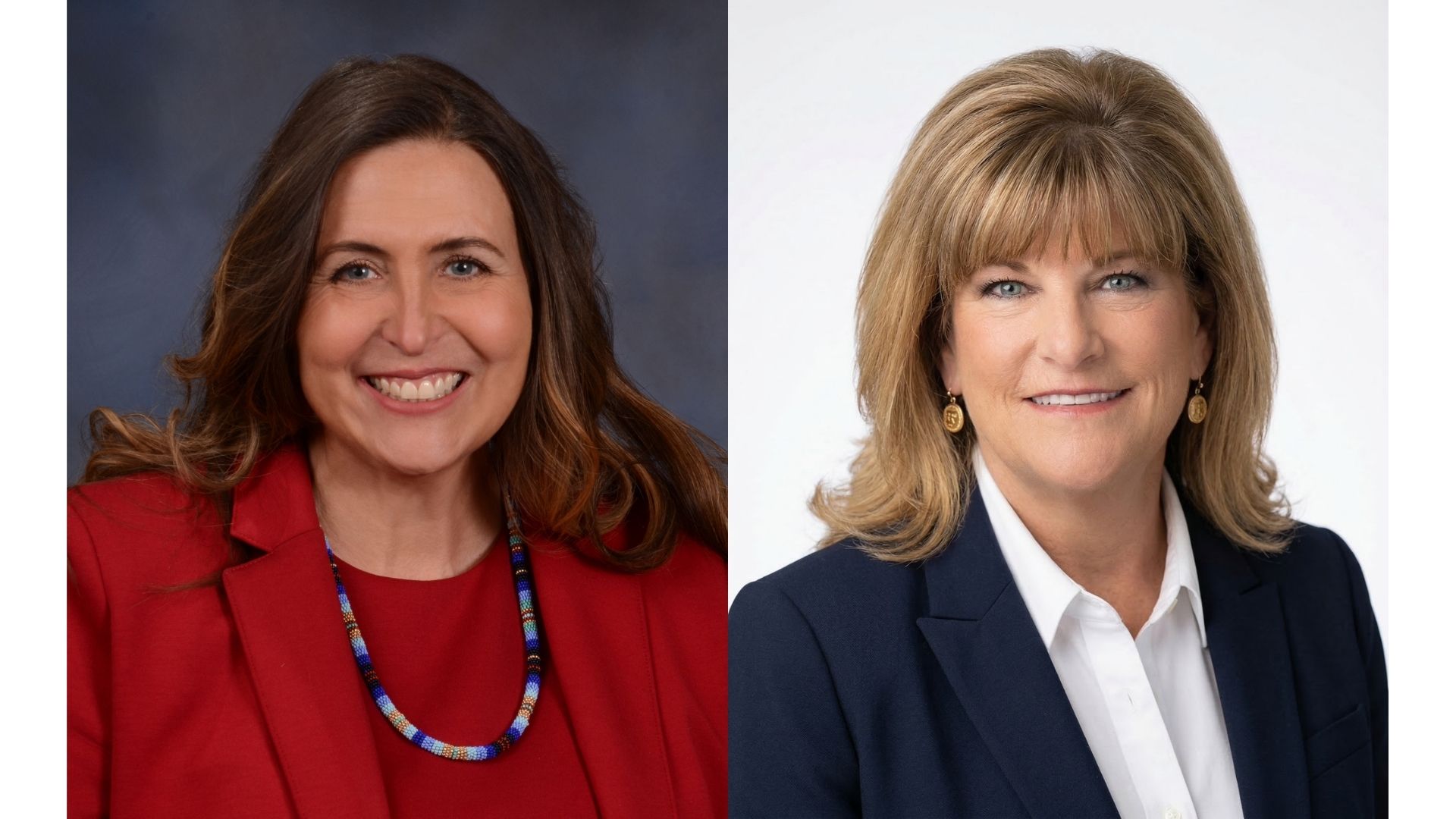
Assembly District 37 is one of the most competitive legislative races on the ballot this November, and one of a handful of seats that could decide whether Democrats maintain a supermajority in the state Assembly.
Assm. Shea Backus (D-Las Vegas), an attorney and third-generation Nevadan, first won the district that covers Summerlin in the northwest Las Vegas Valley in 2018 by a mere 135 votes, then lost it in 2020 to Republican Andy Matthews by 657 votes. She won it back in 2022 by 806 votes, and again in 2024 by 1,064 votes.
Now she's facing Jill Douglass, the Clark County Republican Party chair who calls Assembly District 37 a "textbook swing district."
Backus rejected that framing outright, saying the district actually "leans blue."
She points to her own history as evidence. Her biggest margin of victory came in 2024 against David Brog despite what she described as an onslaught of outside spending against her.
She argues nonpartisan voters in the district are breaking left, and that raw registration numbers undersell her actual strength once precinct-level performance is factored in.
Douglass reaches the opposite conclusion. Registration in the district is close enough, she said, that Democrats hold only a few hundred more registered voters than Republicans.
"[It is] basically statistically tied," she said, noting nonpartisans are the largest bloc.
This isn't Douglass' first time running. In 2024 she unsuccessfully challenged Senate Majority Leader Nicole Cannizzaro (D-Las Vegas). This time, carrying Gov. Joe Lombardo's (R) endorsement, she sees AD37 as a winnable race.
She'll have to overcome Backus' significant fundraising advantage. The Democrat's cash-on-hand stood at more than $139,000 as of her most recent campaign filing, compared to Douglass' approximately $41,600.
Douglass argues the overall gap itself makes her point.
"You're never going to outraise an incumbent who's bought out by special interest," she said, encouraging voters to look at who's actually funding a candidate rather than how much.
Backus said she's proud of her donor base that spans corporations and small-dollar donors alike, with endorsements from the Las Vegas Police Protective Association, the Professional Firefighters of Nevada and the Nevada Conservation League, among others.
Meet the candidates
Backus was born and raised in Las Vegas, a Cherokee Nation citizen and the third enrolled tribal member to serve in the Legislature. She's built her brand in part on pro bono legal work representing abused and neglected children in the foster care system, work she still does in a limited capacity, and around education and healthcare access.
She's held an increasingly prominent role in the Legislature's budget process since 2023, sitting as chair of the Revenue Committee and vice chair of Ways and Means for both legislative sessions.
Douglass has lived in Nevada for 32 years, raised her four sons in Las Vegas and built an insurance and financial services business after moving from Florida. She got involved in politics as a self-described community activist, attending school board meetings over concerns about student proficiency, before working her way into legislative advocacy. She has never held public office, though she now chairs the Clark County Republican Party, elected in July 2025 after defeating incumbent Jesse Law.
The issues
Douglass has made school choice her signature issue.
"If I could only get one thing accomplished for Nevada, it would be for our children, and that would be school choice," she said.
Douglass didn't name a specific mechanism, but Nevada's only current school choice program is the Opportunity Scholarship, which gives businesses a tax credit for donations that fund private-school scholarships for lower-income students. The program is currently capped at about $6.65 million a year and served roughly 1,800 students in 2023.
Read more: Federal program could offer lifeline to Nevada's starved school choice scholarship program
Separately, Lombardo announced in January that Nevada will opt into a new federal program, the Federal Tax Credit Scholarship Program, created by the One Big Beautiful Bill Act. The program will functionally expand school choice funding beyond the state's existing cap, offering individual donors a federal tax credit for contributions to scholarship organizations with no state-set cap. The program's specific rules are still being finalized and won't take effect until 2027.
Backus says the existing state program is broken and shouldn't be expanded.
She pointed to legislative hearings that found a Florida-based nonprofit claimed the entire $6.66 million available for the program in 2023 while holding $13 million in reserves. Her own version of choice stays inside the public system, charter schools, open enrollment and career and technical education.
Douglass' education concerns go beyond school choice; she also called Nevada's proficiency standards too low. Backus agreed, and tied the problem to staffing rather than standards themselves, pointing to newly released audits that found inconsistencies in how districts report classroom sizes and substitute-teacher use.
The two split on public safety, particularly the 2019 criminal justice reform package that raised the felony theft threshold. Douglass blames the law directly for a rise in retail theft, describing shoplifting incidents she says she's witnessed at CVS stores near her home.
"Why would you ever want a law that says it's OK to go in a store and steal?" she said.
She wants tougher penalties paired with more addiction and mental health services, and said, based on conversations with residents, that seniors in Sun City Summerlin's feel unsafe walking in their own neighborhoods.
Backus defended the reform as a bipartisan fix meant to correct inconsistent sentencing for similar crimes, rejecting the idea that Nevada is uniquely lenient.
"Everyone says we had a lower felony threshold than California," she said. "The irony of all ironies is that ours was higher than Texas. No one ever talked about that."
She argued voters see through the attacks, calling it an educated district that understands crime isn't as high as it's been portrayed. Instead, she pointed to a less-discussed problem: prison staffing shortages and the likelihood the state will need to build another prison as incarceration rises.
Douglass raised affordability concerns too, bringing up a housing permitting process she says has stretched from roughly 12 to 36 months.
"There has got to be a certain length of time period, and then that's it," she said of permitting.
Permitting is primarily administered by local and county governments rather than the state, though Lombardo has pushed for state-level changes to streamline the process.
Read more: Updating the Nevada Policy Tracker: A guide to key issues in the 2025 legislative session
Backus, whose own housing bills speak to the same underlying supply problem, said she used a Guinn Center report to help pass an accessory dwelling unit bill last session. She added she's continuing to draw on that same report for a new housing bill this session targeting infill and development of "middle housing" such as duplexes, triplexes and townhomes. For the 2027 session, she's filed bill draft requests on housing, economic development and healthcare, according to the Legislature's list.
Douglass also pointed to high auto insurance rates, which she attributes partly to uninsured and unregistered drivers.
On insurance, Backus pointed to a mix of factors: DUIs, uninsured drivers and out-of-state insurance fraud, plus a related registration problem. High fees push residents to keep cars registered elsewhere, she said, draining Nevada's highway fund, while wealthy residents register luxury cars in Montana to dodge taxes.
Backus spoke on rent affordability, but said her real priority is getting people into homeownership. Unlike renting, she argued, homeownership builds equity and locks in housing costs, while rent, she said, "just keeps escalating" with no such ceiling.
Douglass opposes rent control outright and calls it a supply problem. She credits Lombardo's push to release federal land for construction with already bringing rents down.
On government spending oversight, Douglass criticized Democrats for not advancing a bill from the state controller that would have created an Office of the Inspector General to audit state books, framing the opposition as resistance to accountability.
Backus disputed the premise, noting the Legislative Counsel Bureau's Audit Division already employs a team of full-time performance and financial auditors, and the state conducts an annual audit. The real problem, she said, is that Nevada is significantly behind on completing those audits.
"It's ironic," she said of Republicans criticizing "big government" while pushing to add more staff. She pointed to the state's base-budget process, rather than a lack of oversight, as the likelier place waste is hiding.
Making their case
Douglass, despite now running the county party apparatus, positions herself as the outsider in the race and casts Backus as a "career politician" propped up by "special interest" money.
Backus pushes back on both fronts.
"It's hard to think that I'm truly a politician now," she said. "Sometimes I love to think I'm still an outsider."
But she was unequivocal in rejecting Douglass' version of the same claim.
"I don't think she's an outsider by any means," Backus said. "She does politics all the time."
Douglass' pitch to voters centered on government efficiency and her business background — arguing voters should judge Backus on results after six years in office.
"Has the person that's been in office actually helped?" she said. "Are people in a better place today after this person's been in office for six years?"
Backus leaned into experience when pressed on why voters should choose her, pointing to the wave of senior lawmakers stepping down this cycle. She said the Assembly is losing more than a third of its budget committee membership to retirement, and argued that it's exactly the wrong moment to trade her committee seniority for a first-time legislator.
"While I may think Ms. Douglass is … a nice person and has business experience, I bring the business experience," she said. "I bring the lawyer with me. I guess Nevadans get a three-for-one with me going back up to Carson City."
Where they stand, issue by issue
Both candidates also completed The Nevada Independent's policy questionnaire on issues from data centers to school funding. Their full responses are below.
Support Independent Elections Coverage and Journalism in Nevada
You’ve enjoyed unlimited access to our reporting because we’re committed to providing independent, accessible journalism for all Nevadans.
But sustaining this work — informing communities, holding leaders accountable, and strengthening civic life — depends on readers like you.
Nevada needs strong, independent journalism. Will you join us?
A gift of any amount helps keep our reporting free and accessible to everyone across our state and funds our elections coverage.
Choose an amount or learn more about membership