Climate change is getting worse in Nevada. Why did Democrats stop talking about it?



In Nevada's 2018 gubernatorial race, then-Clark County Commissioner Steve Sisolak (D) ran ads touting his "bold environmental vision for the state."
That fall, Nevadans elected Sisolak to office and approved a ballot measure requiring the state to draw half of its electricity from renewable sources by 2030.
In 2019, former Sen. Harry Reid (D-NV) said climate change was the "number one priority" behind his support for ending the Senate filibuster.
Nearly a decade later, plenty of voters still care about the environment and energy. But the approach of Nevada's Democratic elected officials has shifted toward discussing climate issues through the affordability lens that is framing nearly every major political debate this year.
"Affordability costs are much more important to almost every voter, if not every voter," said Josh Marcus-Blank, a Democratic political strategist. "Any smart politician is going to be addressing the energy cost crisis that's facing their constituents."
Plans to address climate issues — which are still everywhere in Nevada, from a dwindling water supply to fast-moving fires to a growing number of heat-related deaths — are no longer a top campaign talking point for many of Nevada's Democratic elected officials.
"We really leaned into climate change for a while," said former Assm. Sarah Peters (D-Reno), who introduced multiple environment-oriented bills while in the Legislature. As conversations about climate issues cooled off, she said, many members of the Democratic Party "put our tail between our legs. … It's not something that Democrats want to be focusing on."
Polling conducted by Pew Research before the 2024 election shows voters ranked climate change last on their list of priorities. And a Yale survey from 2025 shows that while a majority of Americans reported being "very" or "somewhat" worried about global warming, they worry more about other issues.
But environmental experts and advocates who spoke to The Indy offered a different perspective from Peters, saying the laser focus on pocketbook issues this cycle is actually an opportunity for the environmental movement.
"I think we are talking about climate change, I think we're just not using those words," said Kristee Watson, executive director of the Nevada Conservation League, who added that fires, drought and rising energy costs were all on voters' minds.
In the state's 2026 governor race, Democratic candidate Aaron Ford has avoided direct mentions of climate change on his website and in campaign communications, but slammed "data center billionaires" and touted clean energy projects for their jobs and cost savings more than for their environmental benefits.
Gov. Joe Lombardo has taken a similar approach on the Republican side, focusing on energy affordability and the jobs brought by solar projects.
David Kieve, president of EDF Action, the political arm of the nonprofit Environmental Defense Fund, said advocates now focus less on the environmental benefits of clean energy and more about "how it's cheaper, faster, more reliable."
"We are on much firmer ground as environmentalists" when discussing clean energy as an economic issue, he said, rather than a moral one.
How did we get here?
Public polling shows interest in climate change hit a nadir during 2008's Great Recession, when Nevada was especially damaged by the foreclosure crisis and voters had little else on their minds beyond economics.
But climate change's political salience grew as the 2010s progressed, especially after the 2015 signing of the Paris Agreement and as student activism attracted media coverage and political praise.
The share of Americans who said the U.S. government should prioritize the environment even at the cost of economic growth peaked at 65 percent in 2019, then fell during the COVID pandemic. Congressional Democrats' mentions of climate change in speeches and online also rose over a similar period.
But in the years since the pandemic, some prominent Democrats began discussing climate change less often and under different terms — as an economic problem rather than an existential one.
Ford's energy plan, for example, does not mention climate change explicitly, although it does say he wants to "protect our land and water from pollution" and mentions a grant for a tribal climate resiliency plan in flux due to the Trump administration.
This shift in political discourse is also borne out in public opinion: Monmouth University polling found that 46 percent of Americans described climate change as a "very serious" problem in 2026, compared to 54 percent in 2018.
Environmental professor Anthony Leiserowitz, director of the Yale Program on Climate Change Communications, blames voters' shifting views of climate change on "elite cues" from media and political influencers.
Media coverage of climate change has dropped roughly in half since 2023, Leiserowitz said. Elected officials began mentioning the issue less in their speeches, too, he said, as they grew skittish that no voters cared and "didn't want to go against the tide."
Climate had its own dedicated segment at the 2020 Democratic National Convention, when then-candidate Joe Biden mentioned it three times during his speech. Four years later, Kamala Harris mentioned "the climate crisis" just once in her speech, and her campaign never issued a climate policy plan.
Some experts blame these trends on the Trump administration.
"It's hard to know what to triage first because things are so very bad," said Ben Leffel, assistant professor at UNLV's School of Public Policy and Leadership. "With all of the crises the Trump administration is causing, it does make it difficult to focus on any one thing."
Leffel said he believes some political candidates shy away from environmental topics because they view it as too risky to discuss.
"Instead of tackling political issues that are of interest to constituents, it's … almost looking at political leadership, and policy leadership, from a profit and loss perspective, and short term profit and loss by way of donors, rather than aligning with constituents that they care most about," he said.
Nevada once led the nation in various environmental issues, Leffel noted. The state was one of the first to pass a renewable portfolio standard, requiring it to pull a certain amount of power from renewable resources each year. It's now falling behind on those requirements.
The state also had a strong climate action plan drafted under Sisolak, but Lombardo withdrew the plan after taking office and replaced it with one that some critics described as inadequate.
While he hasn't focused on climate issues in office, Lombardo has touted solar power as a way of growing the state's economy. In an April press release, his campaign bragged that "under Governor Lombardo, Nevada leads the nation in solar energy."
The governor has written to Trump administration officials — and spoke directly with President Donald Trump (R) — about the economic importance of Nevada's solar projects, some of which were paused due to provisions in the One Big Beautiful Bill Act and a Trump executive order.
The platform for Lombardo's possible second term, however, doesn't mention energy policy.
In a statement, Ford campaign spokesperson Prerna Jagadeesh wrote that Ford had "common sense plans" to "bring down the cost of living and protect our national resources" but only mentioned climate change by name in the context of attacking Lombardo's environmental record.
'Very difficult to get people worked up'
Environmental advocates and experts say climate change is an issue where support is a mile wide but an inch deep. While most Americans care about climate change, it's not necessarily deciding their vote.
The big sweeping rhetoric of "save the [insert species here]" appeals mostly to idealistic college students but resonates less elsewhere, said Rebecca Gill, an associate political science professor at UNLV.
"It's very difficult to get people worked up about something that isn't going to immediately affect them because it doesn't seem like a 'today' problem," she said.
Nathaniel Stinnett runs the Environmental Voter Project, a nonprofit that seeks to identify and mobilize citizens who say they worry about the environment but don't vote. It's a bloc Stinnett calls "non-voting environmentalists."
His group estimates there were roughly 83,000 non-voting environmentalists in Nevada in 2024 — more than Trump's margin of victory.
Stinnett said it's a psychology problem, pointing to studies that show most Americans believe the most effective ways to address global warming are to "recycle more … change your consumer behavior … and educate people."
"People don't think of the climate crisis as a systemic political problem that requires systemic political solutions," said Stinnett.
Leiserowitz argues that politicians have incorrectly responded to this apathy, shying away from environmental discussions rather than educating the public. "Climate change is not a separate issue, it's a health issue, it's an economic issue, it's a moral and religious issue, it's a national security issue," he said.
Sen. Catherine Cortez Masto (D-NV) made energy policy a key part of her 2022 Senate bid, slamming her opponent for his ties to oil companies.
"There's not really a distinction when you're talking about climate and clean energy costs," she said in an interview with The Indy. Some voters might not see it that way, she added, so politicians must "connect the dots" for them in public messaging.
Don't touch my water
Gallup polling from April shows that majorities of Americans worry "a great deal" about two environmental problems — the pollution of drinking water (56 percent) and maintenance of the nation's supply of fresh water for household needs (53 percent). Water pollution has consistently ranked as voters' top environmental concern since 2001.
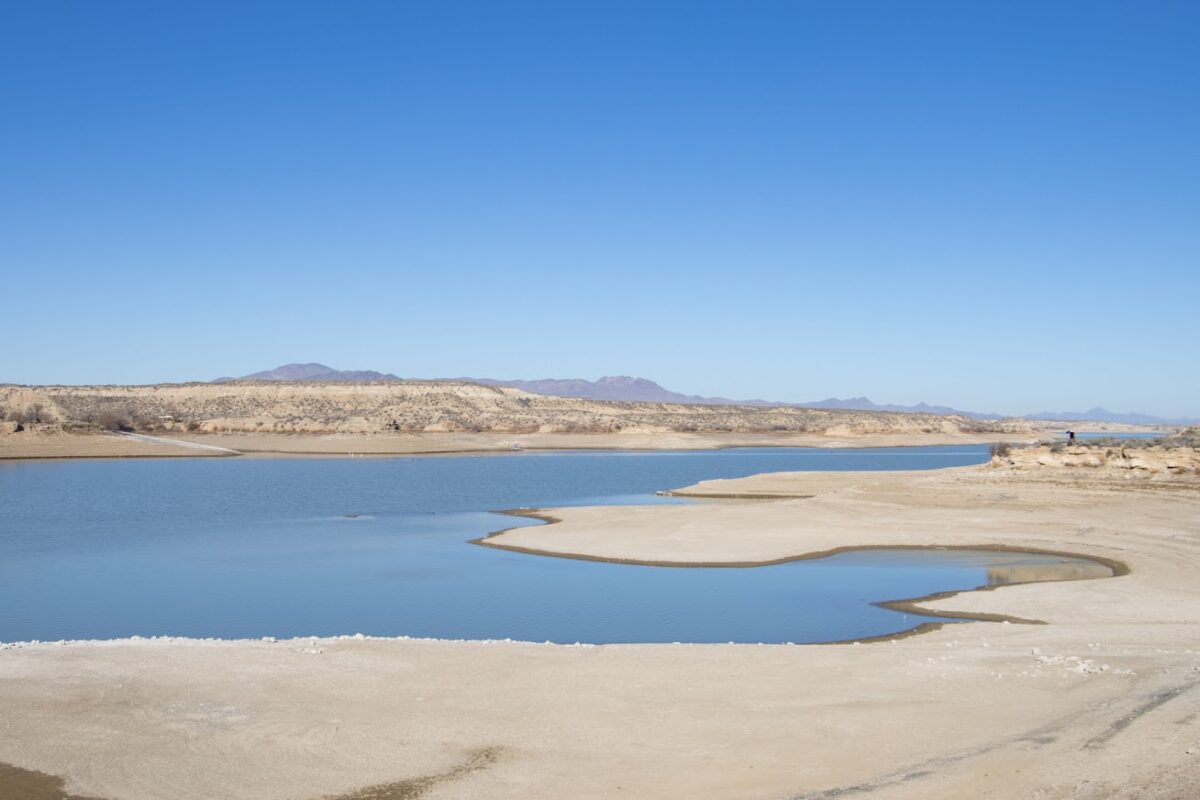
"From personal experience of just being a part of so many town halls and conversations, there's never a time that water doesn't come up," said Molly Forgey, an adviser to the Nevada Democratic Party. "Everybody is terrified of a water shortage."
At the Nevada Water Resources Association's recent fall symposium, Sen. Melanie Scheible (D-Las Vegas) said that for the first time since she took office in 2018, water is among the top issues brought up by her constituents.
"Media coverage has helped everyday folks realize just how dire the water situation is, how much less we have than in years past, and they're starting to see or foresee the impact to them, personally," she told The Nevada Independent.
More recently, water has become one of the leading causes of fear in perhaps the most hot-button, bipartisan issue of the 2026 election cycle — data centers.
Nearly a third of people surveyed in a recent New York Times poll cited "the environment/water usage" as the cause of their opposition to data centers, even though data centers' use of water is frequently exaggerated and misunderstood. Democratic candidates have capitalized on the issue, with the Nevada Democratic Party and its candidates blaming Lombardo for "data centers jacking up costs and draining our water."
Republicans have also seized on water and data centers as campaign issues, with Lombardo calling Ford "Data Center Aaron" in press releases. Marty O'Donnell, the Republican challenging Rep. Susie Lee (D-NV) in Nevada's 3rd Congressional District, also has a new ad focused on Nevada's water issues.
Voters' fears of data centers could make the environment front and center again in American politics. But economic concerns are still the top campaign issue in 2026, and even people who are the most involved in the environmental movement aren't immune from the worries shared by everyday voters.
"I was talking to one of my colleagues around the water cooler," said Kieve, "and we both said that if a pollster called us up and asked, 'What's your number one issue?' I'd probably say things cost too much. And I'm a professional climate advocate."
Support Independent Elections Coverage and Journalism in Nevada
You’ve enjoyed unlimited access to our reporting because we’re committed to providing independent, accessible journalism for all Nevadans.
But sustaining this work — informing communities, holding leaders accountable, and strengthening civic life — depends on readers like you.
Nevada needs strong, independent journalism. Will you join us?
A gift of any amount helps keep our reporting free and accessible to everyone across our state and funds our elections coverage.
Choose an amount or learn more about membership