IndyTalks: Ford defends record on data centers, touts success on opioid litigation

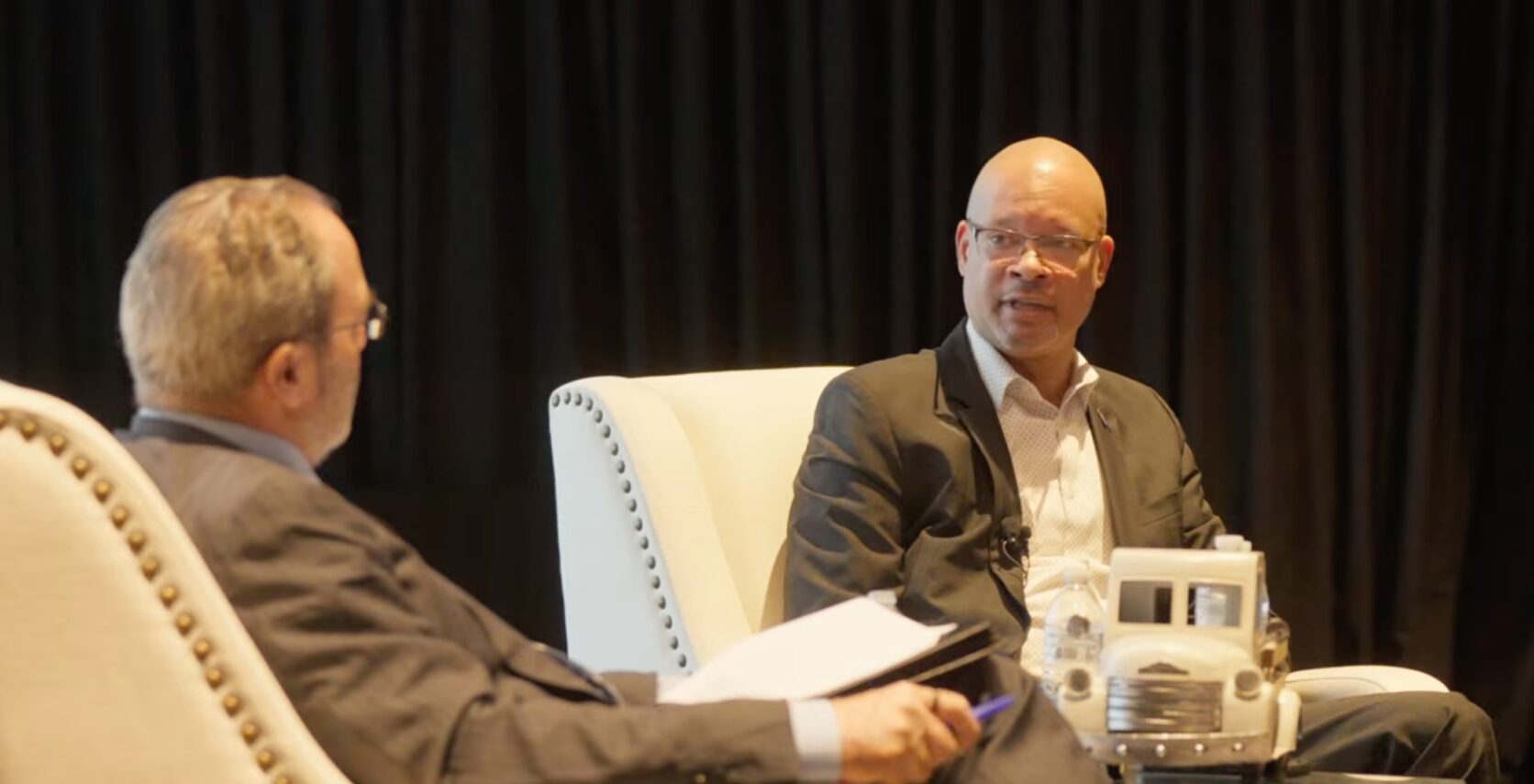
Attorney General Aaron Ford (D) defended his record on data centers and his extensive out-of-state travel while touting his office's success on opioid litigation and other public interest lawsuits during an IndyTalks event Thursday.
Ford, who recently pledged to pause new data center tax breaks along with other changes, co-sponsored the original 2015 bill to give data centers tax breaks and promoted the bill on the Senate floor before its passage.
Nevadans don't want their elected officials to be unwilling to change their positions when new information comes about, he said, adding that pausing tax breaks is the responsible thing to do.
"The data centers of 11 years ago are not the data centers of 2026. … The dynamics have changed," Ford said. "What you have to be able to do is to be flexible enough and responsive enough to understand that what I said 11 years ago was based on that information. You have new information now."
Ford made his comments Thursday evening, 67 days ahead of Election Day, amid a spirited interview with The Nevada Independent CEO Jon Ralston in Reno.
During the conversation, Ford also said his hundreds of days of travel helped secure billions of dollars in opioid epidemic settlements and hundreds of millions of dollars in a recent settlement with Meta and other social platforms. He added that his lawsuit against Roblox started in a conference room in Spain and culminated in a settlement in his office. Of his record of extensive out-of-state travel, he said he spent only 16 days on vacation.
"That's the import of these meetings. It's getting together, talking face to face, working it out, figuring out what's getting done," he said. "It's the same with opioids. It's been the same with this social media."
The attorney general didn't commit to a gubernatorial debate hosted by The Nevada Independent, saying he would "maybe" do it. He also said he doesn't have his plan for addressing the state's economic crisis fully figured out but has proposals to address aspects of it.
Below are highlights from the interview. Click on the links to jump to specific topics.
- Economy
- Education
- Lawsuits
- Communications with the governor
- Budget
- Demand charges
- Medicaid fraud
- Rent control
Economy
Ford defended his use of the phrase "Lombardo-Trump economy" on the campaign trail, saying that Gov. Joe Lombardo's support of the One Big Beautiful Bill Act and President Donald Trump justifies the characterization.
Ford said Lombardo should have told Trump to back off tariffs and not sign the One Big Beautiful Bill Act. He added that Lombardo should have signed some of the bills he instead vetoed, such as universal school meals and a cap on prescription drug prices.
Pressed on Lombardo's job creation numbers being among the highest in the country, Ford cited anecdotal evidence of citizens struggling and data on high grocery and prescription costs to argue that the economy is not benefiting voters.
He added that Nevada's unemployment rate is still high and needs to be addressed. Data from the Bureau of Labor Statistics places Nevada's unemployment rate at 5 percent as of July, making it 46th highest out of the 50 states and the District of Columbia.
One of Ford's campaign pledges is to declare an affordability crisis via an emergency order on Day 1 of being in office. He said that the order will be aimed at requiring state agencies to look for ways to put money back into constituents' pockets.
"If it means reducing fees, if it means cutting rate pay, whatever it means," Ford said. "And by the way, I don't have to have all the answers right now."
On the campaign trail, Ford said part of addressing Nevada's funding crisis is addressing fraud, waste and abuse. He acknowledged during the interview that the method is "cushion couch money, but it's still an important concept."
Education
Ford said he was not reconsidering his support for reading retention mandates, despite the Nevada Association of School Superintendents calling on state lawmakers to repeal the mandates in the next legislative session.
As a former high school teacher, he said reading ability is critical for success. He noted, however, that he knew retention could have unintended consequences and is open to other perspectives.
"I still support Read by Grade 3," he said. "I'm always going to be open for conversations and communication, and if there's new evidence … I need to be open to it."
The reading mandates are set to begin in the 2028-29 school year, but superintendents who have come out against them say that the state doesn't have the funds to adequately support students who are held back.
Lawsuits
Ford pushed back on the notion he piggybacked on lawsuits that were filed by other attorneys general. He said he filed and sued on some of the lawsuits that generated enormous amounts of money for the state.
He acknowledged, however, that he worked on lawsuits that included Democratic and Republican attorneys general.
He also touted his lawsuits against the Trump and Biden administrations. He said suing is one of the best options to stand up to abuses of power.
"When we win those lawsuits and we give those injunctions, the Trump administration would in fact correct their action," he said.
Communications with the governor
Lombardo said in a separate IndyTalks that Ford's office has not communicated with his on state issues. Ford said he rejected that premise. He said he's under no obligation to tell Lombardo about lawsuits brought against the Trump administration and that he does communicate with the governor when he is representing the governor's office.
Ford said Lombardo has told departments to withhold information that would help with federal lawsuits and the state has lost out because of it.
For example, Ford signed onto a lawsuit against the Trump administration's attempt to "weaponize" Supplemental Nutrition Assistance Program (SNAP) data against recipients. He said Lombardo's administration went behind his back and shared the data anyway — making the rule moot in Nevada.
Budget
An Indy analysis found that Lombardo's campaign made sweeping assumptions when it estimated the cost of Ford's policy plans would cost $18 billion. The analysis did acknowledge that parts of Ford's plans are vague and, while not likely to cost that much, would nonetheless be expensive.
Asked about paying for his proposals, Ford took a swipe at Lombardo, saying he is not going to take criticism from someone who did not submit a constitutionally balanced budget in the first place.
Though Ford admitted to voting to raise taxes in the past, he said he would not support higher taxes in the future.
"I'm not going to raise your taxes," Ford said. "We are going to make progress. It won't be one fell swoop. I can't spend $2 million or whatever the number is. … But we can make progress, and I'm committed and dedicated to doing that."
Demand charges
NV Energy's daily demand charge has become a key issue on the campaign trail for Ford after he pledged that if elected he would "put a stop to" the charge.
The controversial charge is set to be implemented in January and is intended to address the strain that individual Southern Nevada households put on the grid.
Though the demand charge is projected to lower costs for 90 percent of people, Ford said his office sued because he views the demand charge implementation as unlawful and does not believe it will benefit consumers. He also questioned whether the Public Utilities Commission has the legal authority to implement it, although he did not elaborate on his reasoning.
A Clark County District Court judge ruled against the attorney general's office, and Ford said his office is appealing that to the state Supreme Court.
Ford added that he views the demand charge as contrary to public policy and "a matter of greed" from NV Energy.
Ford also said that, if elected, he would push to appoint more consumer-oriented officials to the regulatory board that oversees the state's energy policies.
When Ralston pointed out that a majority of the board was appointed by former Gov. Steve Sisolak (D), Ford did not respond.
Medicaid fraud
Ford said in an interview that he had "brought in over $40 million of criminal restitution payments to the state to go back into the Medicaid system."
Pressed on reporting from The Nevada Independent that showed only about 30 percent of that money has been collected, Ford publicly acknowledged for the first time that he won $40 million in judgments but that doesn't equal collected money.
"Words matter, and my words should have been more precise," he said, adding that he felt his team who oversees Medicaid fraud litigation were unnecessarily attacked because of the campaign.
National data also indicates that Ford's prosecution rate for referred Medicaid cases, which has been criticized in campaign ads, is twice the national average.
Rent control
Ford said he would not sign a general rent control bill, but he would support the legislation to cap seniors' rent increases that Lombardo vetoed.
Specifically, he referred to Assm. Sandra Jauregui's (D-Las Vegas) bill, AB280, in 2025 that would have required landlords to break down the rationale for fees while also capping annual rent increases for senior citizens at no more than 5 percent for an approximately yearlong pilot program.
The bill passed along party lines in both chambers. Lombardo vetoed a similar proposal in 2023.
Support Independent Elections Coverage and Journalism in Nevada
You’ve enjoyed unlimited access to our reporting because we’re committed to providing independent, accessible journalism for all Nevadans.
But sustaining this work — informing communities, holding leaders accountable, and strengthening civic life — depends on readers like you.
Nevada needs strong, independent journalism. Will you join us?
A gift of any amount helps keep our reporting free and accessible to everyone across our state and funds our elections coverage.
Choose an amount or learn more about membership