More than 50 new Nevada laws go into effect today. Here's what to know.

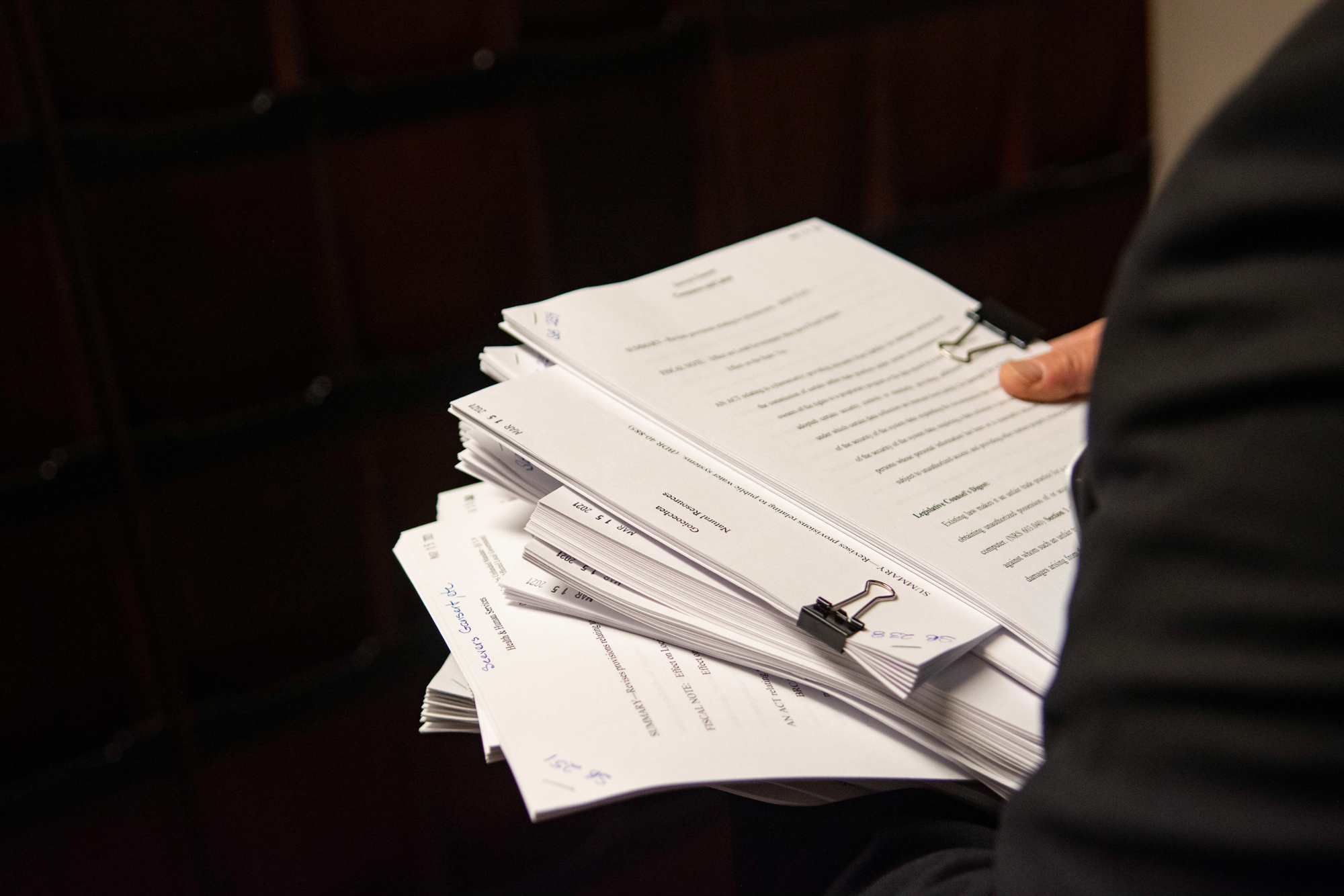
Following a regular legislative session in early 2025 and a special session in November to address outstanding issues — such as Gov. Joe Lombardo's crime bill — quite a lot of legislation was passed in 2025.
The Nevada Independent has compiled this brief overview of important legislation that will go into effect on Jan. 1, 2026. See the full list of laws taking effect today here.
AB73: Disclosing AI in campaign ads
Introduced by Nevada Secretary of State Cisco Aguilar, this bill focuses on the use of artificial intelligence in election materials. The law stipulates that any communications made or paid for by a person, organization, candidate's campaign committee, a political action committee or a political party's committee must include disclosure of any AI materials in a "clear and conspicuous manner."
Ahead of what is expected to be one of the nation's most closely watched governor's races in 2026, this law is aimed at curbing the rising trend of digitally manipulated media.
AB169: Speech-language treatment
This law is meant to help those under the age of 26 who may need speech-language treatment for stuttering.
It requires public and private insurance policies and health plans — including Medicaid — to cover the cost of the treatment, and it prohibits an insurer from imposing an annual limit on the coverage, or limiting coverage based on the cause of the stuttering.
AB176: More abortion protections
This law, called the Right to Contraception and Family Planning Services Act, protects access to reproductive health care by prohibiting government entities from imposing restrictions on reproductive treatment for patients.
The law defines reproductive services as "medical, surgical, counseling or referral services relating to the human reproductive system." It includes services such as access to contraception, prenatal care and in vitro fertilization.
Reproductive freedom is already protected by state law and an amendment to the state Constitution is headed back to voters in 2026 to enshrine the right to an abortion and other medical procedures.
AB220: ID cards for the homeless
This law authorizes the Department of Health and Human Services to create a program to issue identification cards to residents experiencing homelessness.
To get this ID, the person must be at least 10 years old and cannot hold a valid driver's license or identification card from any state. The department must issue the ID for free and cannot charge for renewal or replacement of a card.
The department is allowed to accept gifts, grants and donations to fund the program, and must keep the personal information of card carriers confidential.
AB367: More voting options in other languages
This law requires the Secretary of State's Office to provide voting materials and election information in the seven most spoken languages in the state, regularly review language accessibility data for election materials and establish a toll-free interpretation assistance hotline.
It also requires county and city clerks to make a "good faith effort" to appoint bilingual election board officers, as well as allowing registered voters with a physical disability to use a mobile device to access interpretive services while voting.
AB477: Prison data for redistricting
This law adds more requirements to the Department of Corrections' ongoing responsibility to track the last known residential address of each imprisoned person for redistricting purposes.
The new law requires the department to not only track the last known address, but their age and ethnicity, and transmit that information to the State Demographer for population count adjustments used in redistricting
It further requires the prison system director to collect and maintain the last known residential address of an imprisoned person who will be released after July 1, 2030.
SB257: Autism treatment options
This law broadens the scope of healthcare providers who can conduct evaluations and treatment of those with autism spectrum disorder, authorizing any provider of health care acting within their scope of practice to conduct observation and assessment. It also simplifies insurance coverage requirements to ensure that more providers are eligible to participate in the process.
Support Independent Elections Coverage and Journalism in Nevada
You’ve enjoyed unlimited access to our reporting because we’re committed to providing independent, accessible journalism for all Nevadans.
But sustaining this work — informing communities, holding leaders accountable, and strengthening civic life — depends on readers like you.
Nevada needs strong, independent journalism. Will you join us?
A gift of any amount helps keep our reporting free and accessible to everyone across our state and funds our elections coverage.
Choose an amount or learn more about membership