Nevada is suing to stop Trump order to make eligible voter lists. Is Lombardo looped in?

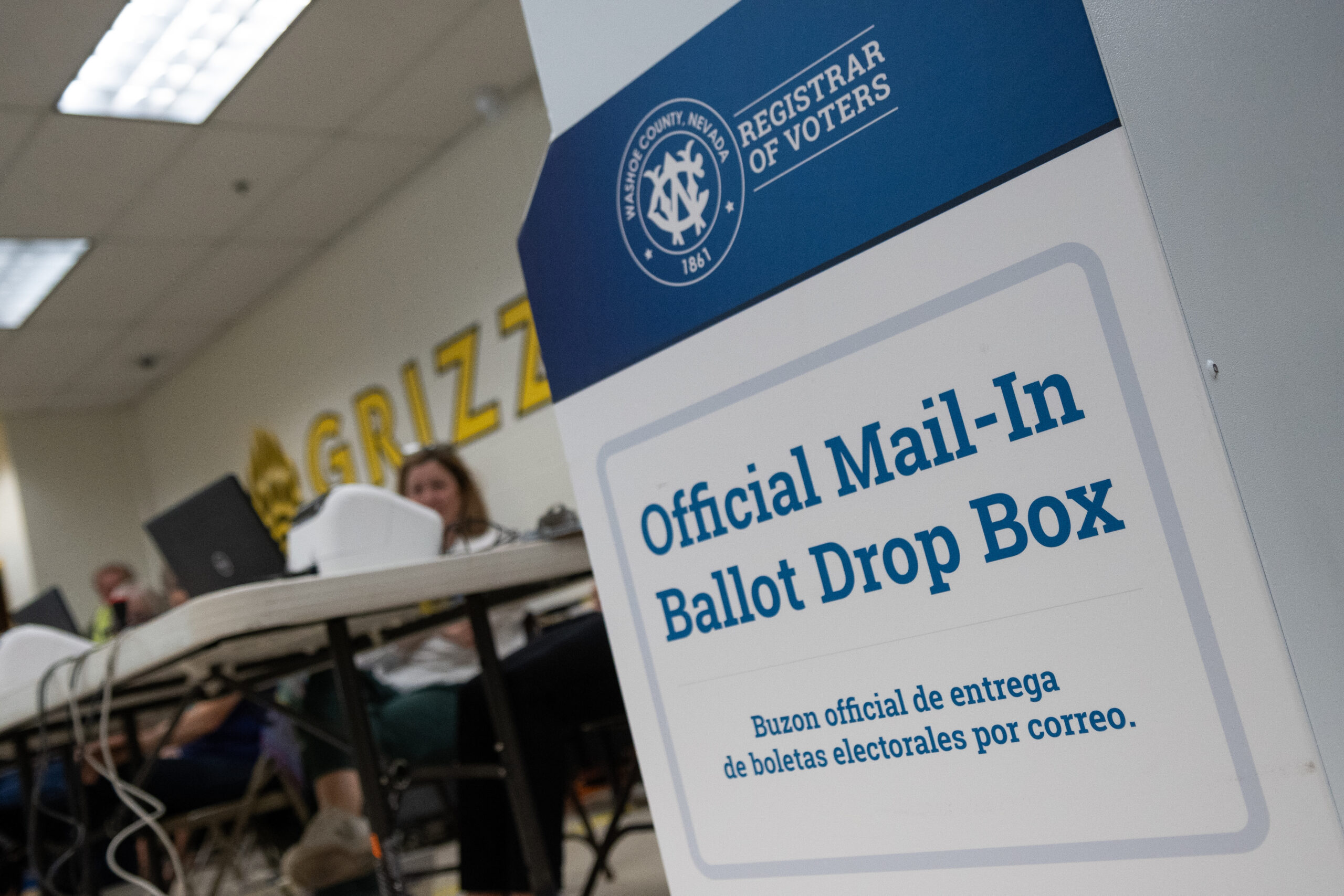
Nevada Attorney General Aaron Ford (D) said he did not inform Gov. Joe Lombardo (R) ahead of time about a lawsuit the state filed in federal court Friday that challenges President Donald Trump's recent executive order — which seeks to grant federal control over states' mail-in voter verification.
But Ford also forcefully denied his office fails to keep the governor's office in the loop on its actions more generally, saying his staffers are in "constant communication" with the governor's office on lawsuits.
Lombardo's communications director, Drew Galang, confirmed to The Indy that the governor's office was not alerted to the lawsuit before its filing but said the governor believes "elections should be run by the states."
Lombardo said in an interview with Indy CEO Jon Ralston last month that he frequently becomes aware of Ford's lawsuits through the news, and that such communication issues are "extremely bad for the state." Ford said on Friday that was "a lie."
Ford is the front-runner to become the Democratic nominee for governor. If he wins the primary, he's all but certain to face Lombardo in the fall.
Nevada, alongside California, Massachusetts and Washington, is co-leading the 24-state lawsuit to block the order Trump signed Tuesday, which will create state-specific lists of eligible voters and use the lists to restrict mail-in voting.
"The notion that the federal government must get involved in states' electoral processes is a direct attack on Nevadans' constitutional right to vote," Ford said during Friday's press conference.
His office filed the lawsuit in conjunction with the office of Secretary of State Cisco Aguilar, a Democrat, who Ford described as "the one that we've been communicating with" on election-related issues.
Trump's order instructs the Department of Homeland Security — which oversees immigration enforcement — to work with the Social Security Administration and other federal agencies to create lists of citizens ages 18 and up in each state. The lists are aimed at preventing noncitizens from voting, a practice that is already exceedingly rare in U.S. elections.
The order also directs the U.S. Postal Service to use the information to identify the voters in each state eligible for mail-in or absentee voting and bars the postal agency from sending mail ballots to voters not on these lists.
Nevada currently sends mail ballots to all registered voters, and in Nevada's 2024 primaries, about 65 percent of voters — including more than half of voters in Republican primaries — voted by mail.
State officials and legal experts say the president's recent order is an illegal power grab. The U.S. Constitution delegates authority over election administration to state legislatures and grants Congress, but not the executive branch, the power to pass election-related laws.
But since assuming office again last year, Trump has called to "nationalize" elections and has directed his Justice Department to repeatedly request states for detailed information on voters. The federal government said in court this week that it would use that information to run citizenship checks.
Aguilar has refused to hand over Nevada voters' data, triggering an ongoing legal battle with federal authorities.
Galang wrote in a statement to The Indy that while Lombardo opposes nationalized elections, he supports expanded election integrity measures — such as voter ID requirements and an end to universal mail voting.
If Nevada's lawsuit doesn't succeed in overturning the president's executive order, states will be required to comply or could lose federal funding. At Friday's press conference, Aguilar said local governments that administer elections are already "running on a shoestring budget, and for the president to pass this mandate onto taxpaying Nevadans is really unfair."
He denied issues with election security and said that any concerns are better addressed by state-level action or by the federal government reauthorizing the funding for cybersecurity that Trump had slashed.
Aguilar also said that if Nevada doesn't comply with the demand for voter data, the subsequent funding issues "would require the governor to call a special session."
Lombardo's office did not say if the governor would be willing to pursue such a move.
Support Independent Elections Coverage and Journalism in Nevada
You’ve enjoyed unlimited access to our reporting because we’re committed to providing independent, accessible journalism for all Nevadans.
But sustaining this work — informing communities, holding leaders accountable, and strengthening civic life — depends on readers like you.
Nevada needs strong, independent journalism. Will you join us?
A gift of any amount helps keep our reporting free and accessible to everyone across our state and funds our elections coverage.
Choose an amount or learn more about membership