Nevada nowhere near meeting 2030 greenhouse gas emission goal

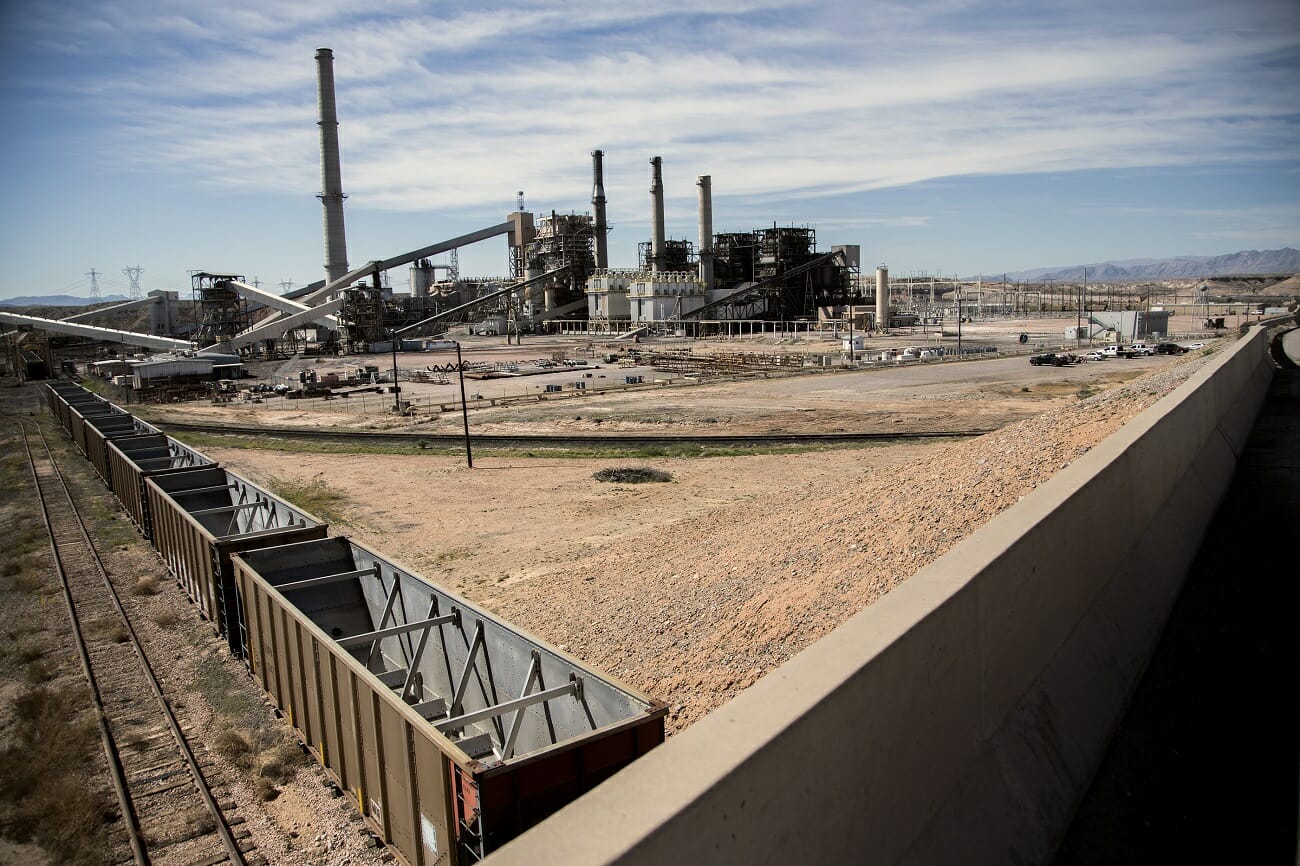
Nevada fell well short of its greenhouse gas emission-cutting goals in 2025, and it's poised to be much further behind when the bar raises again in 2030.
According to the Nevada Department of Environmental Protection (NDEP), the state's carbon emissions are projected to stay nearly the same over the next five years, reaching less than half of the goals lawmakers hoped to see by 2030.
Lawmakers in 2019 passed SB254, setting goals of reducing emissions by 28 percent by 2025 over 2005 levels, when greenhouse gas emissions peaked in the state, 45 percent by 2030 and to net zero by 2050. The law did not establish consequences for failing to miss the targets.
According to NDEP's annual greenhouse gas emissions report, which the department quietly released just before the new year, the state is set to lower its emissions by just half a percentage point between 2025 and 2030 — nearly 25 percent less than what lawmakers had hoped for.
Human activities, including burning fossil fuels to generate electricity, power cars and heat homes, release greenhouse gases that most scientists agree are the primary driver of the Earth's warming climate; its temperature has increased by about 2 degrees Fahrenheit since the Industrial Revolution. The warming is driving a variety of changes, including more erratic weather patterns, prolonged drought, changes in when plants flower and fruit, and snow and ice melting at faster rates. Most experts forecast dramatically worsening effects unless emissions are drastically curbed in the next few years.
Since 2005, the economic downturn of 2007 to 2009 and the COVID-19 pandemic, as well as the retirement of the Mohave and Reid Gardner coal-powered generating stations, have led to substantial reductions in Nevada's emissions.
But since the bill's passage, emission reductions have been largely flat, and are projected to continue to plateau as state and federal policymakers deprioritize the issue of slowing climate change.
The state is only anticipated to reduce its greenhouse gas emissions by 20.7 percent by 2030, 24.3 percent short of the legislative target. Nevada's current trajectory also puts it woefully behind goals of net-zero emissions by 2050.
Since taking office, Gov. Joe Lombardo, a Republican, has made various moves to distance the state from carbon reduction efforts undertaken by his Democratic predecessor, including pulling the state from a nationwide greenhouse gas reduction coalition, drastically revising the state's climate strategy and issuing an executive order that, in part, promotes the use of energy sources such as natural gas, a fossil fuel that, while cleaner than coal, still produces substantial emissions.
Republican President Donald Trump has also taken notable steps favoring fossil fuels and ignoring emission reduction efforts, including withdrawing from the Paris Climate Agreement, ordering coal plants slated to close to remain open and repealing solar tax credits.
Former state Sen. Pat Spearman (D-North Las Vegas), one of the primary sponsors of SB254, said she isn't surprised at the lack of state efforts to reduce emissions, but she is disappointed.
"It doesn't matter if you're in a red state, blue state, purple state or no state. You're talking about people's lives," she told The Nevada Independent. "It's disappointing that the current administration at the state level has decided to go along with the decisions at the national level. It's about science. It's not politics. It's about science and public policy."

Electricity generation, transportation drive emission levels
Electricity generation and transportation remain the largest emitters in the state, followed by industry and buildings. Combined, they accounted for 91 percent of the state's emissions in 2025; the remaining 9 percent were from waste and agriculture.
In 2005, electricity generation drove 45 percent of greenhouse gas emissions. By 2023, with the retirement of the Reid Gardner and Mohave generating stations, emission contributions from electricity generation were down to 26 percent. Lawmakers in 2013 passed legislation requiring NV Energy to shutter its remaining coal plants.
At the beginning of this year, the utility stopped burning coal at the North Valmy Generating Station, the company's last coal plant. (It is being converted to burn natural gas.)
"NV Energy is proud of our work in reducing greenhouse gas emissions in the state," utility spokesperson Meghin Delaney said in an email. "Through careful planning since 2005, NV Energy has been a leader in these efforts and is … transitioning to a less carbon-intensive future."
However, projections indicate that current policies will not lead to future reductions in emissions from the electricity generation sector, and it will eventually become static.
"Continuing to encourage energy efficiency, continuing to adopt renewables will help the power sector, which is where we've seen our biggest gains," said former Sen. Chris Brooks (D-Las Vegas).
But, he acknowledged, he has concerns, including the pace at which the state is decarbonizing the transportation sector, which is becoming an ever larger piece of the pie.
In 2010, transportation overtook electricity generation as the largest producer of statewide emissions.
In 2005, transportation drove 33 percent of emissions; last year, it drove 38 percent. Projections also indicate that unless more aggressive policies are adopted at the state and federal level, transportation emissions will not decrease.
The 2025 report does reflect some drastic year-over-year increases in emissions from transportation, but that is because of changes in how certain emissions, including jet fuel, have been recalculated using methodology developed at the federal level, according to NDEP.
"This reflects a change in methodology, not an actual increase in real-world emissions," according to the department.
Excluding that, the gap between the state's reduction goals and projected emissions has been fairly flat since the state's emission reduction goals were established in 2019, the department told The Nevada Independent in an email.
Olivia Tanager, executive director of the Toiyabe Chapter of the Sierra Club, said the numbers are concerning and that the state is on a "horrible trajectory."
The governor's office of energy declined to make anyone available for an interview or to provide a statement. The Nevada Department of Transportation and the governor's office referred requests for an interview to NDEP.
NDEP declined an interview with The Indy but did agree to answer some questions via email.
"It is not NDEP's role to set policy or advocate for specific actions," the department stated. "Our job is to provide objective information to help decision-makers and the public understand Nevada's emissions outlook."
Enacting change is hard though, requiring corporations to prioritize the environment over profit, governments to introduce effective policies and a change in consumption habits by the general public.
For Nevada, the report points out, achieving net-zero emissions by 2050 "will require major changes to the State's transportation system," "shifts in travel patterns and personal transportation choices" and "a more-strategic approach to Nevada's investment in infrastructure that includes consideration of the cascading impacts of climate change."

Policy shifts
Elected in 2022, Lombardo pivoted away from the climate policies of his predecessor, Gov. Steve Sisolak, a Democrat.
Sisolak signed SB254, the legislation outlining the state's carbon emission goals, entered a coalition of states focused on reducing emissions and issued an executive order directing state agencies to implement measures outlined in SB254. Those changes would be spearheaded by leaders at the state's office of energy and at the Department of Conservation and Natural Resources, which oversees NDEP. A statewide climate plan was also drafted under his administration.
Early in his governorship, Lombardo moved in the opposite direction.
Shortly after taking office, Lombardo issued an executive order outlining his state energy policy objectives. Instead of focusing solely on renewable energy and electrification, it also emphasized a continued use of natural gas.
That approach, according to the order, would "meet environmental objectives while keeping costs low for Nevadans."
Lombardo then pulled the state's climate plan offline. It took more than a year and a half for the state to get a new plan online.
"Nevada's Climate Innovation Plan," the 33-page document that replaced the former plan, was intended to "mitigate the ever-changing patterns of the environment while also considering economic realities and national security."
Critics panned it as having "no data, no goals, and no proposals. It looks backward to what has already been done, instead of charting a path forward," pointing out that the plan focused on critical mineral production and economic opportunities while lacking focus.
Later that year, Lombardo withdrew the state from the U.S. Climate Alliance, a coalition of more than two dozen governors committed to reducing greenhouse gas emissions by advancing climate goals outlined in the Paris Agreement, an international treaty adopted by 196 nations.
Sisolak enrolled Nevada in the alliance in 2019.
In his letter withdrawing Nevada from the group, Lombardo stated that the goals of the alliance "conflict with Nevada's energy policy objectives."

Policies affecting emissions
Several policies that required new cars to emit less pollution were expected to help Nevada get closer to its carbon-cutting goals. But the report notes that some of those rules are in flux, including:
- Clean Cars Nevada, which adopted California's low-emission vehicle standards, went into effect starting with model year 2025 vehicles and was to be applied to all subsequent model years. However, the California Air Resources Board approved new regulations for light-duty vehicles starting with model year 2026 and later light-duty vehicles that Nevada has not adopted; therefore the low-emission standards in Nevada are only applicable to 2025 model year vehicles.
- Under former President Joe Biden, the U.S. Environmental Protection Agency (EPA) set stricter emission standards for all light-, medium- and heavy-duty vehicles; those rules are being considered for repeal. (The EPA is expected to soon rescind a nearly two-decade-old determination, dubbed by environmentalists as "the endangerment finding," that is the foundation for regulating greenhouse gas emissions at the federal level, including from vehicles.)
- Updated federal fuel economy standard rules that went into effect in 2024, increasing fuel economy by 4 percent by 2032 for passenger cars and light-duty trucks and 18 percent by 2036 for heavy-duty trucks and vans, were effectively eliminated through the One Big Beautiful Bill Act approved by Trump and congressional Republicans over the summer.
"The decision-makers at all levels of government need to grow a spine and realize we're on a dangerous and deadly path here," Tanager said. "The issue is a lack of political will."
Support Independent Elections Coverage and Journalism in Nevada
You’ve enjoyed unlimited access to our reporting because we’re committed to providing independent, accessible journalism for all Nevadans.
But sustaining this work — informing communities, holding leaders accountable, and strengthening civic life — depends on readers like you.
Nevada needs strong, independent journalism. Will you join us?
A gift of any amount helps keep our reporting free and accessible to everyone across our state and funds our elections coverage.
Choose an amount or learn more about membership