Here's where Board of Regents candidates stand on issues facing Nevada's higher education

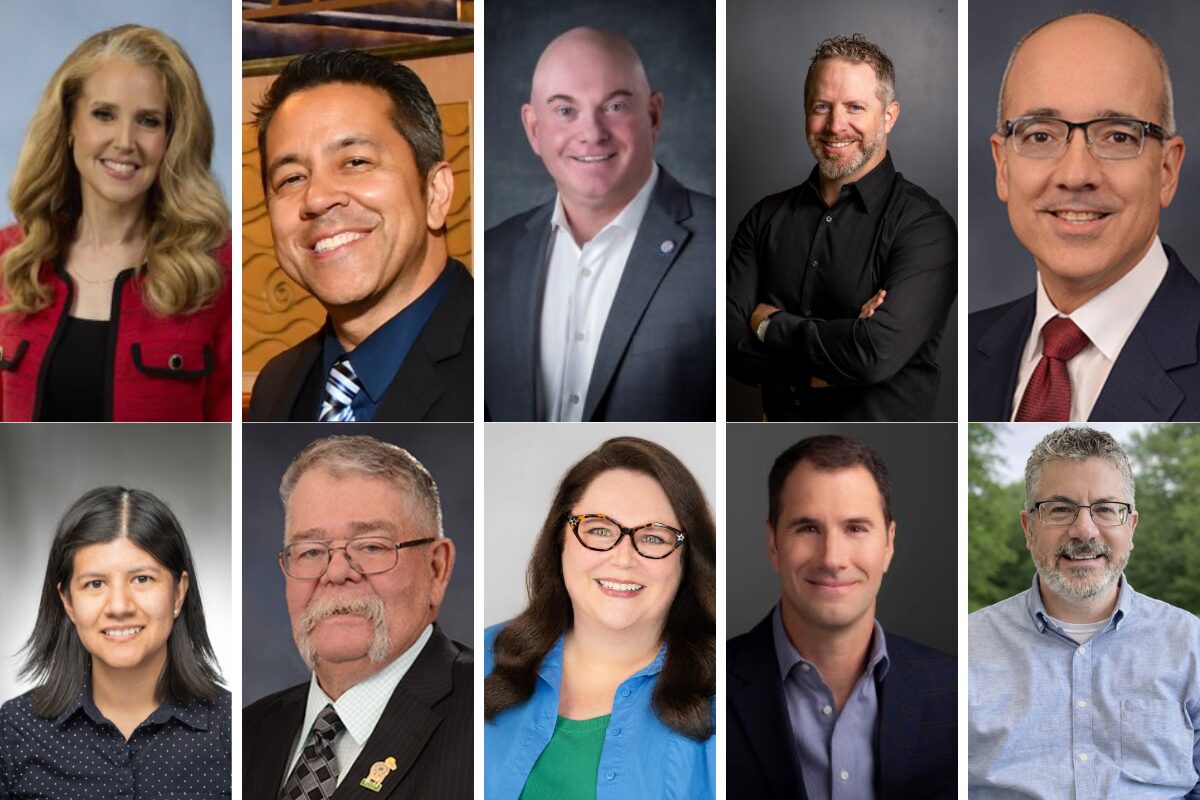
Ten candidates are vying for a spot on the Board of Regents to help shape the future of Nevada's system of public higher education.
The elections come as the system is confronting budget challenges, prompting the board to increase tuition, a move opposed by many students. Higher education institutions are facing scrutiny from the Trump administration, including efforts to quash diversity, equity and inclusion work, which led the board to recently consider eliminating a committee related to this work, though the vote was postponed.
What does the board do?
The Board of Regents governs the Nevada System of Higher Education, which is composed of two doctoral-granting universities, a state university, four comprehensive community colleges and one environmental research institute that serve a total of 100,000 students.
There are 13 elected regents. Together, they decide on policies and approve budgets for the system. They also oversee and hire the institutions' presidents and the system's chancellor.
Regents serve six-year terms, but starting in 2029, it will be reduced to four years because of a 2023 bill (AB118) to bring the terms in line with those of other elected officials. They can serve for up to 12 years.
The bill will also reduce the size of the board to nine in an effort to increase collaboration through a tighter group.
Under state law, regents receive a base salary of $80 for each official meeting they attend. They also receive up to $2,500 a year in a hosting account that they can use to cover business-related expenses and activities directly related to regents' work, such as meals, beverages and small gifts. They are also entitled to a per diem allowance of up to $60.
Each regent must be a resident of the district they are elected to represent and be registered to vote in that district.

Five races
In the District 2 race, incumbent Jennifer McGrath, an attorney who was appointed to the board in 2025 by Gov. Joe Lombardo (R), is running against Patrick Villa, a math professor at the College of Southern Nevada who has previously served on the college's faculty senate and chair of its math department and business department.
In the District 3 race, incumbent Byron Brooks, a managing partner at a bail bonds service in Las Vegas who was elected in 2020, is facing Erik Swendseid, principal of a Las Vegas architecture firm.
The District 5 race features Mo Denis, who served as a Democratic state lawmaker for nearly two decades, and Stephanie Molina, a program coordinator at Nevada State University, where she works on economic and workforce development. The seat is currently held by Patrick Boylan, who came in fourth place out of six primary candidates. Boylan faced calls to resign in 2024 after referring to female transgender athletes as "men masquerading as women."
The District 10 race includes the incumbent, Joe Arrascada, a retired Department of Veteran Affairs worker who was elected to the board in 2020 and co-owns a local community service agency in Reno, and Peter Reed, the director of the Sanford Center for Aging in the UNR School of Medicine and as professor of community health sciences.
Villa, Molina and Reed are NSHE employees, and while there's nothing preventing them from serving on the board while also employed at a public college, it's been previously questioned whether the practice creates a conflict of interest. One current regent, Jeffrey Downs, is a professor at Western Nevada College in Carson City.
All three candidates said they wouldn't step down from their roles if elected but would recuse themselves from voting on certain issues
Comparing the candidates' views
The Nevada Independent is taking a new approach to inform readers about the candidates running for state Legislature: A survey asking candidates to rate their agreement with a series of policy statements, with the option to elaborate on their answers.
Use the tools below to see how the candidates responded. (Note: McGrath did not respond to the survey.)
The Board of Regents made the right choice in January when they voted to increase tuition at Nevada higher education institutions to cover a more than a $40 million budget gap primarily attributed to faculty pay raises.
Villa: "The decision to raise tuition was done without enough discussion and options for alternative ideas. The Board should have asked for multiple options with one of them being the full tuition raise. Prior to this, there could have been more internal discussions and directives asking each institution to look into cutting some less essential programs or expenses while the budget shortfall happened."
The Board of Regents should eliminate its Inclusion, Diversity, Equity and Access committee.
Villa: "Just because there was no business last year is not enough of a reason to eliminate it. There is always work to be done, and some assignments could have been given to the committee to continue working on something. The charge/name could have been altered as well there is a fear of federal repercussions. More input from the stakeholders should take place before a final decision is made."
The Board of Regents should expand collective bargaining rights to university faculty and graduate student workers.
Villa: "Realize that collective bargaining rights does not mean everyone will get pay increases or that the system will go broke. It means there is a formal negotiation process and the Board still has the final call on approval of any such contracts. Give the groups the option to voice their concerns and desires rather than appear to ignore their workers."
If the state worker health insurance program continues raising healthcare premiums and cutting benefits, the Board of Regents should look for an alternative insurance plan to bring down costs and provide better coverage for Nevada System of Higher Education faculty and staff.
Villa: "With the size of NSHE, there really must be alternative options that can be negotiated for all workers. This has slowly become a problem over the years and shows no sign of improving. When one side knows this is a monopoly, they have no reason to move the needle toward the middle. An alternative will be a win-win for everyone in the state."
On tuition increase.
Brooks: "I opposed the increase because students should not shoulder a broad structural budget gap. Faculty compensation and student services matter, but tuition should be a last resort. Nevada needs sustainable state investment, greater budget transparency, and funding formula reform to protect affordability, access, and student success."
Swendseid: "While we need to make up budget shortfalls, I'd hate for this tuition increase to reflect poorly on the expected value of an NSHE education. It shouldn't be a race to the bottom in terms of tuition costs, so as long as costs are tracking appropriately, I can handle an incremental increase. The goal is obviously sustainable and predictable budgets and revenue, I'd like to explore that potential."
On diversity committee.
Brooks: "I support sunsetting the committee, along with other committees that have not produced actionable items for the full Board or could be consolidated for greater efficiency. Student opportunity, success, access, and measurable outcomes should be addressed across the Board, not confined to a standalone committee."
Swendseid: "I think there is a need for making sure that we are providing value and potential to all Nevadans with the ambition for greatness. With that, we need to be sure that a balance is struck between the best interface the institutions have with the community and what might become unsustainable, subsidized support. The opportunity for the best ideas and talent to rise to the top is paramount."
On collective bargaining rights.
Brooks: "I support each campus to determine whether collective bargaining is appropriate. Rather than imposing a one-size-fits-all mandate, campus level decisions and constructive employee engagement should be recognized. Any expansion should be implemented in a way that protects institutional stability, and education quality."
Swendseid: "For full time faculty, I support the right to bargain for the sake of fairness. I don't want to see a search for leverage on either side to continue to overshadow the main goals of the institutions. If a party is overreaching its position, I think a strong board and president should be able to govern to a fair position with the whole of the matter in mind."
On healthcare benefits.
Brooks: "Rising premiums and reduced benefits can undermine faculty and staff retention. The Board should carefully evaluate all viable options, including alternative plans, using independent cost, coverage, provider access, and transitions analyses. The goal must be affordable, reliable coverage, not change for the sake of change."
Swendseid: "As for most things, I don't want costs to be a race to the bottom. I do want to be comfortable that value is being maintained for the bulk of people. Obviously there is no perfect fit for everyone, but if it's not a good fit for most, that is pretty telling that a move is necessary."
On tuition increase.
Denis: "Students should not be the first place NSHE looks to close a budget gap. As a legislator, I worked to expand access to higher education, including creating the Nevada Promise Scholarship. As Regent, I would pursue efficiencies, savings and alternative revenue sources before placing another burden on students."
Molina: "Students should not be the default solution to structural budget problems. Before raising tuition, NSHE should reduce unnecessary executive and administrative layers and give institutions more flexibility to compete on price."
On diversity committee.
Denis: "Diversity and inclusion efforts are important when they remove barriers to student access, affordability and success. The Board should evaluate whether programs are effective and producing results, but eliminating the committee would not address the barriers preventing some students from succeeding."
Molina: "I would strengthen the committee, not eliminate it. If its name has become a distraction, rename it while preserving the work: access, legal compliance, fairness, measurable outcomes. I would also push for stronger ex officio participation from every NSHE institution so the committee is practical, accountable, and systemwide."
On collective bargaining.
Denis: "I supported collective bargaining efforts during my legislative service and believe faculty and other NSHE employees should have a meaningful voice in their working conditions.."
Molina: "All workers deserve a meaningful voice in their working conditions. I previously participated in an effort to unionize graduate students. As a regent, I would listen to workers, respect their right to organize, and work alongside them as they build campus support and pursue collective bargaining — there is a real opportunity for a ballot initiative here with support from our local unions."
On healthcare benefits.
Denis: "Faculty and staff deserve affordable, quality health coverage. If the state plan continues to raise costs or reduce benefits, I would support examining alternatives. Any proposal should be evaluated carefully based on cost, coverage, provider access and long-term sustainability for employees and NSHE."
Molina: "I would not commit to leaving PEBP without evaluating the alternatives. Rising premiums and reduced benefits cannot be the default, especially when employees already face limited opportunities for COLA and merit increases compared to other agencies."
On tuition increase.
Goicoechea: "We didn't have any choice on that. They had put a 21 percent COLA [cost of living adjustment] in. You've got to balance the budget."
Lane: "I understand there was a gap that needed to be addressed during that vote. However, I'm not sure why it went unaddressed for so long. Also, finding out that the predictable pricing inflation increases were going to be compounded on the per credit charges just seem like unacceptable increases."
On diversity committee.
Goicoechea: "I do think that the DEI and the Access Committee probably could be streamlined, maybe even combined [with another committee]. But no, we can't do away with it."
Lane: "I know they eliminated the wording in most of their documents, but assured the students it would still remain open and active. If that's what was promised, they need to keep their word."
On collective bargaining rights.
Goicoechea: "I believe in collective bargaining … but the problem we run into with state government is there's no such thing as binding arbitration."
Lane: "If anyone wants to join a union, they should be free to. However, they should be aware of both the pros and cons, esp. [especially] when it comes to being a new member."
On healthcare benefits.
Goicoechea: "I sat on the PEBP [Public Employees Benefits Program] board when I was in the Legislature … and it's got a host of problems. PEBP is broke. It's expensive. The benefits aren't worth a damn." Goicoechea also said in an interview that state leadership and the Legislature need to revisit the state health insurance program.
Lane: "If you don't take care of your health, you can't be your most effective when teaching students. If the cost is prohibitive, alternatives should be explored."
On tuition increase.
Arrascada: "This was a difficult vote. I voted for the tuition increase to help Nevada's colleges and universities retain high-quality educators and staff. However, I opposed additional fee increases that would place too great a burden on students and families."
Reed: "With COLA, the Regents didn't have a choice. Education is funded with state support, tuition, grants and gifts. When state funding is insufficient to even maintain the programs available to students, the Regents' only lever to balance the budget is tuition. The legislature should ensure Nevada has well-funded colleges and universities, without placing undue burden on students and their families."
On diversity committee.
Arrascada: "The IDEA committee is a critical component. I have chaired the IDEA committee, I seconded the motion to NOT sunset the committee, and I continue to support the IDEA mindset that we are striving to infuse in all our board work."
Reed: " This diversity is, no doubt, a strength. NSHE should show a formal commitment to inclusion and belonging. It should offer resources to those needing support to pursue their goals."
On collective bargaining.
Arrascada: "I believe all workers need and deserve a seat at the table. I am open to reforming the current process, but the system is unique and it is unclear how more traditional collective bargain rights would apply in this unique system."
Reed: "I do not believe there should be any policy or procedural barriers to collective bargaining, and I will support employees' right to organize, when they choose to do so."
On healthcare benefits.
Arrascada: "Nevadans in general and NSHE staff in particular are concerned about affordability especially when it comes to medical costs. I am strongly in favor of keeping any option on the table that reduces costs and increases coverage and benefits."
Reed: "As a professor of public health, I strongly believe that all people should have full access to readily available, high-quality healthcare, as well as community-based supports and services. The Regents should pursue any opportunity to offer faculty and staff access to the health resources they need."
This article was updated at 9/22/26 at 9:26 a.m. to correct one of Patrick Villa's responses. He answered mostly yes on whether the Board of Regents should explore alternative healthcare plans.
Support Independent Elections Coverage and Journalism in Nevada
You’ve enjoyed unlimited access to our reporting because we’re committed to providing independent, accessible journalism for all Nevadans.
But sustaining this work — informing communities, holding leaders accountable, and strengthening civic life — depends on readers like you.
Nevada needs strong, independent journalism. Will you join us?
A gift of any amount helps keep our reporting free and accessible to everyone across our state and funds our elections coverage.
Choose an amount or learn more about membership