
'One of the most difficult decisions': Nevada's higher ed leaders lament tuition increase

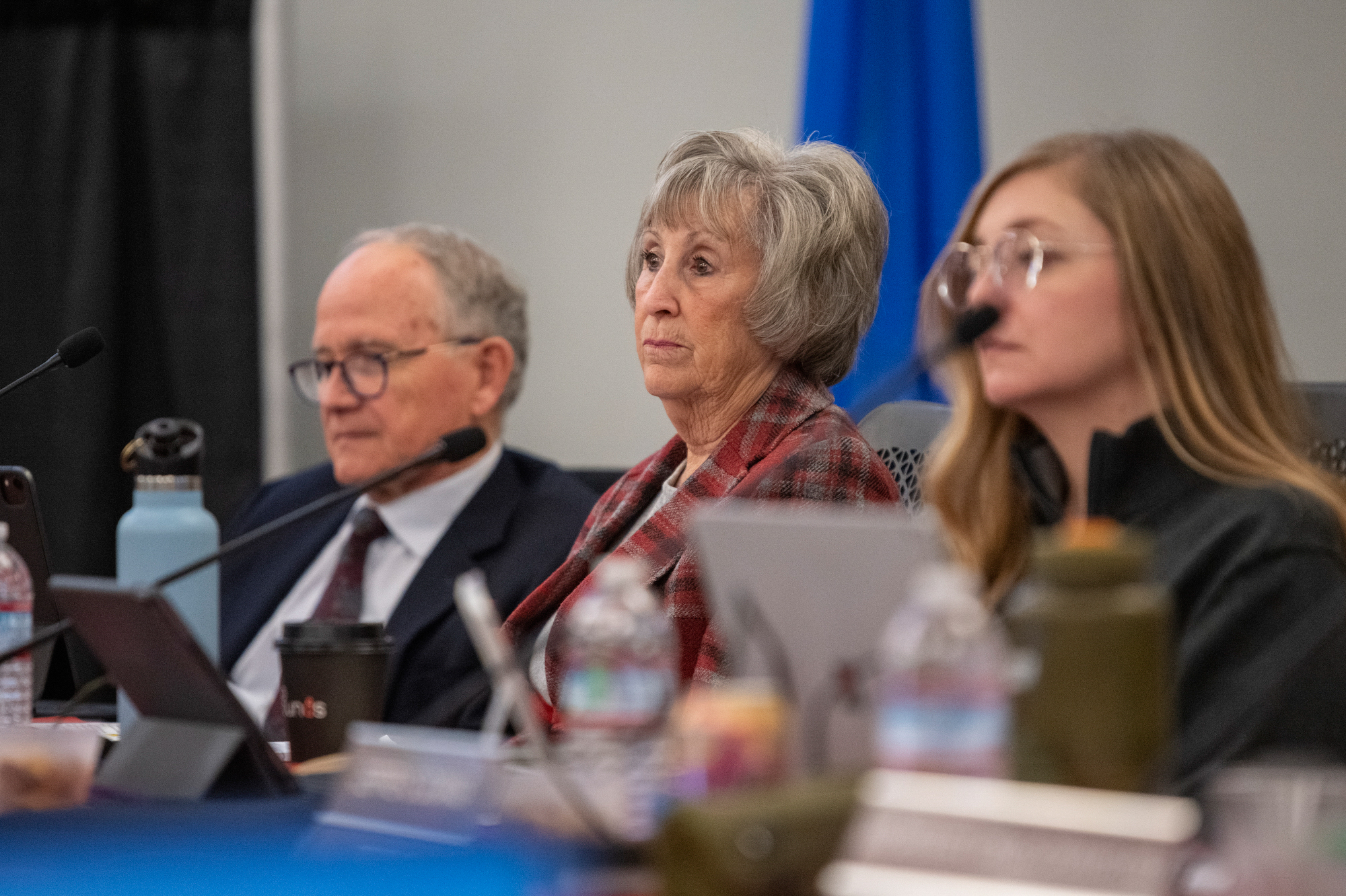
Officials who backed a tuition increase of between 9 percent and 12 percent at Nevada's eight public higher education institutions described the move, approved Friday, as difficult but their best hope to avoid cuts to faculty positions and academic departments.
The regents voted 8 to 5 in favor of the proposal. The hikes will take effect over the next three years and will cover a systemwide annual budgetary shortfall of $46.5 million.
Representatives of the Nevada System of Higher Education, which proposed the hike in the fall, argued at Friday's meeting that the state's colleges and universities will remain affordable and competitive even after the tuition increase.
"We don't make this recommendation lightly," System Chancellor Matt McNair said, "but this is the best we can do in terms of balancing value and affordability."
McNair cited statistics showing that students at Nevada's four-year universities have the second-lowest net tuition amounts nationwide. With the increase, Nevada will still rank somewhere between third and fifth in net tuition, or the average amount students pay after scholarships and financial aid are factored in.
Regents were also presented with scaled-back options, including delaying the hike to fall 2027 or reducing the percent increase.
But Chris Viton, the system's chief financial officer, emphasized that if schools received money later or received less money overall, they would be forced to temporarily or permanently eliminate hundreds of staff positions and reduce class offerings to students.
Regent Jeffrey Downs, who voted against the tuition hike, said he was "disturbed" by system leaders' arguments that the alternative plans required cutting academic programming.
"Students pay for classes and that generates revenue for the schools," Downs said, suggesting that the milder tuition increases could have saved money by cutting executives' salaries instead. "This seems like a punishment to students. Why would we cut the revenue-generating portions?"
What the vote means
The proposal authorized Friday will increase tuition by 12 percent for full-time students at four-year institutions or in upper-division courses at community colleges and by 9 percent for full-time students in lower-division courses at community colleges.
At UNR and UNLV, undergraduate students from Nevada will need to pay an extra $1,200 annually. Out-of-state undergraduate students will pay an extra $3,800 annually.
Those costs come on top of an existing 12.6 percent tuition hike, also phased in over the next three years, that is meant to help the system keep pace with inflation rather than covering any new costs.
Students who gave public comments during Friday's meeting or spoke to The Nevada Independent expressed dismay at the vote, arguing that the state's colleges and universities were already too expensive for some families.
"For many, it will not just make college harder but make higher education feel out of reach," said Nevada State University (NSU) student Stephanie Flores.
Andrew Cirincione, the president of the UNR College Democrats, told The Indy in December that to afford his tuition payments, he works a part-time job while also taking a full courseload. Many of his friends do the same.
"The thought of increasing tuition to make up for the government's unbalanced state budget doesn't seem like a fair trade," Cirincione said. "Students are bearing the brunt of the decisions that our elected leaders are making, at a time when there's already so much uncertainty in higher education."
In a statement provided to The Indy, the Nevada System of Higher Education wrote that "students are at the center of every decision we make" and that system leaders were focused on making education "accessible to every Nevadan."
Budget woes in Nevada higher ed may continue
Financial issues facing the state's higher education system will not be permanently resolved by Friday's vote, in part because of accelerating inflation and the Trump administration's pauses on some federal grants. Higher education institutions receive a slight plurality of their funding from state governments, but dollars from the federal government and students' tuition payments also play a significant role.
The tuition hike was proposed in part to cover historic increases in faculty cost of living payments authorized in 2023 and 2024.
During last year's legislative session, state lawmakers approved nearly $60 million in bridge funding to cover a portion of these cost of living adjustments. That funding expires in fiscal year 2028.
Most of Nevada's higher education institutions will not be affected by this expiration thanks to the additional revenues they will receive from the tuition hike. But UNR will face a $2 million funding shortfall in 2028.
But some faculty members believe Nevada's higher education leaders could be more transparent around the system's budgetary issues and better explain why they settled on a tuition hike as their solution.
Staci Walters, president of Nevada's higher education faculty union and a professor at College of Southern Nevada, told The Indy: "Nobody has a clear understanding of the budget and how money is allocated."
Following this article's publication, Walters elaborated on her comments, adding that there is a lack of transparency around how leaders of the system and its institutions spend their funds. "NSHE has been unwilling to undergo a true, third-party audit of the system," Walters wrote, with spending decisions left to "very few executives."
Walters also said that while she doesn't hold system leaders accountable for budgetary issues, she felt frustrated that funding gaps are often blamed on costs associated with faculty.
"It makes us sound like we are overpaid," Walters said, when faculty hadn't received a cost of living adjustment in more than a decade.
At Friday's meeting, higher education leaders stressed that the faculty pay adjustments were only one reason why approving the tuition hike was critical. They also pointed to additional costs weighing on higher education budgets in Nevada, such as food and housing assistance for students, merit funding for faculty and cybersecurity investments.
"This is probably going to be one of the most difficult decisions I've made, going into my 10th year on this board," said Regent Carol Del Carlo, who voted yes on the tuition increase but suggested the higher education system needed to rethink its long-term budgeting.
"We have to bring in an outside consultant to really do a shakedown on this," Del Carlo said.
This story was updated at 2:33 p.m. on Feb. 2, 2026, to correct the description of Staci Walters' employer and to include new, written comments from Walters about the NSHE budget.
Support Independent Elections Coverage and Journalism in Nevada
You’ve enjoyed unlimited access to our reporting because we’re committed to providing independent, accessible journalism for all Nevadans.
But sustaining this work — informing communities, holding leaders accountable, and strengthening civic life — depends on readers like you.
Nevada needs strong, independent journalism. Will you join us?
A gift of any amount helps keep our reporting free and accessible to everyone across our state and funds our elections coverage.
Choose an amount or learn more about membership