2-Minute Preview: Pre-existing condition protections, same-day voter registration up for hearings


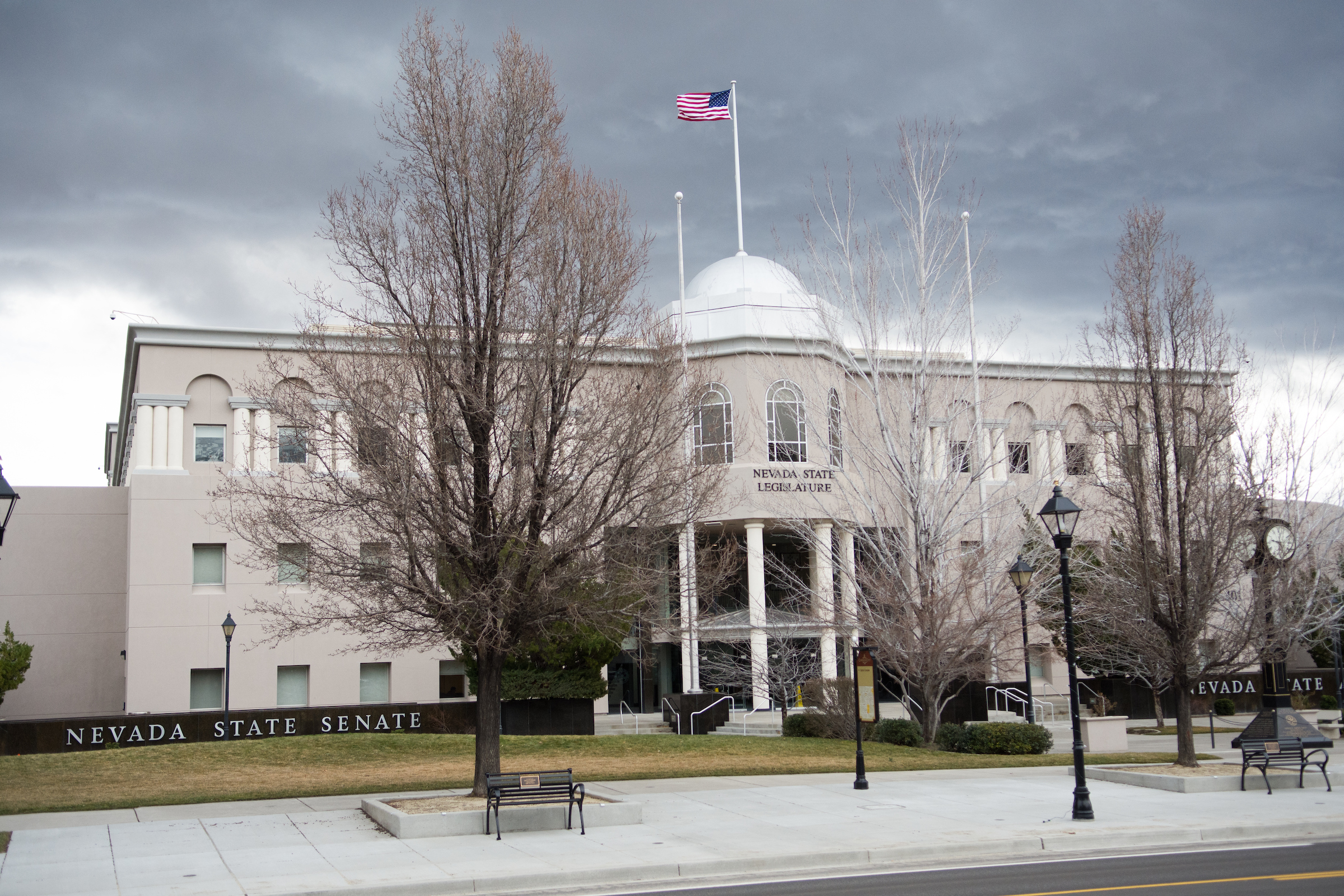
Lawmakers are back to normal business Wednesday after the resignation of Senate Majority Leader Kelvin Atkinson — who admitted to misappropriating campaign funds in an emotional speech on the Senate floor — largely overshadowed the prior day's proceedings.
Bills that would codify the Affordable Care Act's protections for people with pre-existing conditions into state law, protect victims of sex trafficking and make changes to the way the state oversees opioid prescriptions are all up for hearings. A proposal to allow voter registration on Election Day and extend early voting through the Sunday before the election will also receive a hearing.
For more information on the status of bills working their way through the Legislature, check out The Nevada Independent's bill tracker. And for the bills in committee today, check out the Legislature's website for committee times and links to watch live committee meetings and floor sessions.
Here's what to watch for on Wednesday at the Legislature:
AB157 & AB158: Human trafficking protections
Two bills sponsored by Republican Assemblyman John Hambrick designed to protect victims of sex trafficking are scheduled for hearings in the Assembly Judiciary Committee.
The first, AB157, requires law enforcement to inform victims of human trafficking of any possible victim compensation, requires the state Health and Human Services department to put together a plan to service victims of human trafficking and for owners of mass transit facilities, rest areas, truck stops or any area previously cited for prostitution to place information and an emergency hotline for possible human trafficking victims.
Members of the committee will also hear details of AB158, which allows a court to depart from mandatory minimum sentencing or suspend portions of a sentence if a juvenile charged for a crime as an adult is found to have committed the offense against a person who was sex trafficking or sexually assaulting them.
The bills will be presented remotely by Hambrick from Las Vegas; the former speaker has been absent from Carson City for the first weeks of the session while recovering from knee surgery.
The committee is scheduled to meet at 8 a.m.
SB244: Criminal penalties for violating restraining orders
A bill proposed by newly crowned Senate Majority Leader Nicole Cannizzaro would create a misdemeanor penalty for people who violate certain restraining orders.
SB244, which is scheduled for a hearing in the Senate Judiciary Committee, would increase penalties for violating a "stay away" order from a $500 maximum fine or 25 day imprisonment to a criminal misdemeanor. The bill defines a "stay away" order as any court order requiring a person stay away from a certain home, school, business, place of employment or contacting a family member or the individual who filed the order.
The committee is scheduled to meet at 8 a.m.
SB127: More Clark County Commissioners
Proposed by Democratic Sen. David Parks, SB127 would increase the number of county commissioners in Clark County from seven to nine.
The bill, which will be heard by the Senate Committee on Government Affairs, would require the change to be made by the 2022 election and require the existing County Commission to amend district maps to include the two new seats.
In a fiscal note, Clark County said implementing the bill would cost more than $3.8 million over the next three fiscal years in both salary costs and required construction and technology costs for the two new commissioners. The county estimated that the salary and benefits of the two new commissioners would cost around $1.3 million every two years of the budget cycle.
The committee is scheduled to meet at 1 p.m.
AB181: Sick worker protections
Proposed by Democratic Assemblyman Alexander Assefa and co-sponsored by more than two dozen fellow Democrats, AB181 would clarify that an employer is prohibited from requiring an employee to be physically present prior to calling in sick or if they're injured and cannot work.
The bill, which is scheduled for a hearing in the Assembly Commerce and Labor Committee, still allows employers to require their employees notify them in general if they're sick or injured, and show up with a physician's note documenting their sickness or injury upon return to work. The bill also creates a $5,000 administrative penalty for employers who violate the law.
The committee is scheduled to meet at 1:30 p.m.
AB49: Prescription opioid oversight
This bill, sponsored by the attorney general's office, makes several changes relating to the oversight and regulation of prescription opioids.
The legislation would require the chief medical officer to upload information about drug overdoses to the state's prescription drug monitoring database, which tracks the dispensing of controlled substances. It also makes a change to when law enforcement officers must upload information to the database, requiring officers to only report when they arrest someone for a violation involving a prescription controlled substance or receive a report of a stolen prescription for a controlled substance, and removes the requirement that coroners and medical examiners upload information to the database.
The legislation also allows the Board of Pharmacy, which runs the prescription drug monitoring database, to terminate any occupational licensing board's access to the database if they access it for an unauthorized purpose and allows the board to suspend or revoke a prescriber's registration to dispense controlled substance if they violate certain requirements. Those include failure to comply with requirements relating to the program and failing to obtain a patient utilization report before issuing certain prescriptions.
The bill will be heard by Assembly Health and Human Services at 1:30 p.m.
SB235: Codifying protections for pre-existing conditions into state law
The Senate Health and Human Services Committee has sponsored a bill to copy protections for pre-existing conditions currently in the Affordable Care Act into state law as the federal health care law faces ongoing challenges in the court system. Last year, a federal court judge ruled the entire health-care law unconstitutional following Congress's effective repeal of the individual mandate penalty that required people to purchase health insurance or face a fine.
The legislation will require all insurers to offer health insurance coverage even if someone has a pre-existing condition, prohibit insurers from denying, limiting or excluding a benefit based on the condition and bar them from charging a higher premium, deductible, coinsurance or copay based on the condition. The three provisions are known as guaranteed issue, pre-existing conditions exclusions and community rating, respectively. (To date, Nevada has only codified the community rating provision.)
Both Republicans and Democrats alike have expressed their support for codifying the Affordable Care Act's protections for people with pre-existing conditions — the most popular portion of the federal health-care law — into state law. Gov. Steve Sisolak also campaigned on protecting people with pre-existing conditions.
The bill will be heard at 4 p.m. in Senate Health and Human Services.
SB192: Office of the Ombudsman for Hospital Patients and minimum health benefits
This bill, sponsored by state Sen. Pat Spearman, would primarily create the Office of the Ombudsman for Hospital Patients within the Division of Aging and Disability Services to advocate for hospital patients. The ombudsman would be required to train advocates to receive and investigate complaints made by patients and review hospital practices, policies and procedures.
Expenses for the office would be paid from money received from the licensing of medical facilities and so-called facilities for the dependent, a category that includes group homes and transitional living facilities. The office would also be allowed to impose administrative fines for interfering with investigations initiated by the ombudsman or an advocate who works in the office.
The bill also establishes a minimum level of health benefits an employer is required to make available to their employees — such as maternity and newborn care, prescription drug coverage and mental health care — for the purposes of determining whether the employer is required to pay a $7.25 or $8.25 minimum wage. Under current law, employers that offer health plans to employees must pay them a $7.25 an hour minimum wage, while those that don't are required to pay a $8.25 an hour wage.
The bill will be heard in Senate Health and Human Services at 4 p.m.
SB123: Same-day voter registration and extended early voting
The Senate Legislative Operations and Elections Committee will a hear a bill it sponsored to allow voters to register to vote in person on the day of the primary or general election at certain designated polling places. The legislation would also extend early voting through the Sunday before Election Day instead of ending on the Friday before it.
In order to register to vote on Election Day, individuals would be required to complete a voter registration application at the polling site and provide proof of identity and residence. Once they do, they would be considered eligible to vote in the election only at that polling place where they registered.
The secretary of state's office estimates that implementing a voter registration system centralized at the state level would cost the state between $3 million and $6 million for an off-the-shelf voter registration system with ongoing maintenance costs of about $1.6 million every two years or $4.8 million total for an internally developed system. If the ballots are simply cast provisionally, the office estimates no fiscal impact.
The counties have also estimated that implementing the changes will collectively cost them hundreds of thousands of dollars. Washoe County, which provided a line-by-line breakdown of its cost estimates, anticipates that the same-day registration provision will cost it about $330,000 total while the early voting measure will cost them $450,000 in the first year and $90,000 in future two-year budget cycles.
The bill will be heard at 4 p.m.
Support Independent Elections Coverage and Journalism in Nevada
You’ve enjoyed unlimited access to our reporting because we’re committed to providing independent, accessible journalism for all Nevadans.
But sustaining this work — informing communities, holding leaders accountable, and strengthening civic life — depends on readers like you.
Nevada needs strong, independent journalism. Will you join us?
A gift of any amount helps keep our reporting free and accessible to everyone across our state and funds our elections coverage.
Choose an amount or learn more about membership