
ACLU loses challenge against Clark County's 'selfie ban' on pedestrian bridges

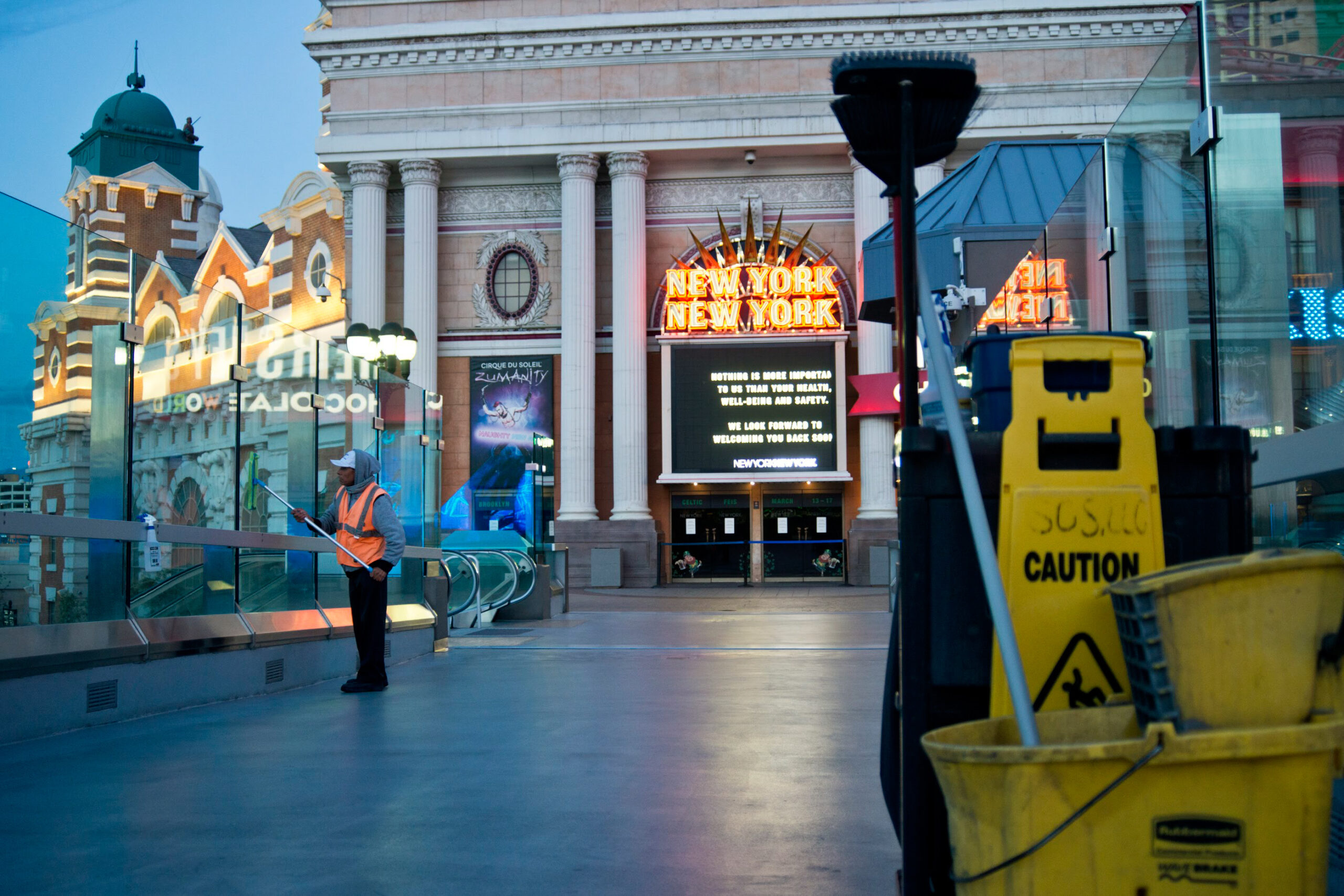
A district court judge has denied an American Civil Liberties Union (ACLU) challenge to Clark County's ban against stopping, standing or blocking a pedestrian bridge on the Strip.
Judge Jennifer Dorsey ruled on the 2024 ordinance, also dubbed the "Strip Selfie Ban," which made it a misdemeanor to "stop, stand, or do something to cause someone to stop or stand" while on the pedestrian bridges overlooking the Las Vegas Strip. Dorsey, who ruled on Sept. 25, said the ordinance did not prevent or interfere with anyone exercising their constitutional or civil rights.
"It is difficult to predict when large crowds may be on the pedestrian bridges — particularly in light of the numerous large concerts, sports events, and conferences held on the Strip on any given day," Dorsey said in her ruling.
The Clark County Commission passed the ordinance in January 2024 and a month later, the ACLU of Nevada challenged it on behalf of Lisa McAllister, a woman with a spinal cord disability who is wheelchair-bound, and Brandon Summers, a street performance artist. The ACLU argued the ordinance was the "most extreme regulation brought forward in years" and unconstitutionally overbroad.
If prosecuted, violators could face a misdemeanor charge that can result in up to six months in prison or a $1,000 fine.
Athar Haseebullah, executive director of the ACLU of Nevada, said the ACLU filed an appeal against Dorsey's decision Monday, which Haseebullah said he hopes would go to the 9th U.S. Circuit Court of Appeals.
According to Haseebullah, the ordinance is a way to prohibit First Amendment protection in public space. He said the ordinance's attempt to stop pedestrians "for just a brief moment" was an attempt to target innocuous conduct.
"There's enough actual real crime to solve, versus the potential manufacturing of crime to potentially target people on a publicly funded bridge that taxpayers continue to pay for," Haseebullah said.
In the ruling, Dorsey acknowledged that the ordinance was fairly restrictive.
"Could the government have proposed a less restrictive prohibition based on time of day or bridge location? Sure," Dorsey wrote in her ruling. "Could it have targeted sleeping or sitting on the bridges? Yes."
However, she still found that it "does not substantially burden speech and is not broader than necessary to achieve the government's interest."
Jennifer Cooper, a spokesperson for Clark County, said the county was appreciative of the judge's decision, and for "upholding the constitutionality of the County's ordinance which protects public safety in the resort corridor while balancing the rights of the public."
Support Independent Elections Coverage and Journalism in Nevada
You’ve enjoyed unlimited access to our reporting because we’re committed to providing independent, accessible journalism for all Nevadans.
But sustaining this work — informing communities, holding leaders accountable, and strengthening civic life — depends on readers like you.
Nevada needs strong, independent journalism. Will you join us?
A gift of any amount helps keep our reporting free and accessible to everyone across our state and funds our elections coverage.
Choose an amount or learn more about membership