
Another ethics complaint filed against Lt. Gov. Stavros Anthony

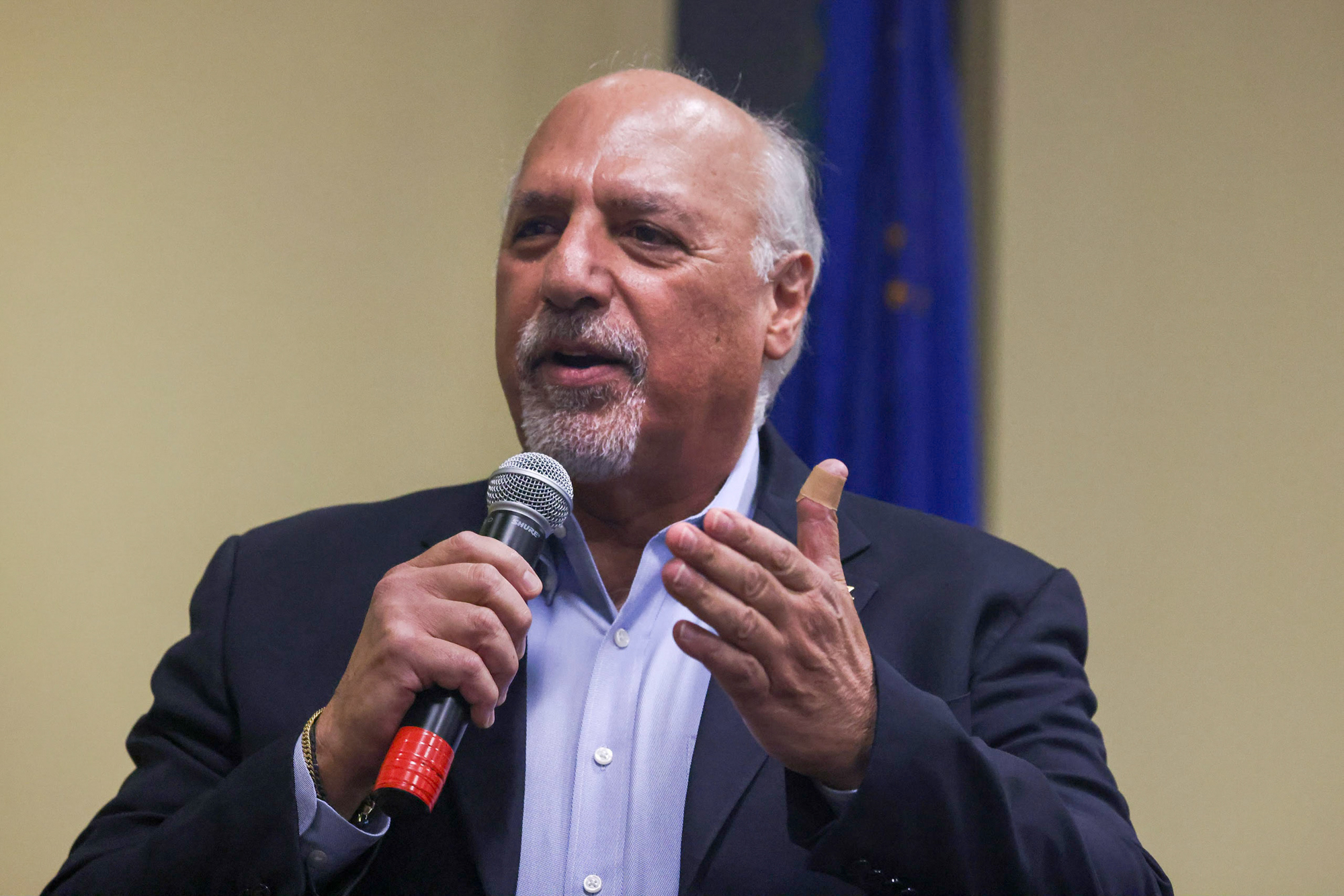
An ethics complaint filed against the Nevada lieutenant governor last week alleges he has been using his office's social media account to promote his book for his personal financial benefit, running afoul of state ethics rules.
The complaint, shared exclusively with The Nevada Independent, contends that Lt. Gov. Stavros Anthony has promoted his newly published book on the social media platform X on a page designed to look like his official lieutenant governor account, including a link to the state's website for his office.
State law prohibits public officials from using their positions — including governmental time, property and equipment — to their personal advantage. The complaint, filed by political consultant and former Executive Director of Planned Parenthood Votes Lindsey Harmon, contends that Anthony's use of social media is a category E felony per a separate state law.
The book, Nights of Fire: An Account of Civil Unrest in Las Vegas During the Aftermath of the Rodney King Trial, was published Nov. 27.
Since the complaint was filed last week, Anthony has tweaked his X account so it no longer links to his government website and instead links to his official campaign account, according to screenshots shared with The Indy.
Anthony's office did not immediately return a request for comment.


Previous screenshots The Indy captured this January also showed that the lieutenant governor was posting campaign endorsements from this same account, including for Clark County Sheriff Kevin McMahill, a potential violation of state ethics law. When asked about the campaign endorsements earlier this month, the lieutenant governor's office told The Indy that the account has been Anthony's personal page since 2012.
The complaint is the latest against Anthony, who has faced mounting scrutiny for using state resources to advance personal agendas. This summer, the state's ethics commission took issue with Anthony for using state resources for a task force that aims at keeping transgender athletes out of women's sports. Instead of continuing proceedings, the panel proposed dismissing the complaint if Anthony completed corrective actions to address the issues.
Those included getting into compliance with ethics law, training for his entire staff and adopting a social media policy for his office that prohibits the use of government accounts to promote political campaigns.
Anthony declined to enter into a deferral agreement, the state's ethics commission confirmed to The Indy. Instead, he requested that the commission further consider the matter.
The complaint process for the state's ethics commission is multifold. The complaint is confidential until the review panel looks at the evidence and determines whether to dismiss the case or move it forward. If found to be in violation of state ethics law, penalties can range from mandatory training, civil penalties upwards of $5,000 or even for a petition for the removal of the public officer.
But just because a complaint is filed does not mean the commission will take action. First, the commission must review a complaint and determine whether there is an ethics issue and a report is made detailing the situation. Moreover, there is no criminal liability for ethics violations.
The lieutenant governor's office has been embroiled in controversy for several months. Earlier this month, The Indy reported that the lieutenant governor ousted a former staffer and replaced her with a prominent conservative activist as he heads into his re-election bid. In November, an ethics complaint against the office's chief of staff, Rudy Pamintuan, was forwarded to the commission for review.
Updated at 10:57 a.m on 1/22/2026 to clarify the state's ethics complaint process
Support Local Journalism
You’ve enjoyed unlimited access to our reporting because we’re committed to providing independent, accessible journalism for all Nevadans.
But sustaining this work — informing communities, holding leaders accountable, and strengthening civic life — depends on readers like you.
Nevada needs strong, independent journalism. Will you join us?
A gift of any amount helps keep our reporting free and accessible to everyone across our state.
Choose an amount or learn more about membership