
Community members are divided on upcoming Clark County school start time changes

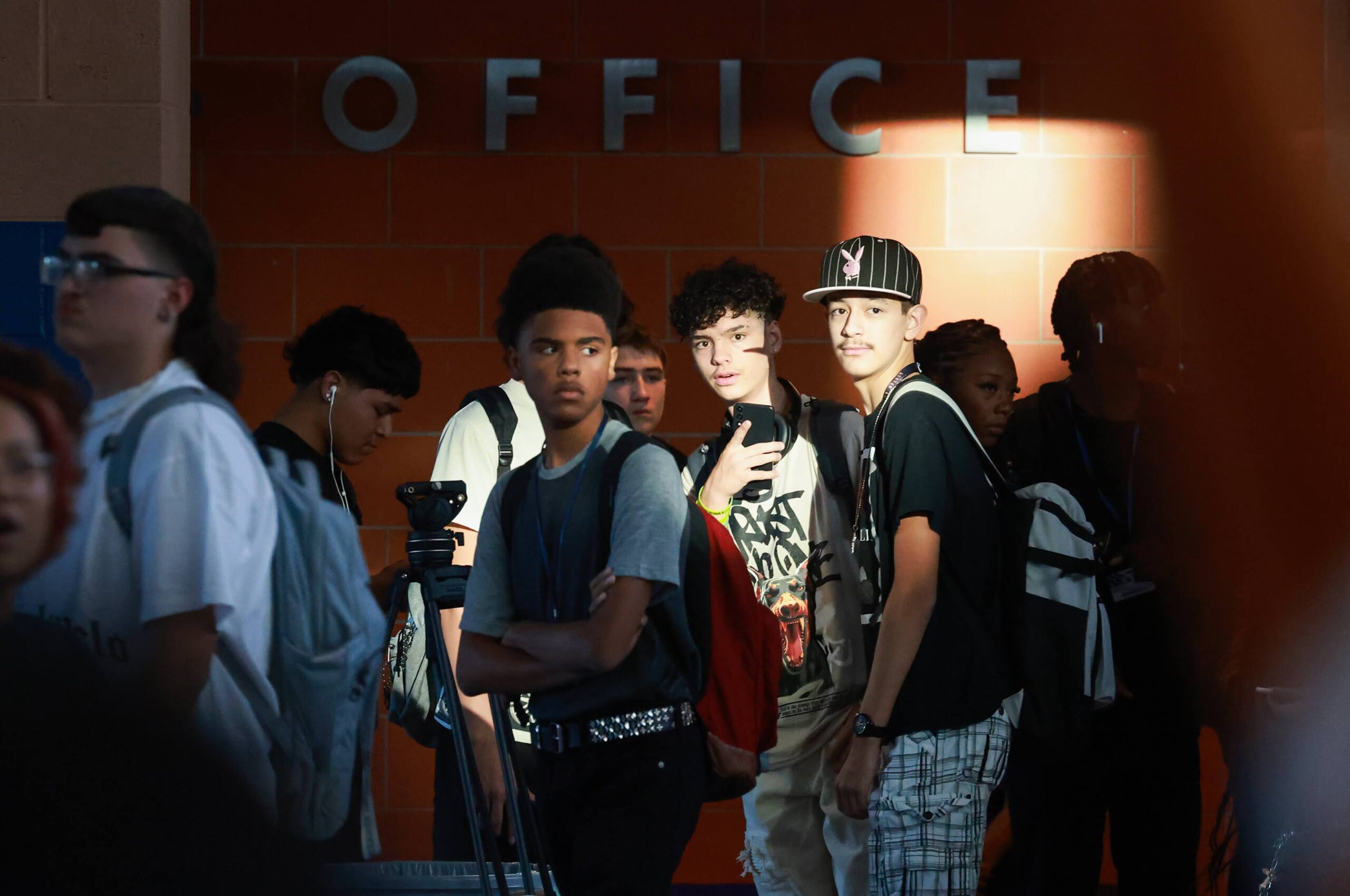
After the Clark County School District (CCSD) announced last Tuesday that school start times will change, many community members have questioned how they were determined for each school level and are concerned about the burden this could place on working parents.
Parents, some who are district staff members, wonder what will happen if they can't move their work schedule to accommodate this shift and what happens to families who can't afford before- or after-school child care.
Generally, most CCSD high schools start around 7 a.m., followed by middle schools around 8 a.m. and elementary schools around 9 a.m.
Superintendent Jhone Ebert announced Tuesday that starting next term, most middle schools will generally start first at 7:30 a.m, followed by high schools at 8:30 a.m. and elementary schools at 9:15 a.m.
During the Clark County School Board's meeting Thursday, the district's Deputy Superintendent of Teaching and Learning Jesse Welsh reiterated to the board that the decision was motivated by research that found starting the day later for high school students reduces their risks of developing anxiety or depression and improves their sleep and academic performance.
The district proposed four scenarios in a December survey. The scenario with the highest overall support was pushing back start times for schools across grade levels by 30 minutes. But Welsh said the district heard from elementary school parents concerned that the shift would mean their students would be arriving home in the dark during standard time.
Welsh said while the scenario the district decided on had the second highest overall support, it was supported by the majority of elementary students and parents across all grade levels, according to the survey.
Trustee Brenda Zamora said parents have asked why the district didn't include a scenario to leave the start times as they are.
Welsh said the district leadership felt strongly that it needed to act.
"You're not going to get a difference in results if you continue to do the same thing that you've been doing," he said.

Reactions
Trustee Isaac Barron, a former high school teacher, attested that it was harder to engage students during a first period class versus a class later in the morning.
"A good number of my students were not fully conscious there at 7 a.m.," he said. "It was like pulling teeth."
Not everyone was excited about the change.
Jeanine Crane, a parent of two high schoolers and one elementary school student, told the board she was concerned that a later dismissal time would disrupt her older children's schedules because they are athletes and work after school. She also wondered whether it would mean they spend less time on homework and with family.
"You discussed that … some practices may even be moved to before school, but if sleep is the priority, then why does it seem to matter less for our athletes," she said.
The district noted that moving practices to the morning would have the added benefit of being cooler during summer months, and student athletes could leave class early for meets and games.
Other parents wrote to the school board saying they were concerned that middle schoolers were going to have to start an hour and half earlier than they typically do.
"When I took the survey, I was for later start times for my teenagers, I am not for earlier start times," wrote Tiffany Wang, who has a seventh grader and an eighth grader, in her written public comment.
Jeremy Heckler, president of the National Education Association of Southern Nevada teachers union, told the board his members were concerned that the new start times would affect their ability to pick up their own kids from school, go to the doctor or serve as a sports coach or club adviser.
"We want the best for our students and their families," he said. "We are in favor of whatever we can do to help our students and see them succeed, but we are also people too."
Laura Jeanne Penrod, a teacher at Southwest Career and Technical Academy, said she was excited to be able to come to work a little later, but students and other teachers are split.
"The reality is, there's never going to be a perfect solution," she said. "I don't know that they could have made a decision that would have made everybody happy."
But Milah Sutton said she was happy to see the district "has followed the science."
"As a parent of current elementary and middle school students, this proposal will require sacrifice and adjustment on our side," Sutton wrote. "However, this is for the good of the overall community."
Shanna Haynie, president of Hickey Elementary School's parent-teacher organization, said she's not sure about what the shift will mean for the school. Hickey currently starts school at 8 a.m. It's among about 60 elementary schools that start before the typical 9 a.m., with the earliest being Booker Elementary School at 7:40 a.m., according to the district's bell schedule for this school year. Other elementary schools start between five and 15 minutes after 9 a.m.
She said it's common for older students from the nearby middle school to drop off their younger siblings before going to their own campus.
"The middle school kids would be going to school almost two hours before the elementary school," she said. "If we have to go to 9:15 a.m., I don't know how a lot of parents are going to get their kids to school just because they depend on those older kids to drop them off."
The district said in an FAQ that the start times that were announced are not exact and there will be some variation based on transportation times. The district expects to release the bell schedule for the next school year in April.
Barron encouraged families to be open to try something different to benefit teens who he said "are wired differently" than the students of a generation or two ago.
"We might find out that we have a little gem here," he said.
News briefs

💵 Governor opts Nevada into a federal program that could raise money for private school costs — Republican Gov. Joe Lombardo announced Friday that he was opting Nevada into the new Federal Tax Credit Scholarship Program created by President Donald Trump's One Big Beautiful Bill Act. It will raise money to fund scholarships for K-12 students to cover education costs, such as private school tuition.
This would make Nevada the 19th state to opt in, according to the American Federation for Children, a conservative school choice advocacy organization.
The program creates a pathway for Lombardo to expand the state's similar scholarship program for private school families. His previous attempts to do so through legislation during the past two legislative sessions have been blocked by the Democrat majority. However, he has had success in other forms of school choice expansion.
While the state's program targets lower-income families seeking private school education and is constrained by a maximum amount of donations set by state statute, $6.65 million, the federal program would have no cap.
The program would provide individuals a dollar-for-dollar tax credit for donations of up to $1,700 per year made to an approved Scholarship Granting Organization (SGO). It will also allow higher-income families to take part.
In addition to private school tuition, the funds can be used to pay for tutoring, special education services and other qualified elementary and secondary education expenses.
The program is scheduled to begin Jan. 1, 2027, and taxpayers will be able to make qualifying contributions to SGOs during 2027 and claim the credit on their 2027 federal income tax return.
Lombardo's office did not immediately respond to an inquiry about whether an SGO has already been selected or for more details about when and how families will be able to apply for funding and how much they could receive.
✋ Lawmaker says implementing bill limiting immigration officials' access to school is crucial — After students were caught in immigration enforcement actions taking place in states such as Minnesota, Senate Majority Leader Nicole Cannizzaro (D-Las Vegas) said it's important to ensure school districts and charter schools are implementing a new law that curtails the ability of the U.S. Immigration and Customs Enforcement (ICE) to act on school grounds.
In a Jan. 16 letter, Cannizzaro asked State Superintendent of Public Instruction Victor Wakefield for an update on what the Nevada Department of Education is doing to implement AB4.
Cannizzaro told The Nevada Independent on Friday that while the state isn't aware of immigration enforcement activity happening in or around a Nevada school, "We can't wait for a dangerous incident to occur.
She is also urging schools to have a plan on what to do if immigration officials show up on a school campus.
"Kids deserve to go to school and … not be worried about what happens if … a raid happens on school grounds, and the trauma that comes from that," Cannizzaro said.
The department shared guidance that was recently issued to schools, with resources related to interactions with law enforcement. Wakefield said in his Jan. 20 response the department "continues to encourage local education agencies to proactively share information with families and educators regarding individual rights and appropriate response protocols."
Reading assignments
😕 Nevada wants to boost attendance rates. Parents say inconsistent rules work against that.
Parents' frustrations about inconsistently applied attendance rules is damaging trust in school districts even as schools have pledged to boost attendance after no-shows soared during the pandemic.
🏫 What are charter schools, and how do they compare to traditional school districts?
These schools have grown in popularity over the years as families look for options that can better meet their student's needs, such as smaller class sizes and more flexibility, than a large school district.
Extra credit
Education Week: In Trump's First Year, at Least $12 Billion in School Funding Disruptions
Chalkbeat Tennessee: Tennessee GOP wants to track K-12 student immigration status
Featured social media post
From U.S. senator to Sparks government class guest speaker. What a neat learning experience.

This article was updated on 1/27/26 at 5:09 p.m. to correct Shanna Haynie's last name.
Support Independent Elections Coverage and Journalism in Nevada
You’ve enjoyed unlimited access to our reporting because we’re committed to providing independent, accessible journalism for all Nevadans.
But sustaining this work — informing communities, holding leaders accountable, and strengthening civic life — depends on readers like you.
Nevada needs strong, independent journalism. Will you join us?
A gift of any amount helps keep our reporting free and accessible to everyone across our state and funds our elections coverage.
Choose an amount or learn more about membership