Nonpartisans are surging in Nevada. Is a recent policy change the reason?

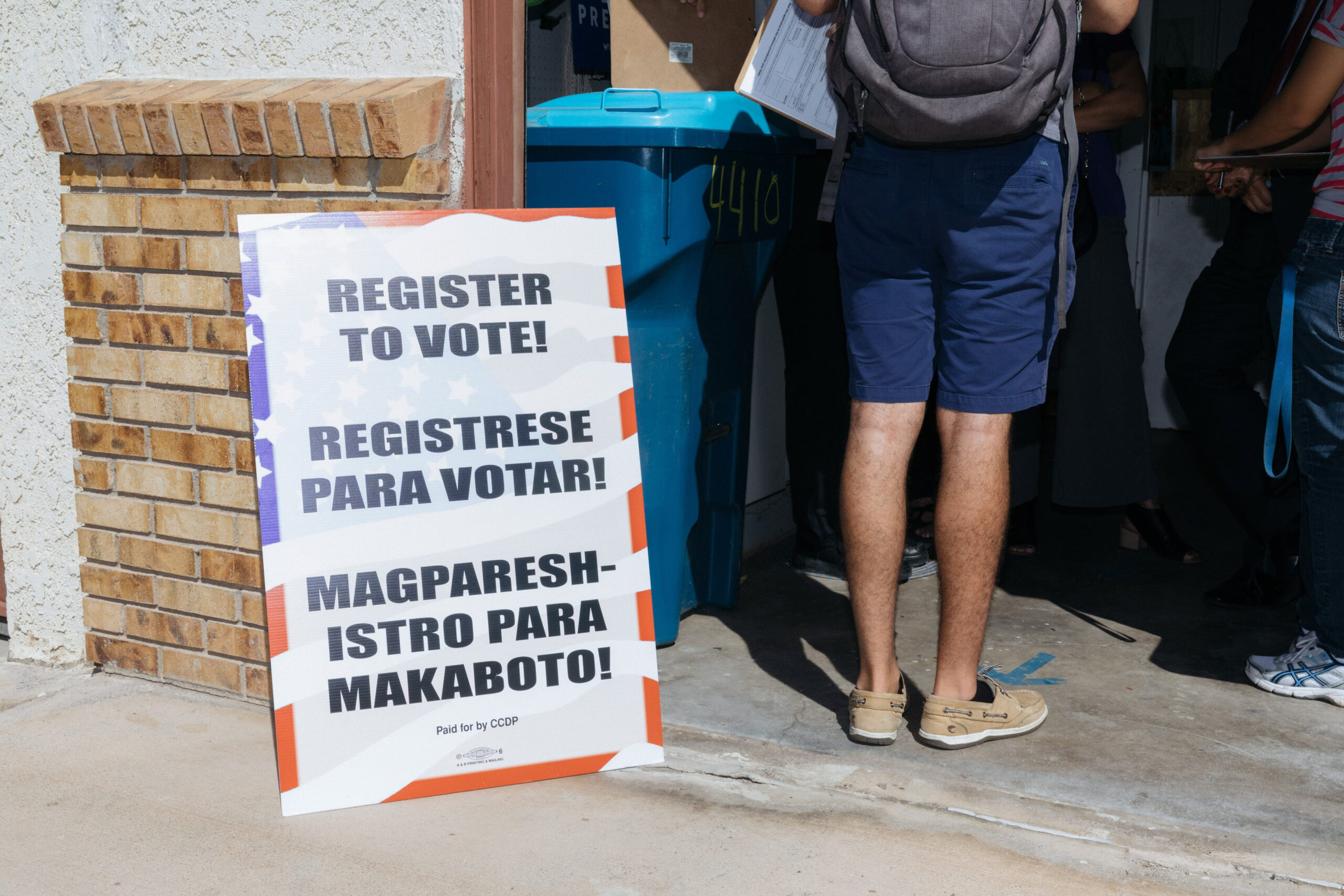
Nonpartisans became the largest voting bloc in Nevada in 2023, and the gap has only widened since.
And across the past year, a new factor appears to be accelerating the surge: changes in the party registration process.
Under the automatic voter registration program that took effect in 2020, voters could select their party while registering to vote at the Department of Motor Vehicles (DMV), with the default option being nonpartisan.
However, starting in 2025, voters could no longer select their preferred party at the DMV. Instead, after the agency verifies a voter's eligibility, a county election office mails a form to the voter to select their party. Eligible voters are also allowed to change their party registration online or at polling sites. If a voter doesn't use any of these methods, they will be automatically registered as nonpartisan, meaning they cannot vote in partisan primaries.
The changes could inflate the number of Nevadans who identify as nonpartisans, potentially presenting a cloudier view of where potential voters see themselves on the political spectrum. However, party strategists said this shouldn't cause significant issues for their operations.
Still, the data since the change is stark.
In Clark County, of the more than 105,000 people who registered to vote this year, 94 percent of them are designated as nonpartisans, according to county voter data. In Washoe County, 88 percent of the more than 21,000 new registrants are nonpartisan, a spokesperson confirmed.
Plus, since the start of the year, there has been an increase in nearly 74,000 active nonpartisan voters across the state, with a reduction of about 34,000 Democrats and 25,000 Republicans. Across the same period last year, there were jumps of about 60,000 registered nonpartisans and 100,000 Democrats and Republicans, respectively.
There are concerns the change could further bog down the voter registration process.
Nevada Secretary of State Cisco Aguilar, a Democrat who was not in office when the change passed the Legislature, said in an interview that there should be discussions about if "we really want voters to go through this extra step."
"The best thing we can do for voters is to streamline the process as much as possible," he said. "But we always want to make sure the information is accurate, and I guess if this step is required to make sure that information is as accurate as possible, then I guess it has to be done."
Aguilar added that more conversations should take place on how to best reach voters. He floated the idea of asking voters for their cellphone numbers, keeping that information confidential and helping them in real time with election-related questions.
The secretary of state's office is also sending a postcard to all active registered voters ahead of the 2026 elections with information on how to check their voter registration information online.
The effect on political operations
David Damore, a political science professor at UNLV, said in an interview that the surge in nonpartisans makes the work of political parties "much more difficult" to "figure out what the electorate is."
However, Democratic and Republican political operatives said they don't envision significant implications on their work because of the many other factors that go into political parties' modeling.
When modeling for nonpartisan voters, the top question is whether a person will actually vote. Because of automatic voter registration, there has been an increase in registered voters who have no intention of going to the polls.
"Registration is not the only piece of information that campaigns are operating off of," said Peter Koltak, a Democratic political operative. "There's lots of other things you can look at to sort of get a sense of 'is this person even likely to vote?'"
Jeremy Hughes, who runs Republican campaigns in Nevada, said the increase in nonpartisan voters underscores the importance of having sound data. He referred to the 2024 campaign of Clark County Commissioner April Becker, who Hughes said outperformed the top of the ticket because of the campaign's targeting of swing voters.
"There are so many voters in these kinds of commission races that are nonpartisan … we have to have data to tell me who we need to talk to," he said. "We ended up finding a much smaller universe of likely voters that were swing voters."
How the change happened
In 2021, the Legislature passed a bill (AB432) to bring in new agencies to participate in the automatic voter registration process, including the Silver State Health Insurance Exchange and Medicaid program.
The bill also included the changes to how voters select their parties when registering to vote. There were no discussions on the change in bill hearings.
Assm. Howard Watts (D-Las Vegas), who presented the bill, said in an interview the change stemmed from concerns from the DMV. The department told The Indy that the introduction of automatic voter registration led to increases in transaction times, and voters were selecting a party before county election officials confirmed a voter's registration.
"That adjustment was also made so that people can do that without any real or implied sense that a government official is asking or trying to influence them in one way or the other," Watts said.
The original plan was to roll out the change at the start of 2024, but a bill from the 2023 legislative session moved implementation back to 2025 — a decision that state election officials said was to avoid conflicts with the rollout of a new top-down voter registration system last year.
Damore from UNLV said the data shows legislators might not have realized the full consequences of the change.
"I don't know if anybody — when they thought this was a good idea — thought through what this would really look like," he said.
Updated on 1/7/26 at 11:45 a.m. to clarify the process for confirming a voter's eligibility.
Support Independent Elections Coverage and Journalism in Nevada
You’ve enjoyed unlimited access to our reporting because we’re committed to providing independent, accessible journalism for all Nevadans.
But sustaining this work — informing communities, holding leaders accountable, and strengthening civic life — depends on readers like you.
Nevada needs strong, independent journalism. Will you join us?
A gift of any amount helps keep our reporting free and accessible to everyone across our state and funds our elections coverage.
Choose an amount or learn more about membership