
Vegas police are filling the sky with camera-equipped drones. Residents have little input.


If you've seen a drone zip over your yard in Las Vegas recently, there's a good chance it's the police.
While there is a Nevada law against law enforcement flying drones over private property, a loophole has allowed the Las Vegas Metropolitan Police Department (LVMPD) to massively increase its drone deployments to nation-leading numbers during the past year.
The exception permits law enforcement to fly over residents' property without a warrant in "exigent circumstances," essentially emergencies. And Metro, through a new first responder program that dispatches camera-equipped drones to scope out the scene of a 911 call and transmit footage to a central command station even before human officers arrive, is considering its thousands of flights per year as exempt from the privacy rule.
Privacy and civil rights experts, while acknowledging the utility of drones to quickly react to emergencies, worry first responder programs and law enforcement's use of drones in general might violate Fourth Amendment rights, which protects residents from unreasonable searches and seizures by the government.
The department has touted success stories from the program. In March, police caught a suspect who had allegedly stabbed his girlfriend and crashed his car before fleeing on foot. Earlier this year, they found a missing child using thermal drone cameras. The department also claims the program saves on cost.
LVMPD declined to comment on this story, saying most questions about the drone program could be answered by various press conferences on the topic.
However, many in Las Vegas are wary of the technology. Some Facebook commentators have likened it to Skynet, a fictional artificial intelligence (AI) in the Terminator movie franchise that deems human beings a threat and attempts to wipe them out.
Vegas resident Geoff Sanders, who works in cybersecurity, said he noticed the increase in drone flights this year and worries it opens the door to privacy infringement.
"There's always been a natural tension between stopping crime and preserving privacy," Sanders said. "The issue is that it's capable of being misused, and we have history and examples of police and governments misusing the technology beyond what it's intended to do."
Drones as first responder programs
Nevada law prohibits law enforcement from not only flying over residents' yards without a warrant but also their curtilage, which is the area surrounding a home. Another law deems all footage captured during municipal drone inspections inadmissible in court.
But first responder programs sidestep these protections. In 2024, Metro police created such a program, the Drone as First Responder Blue Sky Program, mimicking an emerging surveillance model used by thousands of police agencies across the country. The loophole in the law, alongside drone donations and a local emphasis on surveillance technology, has allowed the department to make its program one of the largest in the U.S.
Metro went from deploying drones 345 times in May 2025 to 2,270 times in April of this year, a seven-fold increase, according to data published by the department. Last year, Metro flew more than 10,000 drone missions, the highest number in the country, according to the department. In 2026, police anticipate 20,000 missions.
The model, which originated in California, sends drones as a first responder to 911 calls. In Las Vegas, the drones are controlled from the Fusion Watch Command Center, a command room filled with screens and video feeds from various surveillance technologies around Las Vegas.
This allows drones to launch instantly in the direction of an emergency, either by an operator or automatically, and arrive on the scene before officers get there. From there, the drones transmit live footage to the responding command car or a command center so officers know what to expect when they arrive at the scene.
The program, by its very nature, is always operating under exigent circumstances, which is why police don't need a warrant to fly over private property.
Beryl Lipton, a scholar in residence at UNR in partnership with the Electronic Frontier Foundation, focuses on law enforcement surveillance and government transparency. She said first responder programs can make it hard to enforce privacy laws or quantify how often officers overstep those laws. As a result, it can make it easier for police departments to increase surveillance without raising alarm.
"Some of these loopholes are just a lack of public pushback, like, 'Oh, we're going to a specific crime, we're not doing random surveillance,'" Lipton said, adding that some of the drone cameras can record action happening up to 2,000 feet away in high-definition.
Metro said its program's end goal is a "24/7 aerial response infrastructure capable of responding within seconds to calls for service across Clark County."
The program was split into three phases and is now in Phase 3, operating 75 drones and 13 Skyports across the county.
During a public presentation in Summerlin in early April, Metro officers said the drone docks are situated on rooftops around the city with each housing three fully-charged drones. The batteries last 20 minutes, so the drones rarely fly more than 2 miles from their station. Eventually, officers said all of Clark County would be covered by a drone path.
Despite privacy concerns, Metro is working within the law, according to Brent Skorup, a legal scholar for the libertarian Cato Institute and an expert on the Fourth Amendment. His concerns lie in the expansion of these programs to include civil enforcement, or to ensure compliance with zoning and building ordinances.
"Calling 911, to most people, means someone is clearly in distress — they didn't call the non-emergency line," Skorup said.
Privacy concerns and constitutional risks
Constitutional experts say drones give officers access to areas they would otherwise be barred from. That might be good for canvassing a neighborhood for a missing child, but it also allows them to see onto people's private property.
"Drones are able to have a perspective that law enforcement officers would not typically be able to have when they are patrolling or based on the ground," Lipton said. "That really opens the space in which they are able to surveil a person."
Athar Haseebullah, director of the American Civil Liberties Union of Nevada, said the drones could be used to monitor protests and arrest people based on video surveillance.
He and Sanders said they thought drones might have a chilling effect on residents exercising their First Amendment rights.
"Protesting is a constitutional right, but if people know that there are police drones out there using facial recognition to identify everyone that goes out, that, for a lot of people, would go beyond the scope of what this type of surveillance should be used for," Sanders said.
More than anything, Sanders said he was concerned with how Metro was sharing its data, how it was stored and how Metro was using artificial intelligence tools. He said most people don't have a full understanding of how it works or whether it is secure from hackers.
"They don't know about facial recognition. They don't know about how data could be secured and whether that data can then be accessed by other criminals or other agencies within the U.S. government and how it can be used against them," Sanders said.
This lack of awareness, he said, allows law enforcement to implement technologies that people might not be comfortable with.
"They kind of take advantage of the naiveté of the average person when it comes to this technology," Sanders said, "because on the surface, it seems good."
Metro has addressed some of these concerns. When announcing the launch of the program in April 2024, Assistant Sheriff Dori Koren touted the department's transparency measures. Metro publicly shares its drone flight log data, which includes the number of flights per day, the time of the flight, as well as the flight path. They do not, however, share all the locations of the sky docks. According to Koren, the agency's drone policies have been reviewed by the Department of Justice.
"It is critically important and will always be critically important to us, to ensure that another priority is the privacy, civil rights, civil liberties of our community that we serve," Koren said.
Ties to wealthy donors
At least some of the drones have been donated by a philanthropy connected to billionaire venture capitalist Ben Horowitz. The Horowitz Family Foundation, led by his wife, Felicia Horowitz, has donated other law enforcement technology, such as Flock license plate readers. Because they were donated through the nonprofit Friends of Metro rather than purchased with taxpayer funds, the public gets no input on the addition or deployment of the devices.
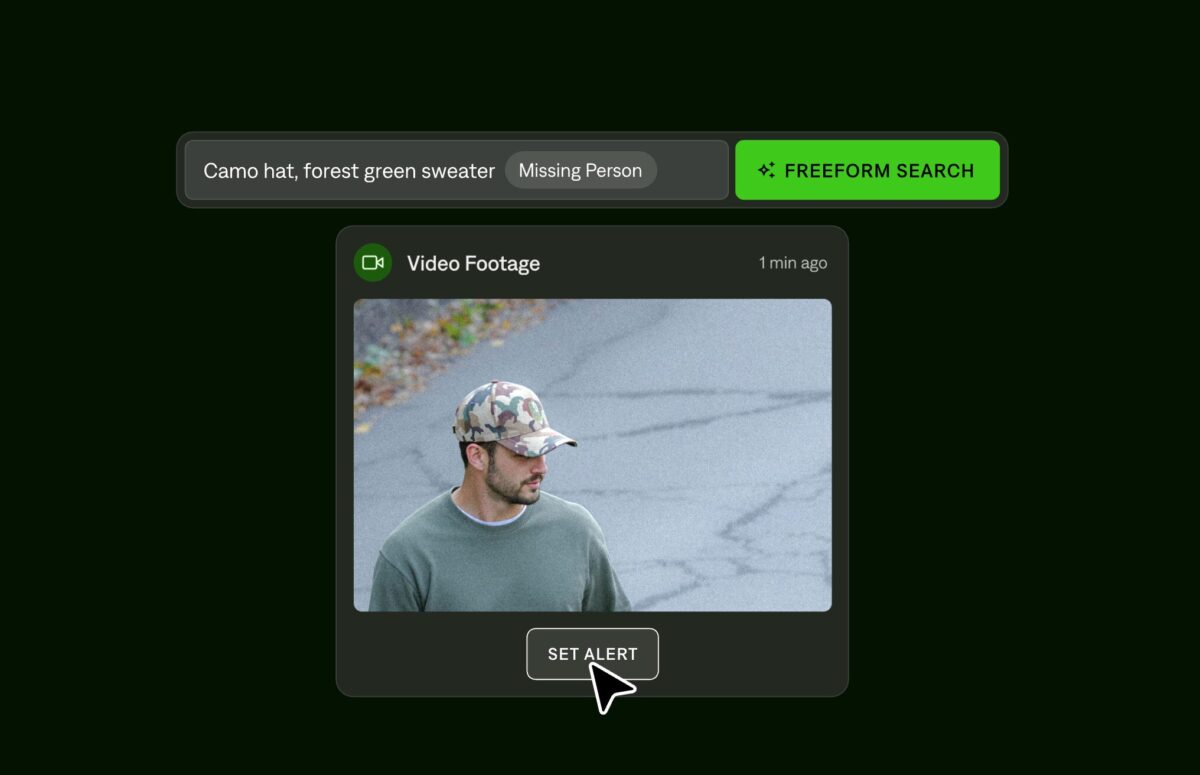
The Horowitz Foundation donated more than $2.4 million for the drones to be outfitted with a five-year Flock Nova subscription, which compiles data such as license plate information, Social Security numbers, credit scores and social media handles, as well as FreeForm Search, a tool that allows officers to use keywords to search the footage acquired by the drones. The foundation also donated more than $32,000 for the Blue Sky Project and the drone operation center.
Horowitz is a stakeholder in Flock and the company that sells the drones, Skydio, through the venture capital firm Andreessen Horowitz, also known as a16z.
The Horowitz Family Foundation did not respond to requests for comment in time for publication.
With billionaire backing through a nonprofit keeping residents from weighing in on how Metro uses technology, and a department committed to expanding its use of surveillance tools, Lipton said it can be hard to keep track of all the ways the police are watching Las Vegas residents.
And, she says, expect drone use to continue to ramp up.
"I'm sure you're going to see a lot more of them flying around," Lipton said.
Support Independent Elections Coverage and Journalism in Nevada
You’ve enjoyed unlimited access to our reporting because we’re committed to providing independent, accessible journalism for all Nevadans.
But sustaining this work — informing communities, holding leaders accountable, and strengthening civic life — depends on readers like you.
Nevada needs strong, independent journalism. Will you join us?
A gift of any amount helps keep our reporting free and accessible to everyone across our state and funds our elections coverage.
Choose an amount or learn more about membership