
Nevada hit with $447K fine for continued delays in mental health care for defendants

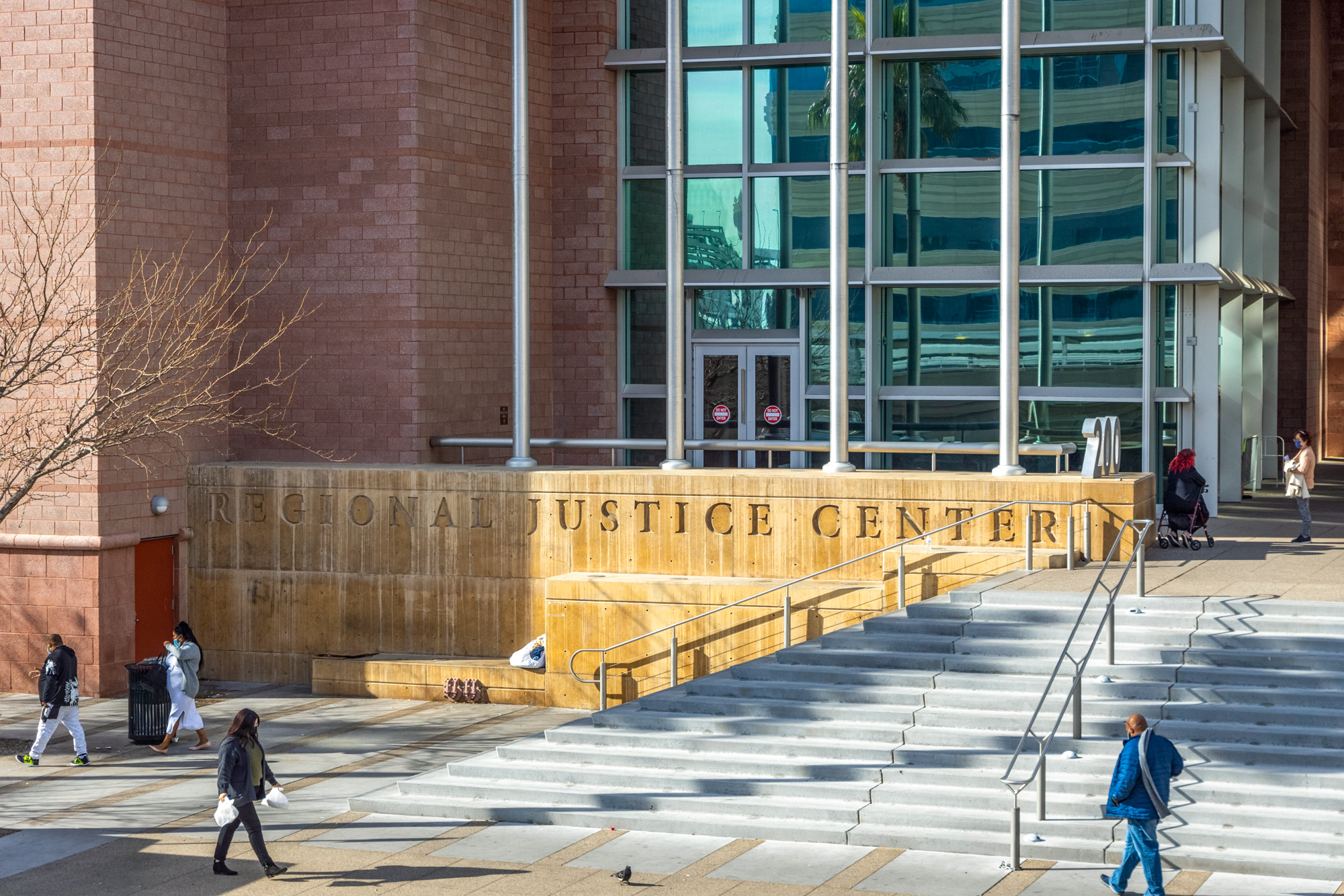
Nevada will pay $447,000 in court-ordered fines for continued delays in providing mental health care to criminal defendants in Clark County, the latest sign of its struggles to quickly provide treatment.
Defendants deemed unfit for trial are supposed to be transferred to a mental health facility within seven days of a court order, but the state has consistently failed to meet this deadline amid a shortage of mental health facilities.
Wait times for defendants have remained lengthy. As of 2022, the average wait time was 122 days. It had fallen to 74 days a year ago, but was back up to 121 days as of Monday, state health officials told The Nevada Independent.
Last year, a Clark County judge held the state in contempt and placed sanctions of $500 for each day a transfer is delayed after a defendant had waited 82 days after he was deemed incompetent, which the judge said "violated his due process rights." Since then, there have been 32 orders when sanctions applied, adding up to the $447,000 penalty.
The state has been assessed $1.4 million in fines related to delays in mental health care over the past two years, with more than half coming last year via a $753,500 penalty in Washoe County.
Tuesday's approval from the Board of Examiners — a panel consisting of the governor, attorney general and secretary of state — came with no discussion. The state's Division of Public and Behavioral Health, which is responsible for connecting defendants with treatment, did not respond to a request for comment.
It needs one more final approval from the state's Interim Finance Committee (IFC), a group of lawmakers that makes financial decisions when the Legislature is not in session. The money will go to Mojave Mental Health, a clinic affiliated with UNLV.
The continued payouts reflect the struggles facing the state in providing care to defendants deemed unfit to stand trial.
The issue dates back to 2005, when a man sued the department after never being transported to a treatment center. The state previously sued to stop the fines, arguing the seven-day timeline would be "impossible" to meet and that consistent fines would put the agency "on a debt treadmill," but the Nevada Supreme Court upheld them in 2023.
In a December Clark County court hearing, attorneys representing the public health agency argued that it could not legally pay for the fees because its budget does not account for these payments. The agency can go to IFC for extra funding when the Legislature is not in session.
"It is unclear to the court why the division failed to address this issue prior to the end of the last legislative session or during the special session, or at other interim IFC meetings," District Court Judge Christy Craig said at the hearing, according to a transcript.
Craig said she was concerned about the frequency of the delays, even if the agency is making efforts to lower wait times.
These efforts include placing certain individuals into nursing facilities, bringing on staff to divert defendants who might be better served outside of hospitals, renovating a mental health building to increase capacity and starting mental health programming in detention centers, where defendants are held prior to receiving treatment.
The agency's latest budget also allocates $17.6 million for 21 additional beds for Southern Nevada patients and 53 new positions related to care for criminal defendants. The state is also planning to build a new mental health treatment facility in Southern Nevada, set to open in 2029.
"It seems as if it's just become a kind of a cost of doing business — that sanctions are going to be imposed and that the division is going to pay them," Craig said. "I recognize that the division is attempting to do things to try to ameliorate the problem of the failure to promptly transport, but it has been 20 years of these issues."
Craig also noted that these delays can have negative downstream effects, referring to one recent case where a man — detained at a county jail while awaiting mental health treatment — picked up an additional battery charge while in custody.
"Incapacitated criminal defendants suffer from various harms while they languish in facilities that are not equipped to treat them while awaiting transport," Craig said. "These harms include worsening of their mental illness, bodily harm, and even death."
Updated at 2:48 p.m. to add more information about average wait times and the case involving the contempt order.
Support Independent Elections Coverage and Journalism in Nevada
You’ve enjoyed unlimited access to our reporting because we’re committed to providing independent, accessible journalism for all Nevadans.
But sustaining this work — informing communities, holding leaders accountable, and strengthening civic life — depends on readers like you.
Nevada needs strong, independent journalism. Will you join us?
A gift of any amount helps keep our reporting free and accessible to everyone across our state and funds our elections coverage.
Choose an amount or learn more about membership