
Nevada sues Discord, alleges social media platform is a 'haven' for child sex predators

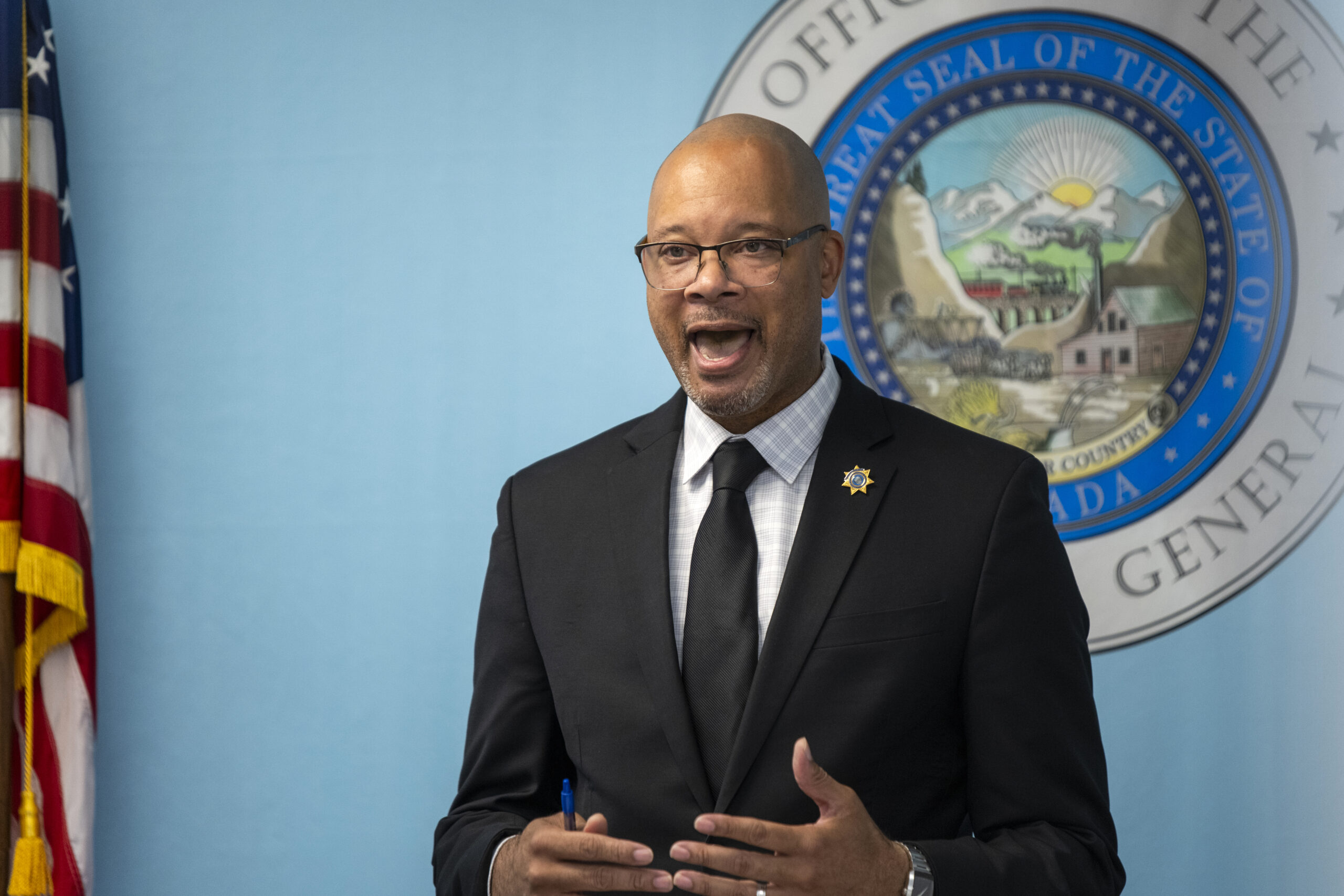
Nevada filed a lawsuit Tuesday against the popular social media platform Discord, claiming the company makes it too easy for sexual predators to connect with children.
The lawsuit, filed in state court, alleges Discord violated Nevada's deceptive trade practice laws by not being transparent about its "deficient safety features." It also argues Discord was aware of its platform's safety flaws, yet did little to protect underage users from sexual predators.
Discord is an app that was originally created to make it easier for video game players to play with friends but is now used for video streaming, messaging and communications by more than 200 million people each month.
The lawsuit comes amid increased scrutiny nationwide on how social media platforms fail to protect children from exploitation and after lawsuits succeeded in demonstrating companies acted negligently toward young users' social media addictions.
The suit comes just weeks after the office of Attorney General Aaron Ford (D) reached a $12 million child online safety settlement with Roblox, a gaming website similar to Discord. His office also has lawsuits pending on similar grounds against Snapchat, Meta, TikTok and other companies.
Nevada is the sole plaintiff in the Discord suit, which seeks both injunctive relief — meaning a pause on what the state characterizes as troublesome policies — and financial compensation greater than $50,000.
On Tuesday, Ford, who is running for governor this year, told The Nevada Independent that he's pursued all these efforts with the goal of "trying to protect children from online predators to begin with, but also the harmful, addictive algorithms that they utilize that negatively impact the mental health of our children."
Discord users can message each other at will and can invite other users into the platform's social groups, or "servers," a process that the lawsuit argues makes it easier for malicious actors to infiltrate communities where children are messaging with each other.
Children under 13 are banned from Discord, but Ford's complaint argues the company does not diligently verify users' ages, asking them to self-report birthdates rather than provide identifying documents. This lax process, the complaint alleges, enables underage children to access the platform and sexual predators to pose as children.
The lawsuit also criticizes Discord's limited protocol for reviewing media exchanged by users of the platform. Discord claims it scans "all spaces for high harm content like malware and child sexual abuse material." In 2023, the company submitted more than 200,000 instances of suspected child sexual exploitation to the tipline maintained by the National Center for Missing and Exploited Children.
But Nevada's lawsuit argues the company's scanning rules are inadequate and unevenly enforced, making it easier for predators. The review process only applies to images and videos, not messages, and for years there was an exemption for media exchanged between users who "friended" each other. Beginning in 2023, Discord pursued a variety of reforms to enhance its review process, but the lawsuit argues those changes constituted only a "partial fix."
Discord "has prioritized growth over safety," said Ford.
In some cases in Nevada and nationwide, these online relationships culminated with adults abducting children they met online. The lawsuit cites instances in Reno and Las Vegas where residents were convicted of grooming or sexually assaulting minors who they first met on Discord.
"They know how to present themselves as initially harmless, and they know how to make these accounts seem to be safe to observers," Ford said. "It's a method through which predators can easily groom kids."
Discord says this is an unfair portrait. Company spokesperson wrote in a statement to The Indy that "the lawsuit's characterization of Discord does not reflect the platform we have built or the investments we have made in user safety," citing Discord's multi-step safety protocol.
"We look forward to collaborating with Nevada in working toward a safer online experience for all users on Discord and across the internet," the spokesperson wrote.
Nevada's prior actions
The concerns raised in the Discord lawsuit echo many of those mentioned in the state's April settlement with Roblox, another gaming platform, and in a bill introduced by Ford's office last year, SB63, which ultimately failed after pushback from social media companies.
Roblox, Discord and similar sites are wildly popular among young people and part of a generational divide on social media, with older Americans preferring platforms such as Facebook and Instagram. Research shows parents are often unaware of what their children are doing online and rarely utilize platform-provided tools meant to enable greater parental oversight — often because parents don't understand how to navigate the platforms to begin with, much less their safety tools.
The settlement Nevada struck with Roblox required the company to implement a variety of stricter rules related to children under 16, including barring them from communicating with adult users unless the adult's contact info was already saved in the younger user's phone.
Ford told The Indy the goal behind his legal actions are "commonsense policies," citing those he introduced in last year's legislative session. His bill would have limited youth social media use and required online platforms to implement age verification systems, among other reforms.
Lobbyists for tech companies have argued that more complex age verification requirements — sometimes involving facial recognition technology — exacerbate child safety concerns by violating minors' privacy rights and potentially exposing their sensitive information in leaks.
Similar complaints were raised around Ford's bill. Its hearing was delayed amid pushback from social media companies, and although it passed both legislative chambers, an amended version never got a final sign-off from the Senate.
For years, Discord did not require users to prove their age, but amid growing exploitation concerns, the company announced in February it would begin doing so through a mix of facial scans and ID uploads.
The announcement drew swift backlash from some of the app's users, who argued it was a violation of their privacy rights. Discord announced on its website just weeks later it was delaying the policy change from March to "the second half of 2026" and emphasized that "90%+" of users would not need to take any action to prove their age, given the company's existing data on its users.
The state's lawsuit characterized that move as another example of Discord going into "damage control mode" after "seeing a hit to the company's bottom line."
Roblox also began rolling out stricter age verification requirements earlier this year, and its settlement with Nevada further strengthened those requirements. The company is now using facial age estimation technology and requiring government-issue IDs to verify the age of prospective users. Once minors become active on the platform, their "behavioral signals" are continuously monitored to check if they appear to be younger than claimed.
The attorney general declined to comment on the details of the technology used for monitoring users' "behavioral signals," including if the technology uses artificial intelligence.
A broader fight
At least 19 states have moved to regulate social media platforms, as sexual exploitation online makes headlines and as a growing body of research indicates that sustained social media use can harm children's social and behavioral health. In Nebraska, parental consent is now required for users under 18 to open accounts; in California and New York, addictive algorithms cannot reach the social media feeds of young users.
Other countries have also pursued policy changes to limit youth social media usage — most notably in Australia, where social media is now banned for all kids under 16.
Most of these reforms have been met with legal challenges from tech companies. New Jersey sued Discord in 2025 on similar grounds as Nevada and Florida opened an investigation into the company last month.
"These are issues that transcend state lines," said Ford.
This article was updated at 3:15p.m. on 5/5/2026 to include new context on older Americans' perception of sites such as Discord and at 3:23p.m. on 5/5/2026 to include a statement from Discord.
Support Independent Elections Coverage and Journalism in Nevada
You’ve enjoyed unlimited access to our reporting because we’re committed to providing independent, accessible journalism for all Nevadans.
But sustaining this work — informing communities, holding leaders accountable, and strengthening civic life — depends on readers like you.
Nevada needs strong, independent journalism. Will you join us?
A gift of any amount helps keep our reporting free and accessible to everyone across our state and funds our elections coverage.
Choose an amount or learn more about membership