
How much water and power do data centers really use?

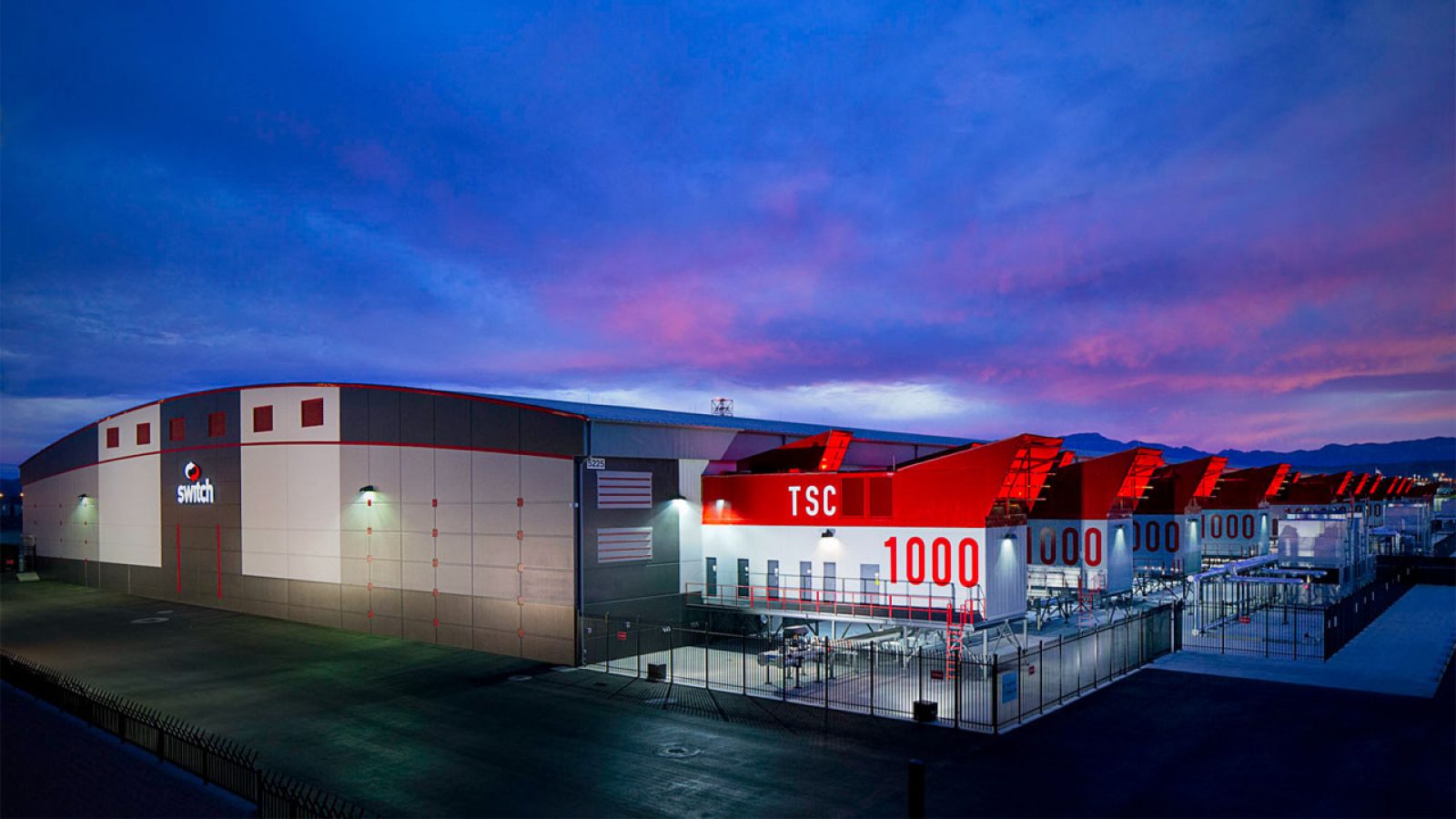
From neighborhood protests to countywide moratoriums, water- and energy-intensive data centers have united protesters who distrust the industrial behemoths.
"You couldn't pay money to make something go viral like the data center fight has been. The data center issue pulls together so many different components [that] people from all walks of life are all worried about," said Rebecca Gill, associate professor in the political science department at UNLV. "Whatever your particular bugaboo is, you can find something about hating the data centers that will speak to your particular issue."
There are now more than 70 data centers either operating in or planned for Nevada, but as more are planned, Nevadans across the state are turning out in droves at public meetings to speak against their construction.
Despite this public disdain for data centers — almost three-quarters of Americans oppose them — almost everyone uses them. Sending an email, streaming music or shopping online all require data centers.
"A lot of these politicians could not predict what cultural significance these data centers would have," Gill said. "These data centers span the gamut of things that make us anxious."
Below, The Indy separates data center facts from fiction.
What is a data center?
Data centers are the backbone of the internet. They can be one or multiple buildings filled with computer servers that store data in the "cloud" instead of on a hard drive.
They can be hyperscale — that is, larger complexes designed to handle massive computing workloads — such as those operated by Google or Meta, or operated by third parties (colocated), such as Switch at the Tahoe-Reno Industrial Center.
These hubs of computer servers require copious amounts of power to operate and often a lot of water to keep them cool.
How much power do they need?
In 2019, data centers accounted for 1.9 percent of total national electricity consumption. That more than doubled to 4.4 percent in 2023, when data centers nationwide consumed about 176 terawatt-hours (a massive unit of energy equaling 1 million megawatt-hours) of electricity. That's more than the entire state of New Jersey consumed that year.
By 2028, data center energy needs are projected to require anywhere from 6.7 percent to 12 percent of the nation's power.
In 2023, 15 states accounted for about 80 percent of the nation's data center power demands. Nevada was one of those states.
NV Energy, Nevada's monopoly electric utility, estimated in its most recent integrated resource plan that it needs about 22 gigawatts of power — roughly twice the peak demand of its current system — to meet existing requests for electric service. That increase in demand is primarily driven by new data center growth.
Who is paying for their energy needs?
NV Energy has asked state energy regulators to authorize mandatory large load electric service agreements for companies requiring 25 megawatts or more of power. Under the agreements, companies would be required to pay costs associated with the infrastructure and energy to serve them. NV Energy's request is part of its current integrated resource plan that state energy regulators are still weighing in on.
How are they cooled?
Data centers rely on water to prevent the many servers inside them from overheating. In modern data center facilities, about 40 percent of the electricity they use is for cooling.
Most data centers are cooled in one of two ways, either with water-intensive evaporative cooling systems or closed-loop systems that recirculate water through sealed pipes. Closed-loop systems can reduce water consumption by up to 70 percent.
In 2023, the Southern Nevada Water Authority banned evaporative cooling for the region's data centers. There were already about two dozen data centers of various sizes in Southern Nevada, but only one used a closed-loop cooling system.
How much water do they need?
Water consumption per data center varies.
In 2024, Google reported its large-scale Storey County facility used 1.5 million gallons.
City of Reno planning numbers forecast the Keystone and Webb data centers — which are on the "smaller" side for data centers, requiring less than 30 megawatts of power per project — will each require around 650,000 gallons of water a year.
For comparison, an average American household uses 300 gallons of water per day — roughly 110,000 gallons annually.
An average casino uses closer to 100 million gallons per year. An average 18-hole golf course uses roughly 200 million gallons of water annually.
Across Southern Nevada, data centers account for about 0.5 percent of water usage. Golf courses account for more than 5 percent while casinos use 7 percent.
How much water does doomscrolling use?
One artificial intelligence query can use about 16 ounces of water.
Browsing social media for one hour can use up to 15 ounces of water.
An hourlong Zoom call uses about 60 ounces of water.
What happens to all that water?
Roughly 80 percent of water used at data centers evaporates. The remaining liquid, known as blowdown water, is treated at municipal wastewater treatment plants.
Do data centers create air pollution?
Data centers themselves don't cause heavy levels of pollution, but the energy sources that power them do. Most data centers rely on fossil-fueled power plants and diesel backup generators that emit pollutants. By 2030, researchers predict up to 1,300 premature deaths annually from American data centers, with the public health burden totaling about $20 billion. The industry is expected to be on par with the steelmaking industry.
Do they create jobs?
It depends.
Research shows most counties where data centers are being built were already growing faster than many other counties.
By comparing 1,500 data center facilities and dozens more canceled projects, then comparing data from the Bureau of Labor Statistics, researchers at the Brookings Institute found data centers do create jobs. But those jobs are less than industry advocates represent because they fail to account for preexisting county growth.
The institute also found that employment levels depend on the type of data center facility being built. Hyperscale data centers bring more jobs than colocation data centers.
The institute also found that wages are generally unaffected by data center construction, but home prices rise between 2 percent and 5 percent.
Do tax abatements encourage data center construction?
Hyperscale data centers tend to be built where power, land and infrastructure are plentiful. Tax incentives are secondary considerations and only account for about 2 percent of total construction investment.
However, colocation data centers — the ones that historically generate fewer jobs — rely heavily on subsidies, which account for about 62 percent of total investment.
And while building data centers can add thousands of construction jobs, data centers tend to require only a few dozen to a few hundred people for routine operations.
Support Independent Elections Coverage and Journalism in Nevada
You’ve enjoyed unlimited access to our reporting because we’re committed to providing independent, accessible journalism for all Nevadans.
But sustaining this work — informing communities, holding leaders accountable, and strengthening civic life — depends on readers like you.
Nevada needs strong, independent journalism. Will you join us?
A gift of any amount helps keep our reporting free and accessible to everyone across our state and funds our elections coverage.
Choose an amount or learn more about membership