Two Nevada scientists tried figuring out how much water data centers use. It got complicated.

Estimates of how much power Nevada's swelling number of data centers need have grown astronomically over the past two years. But the amount of water needed to cool and power them is opaque, even to scientists attempting to finalize a number.
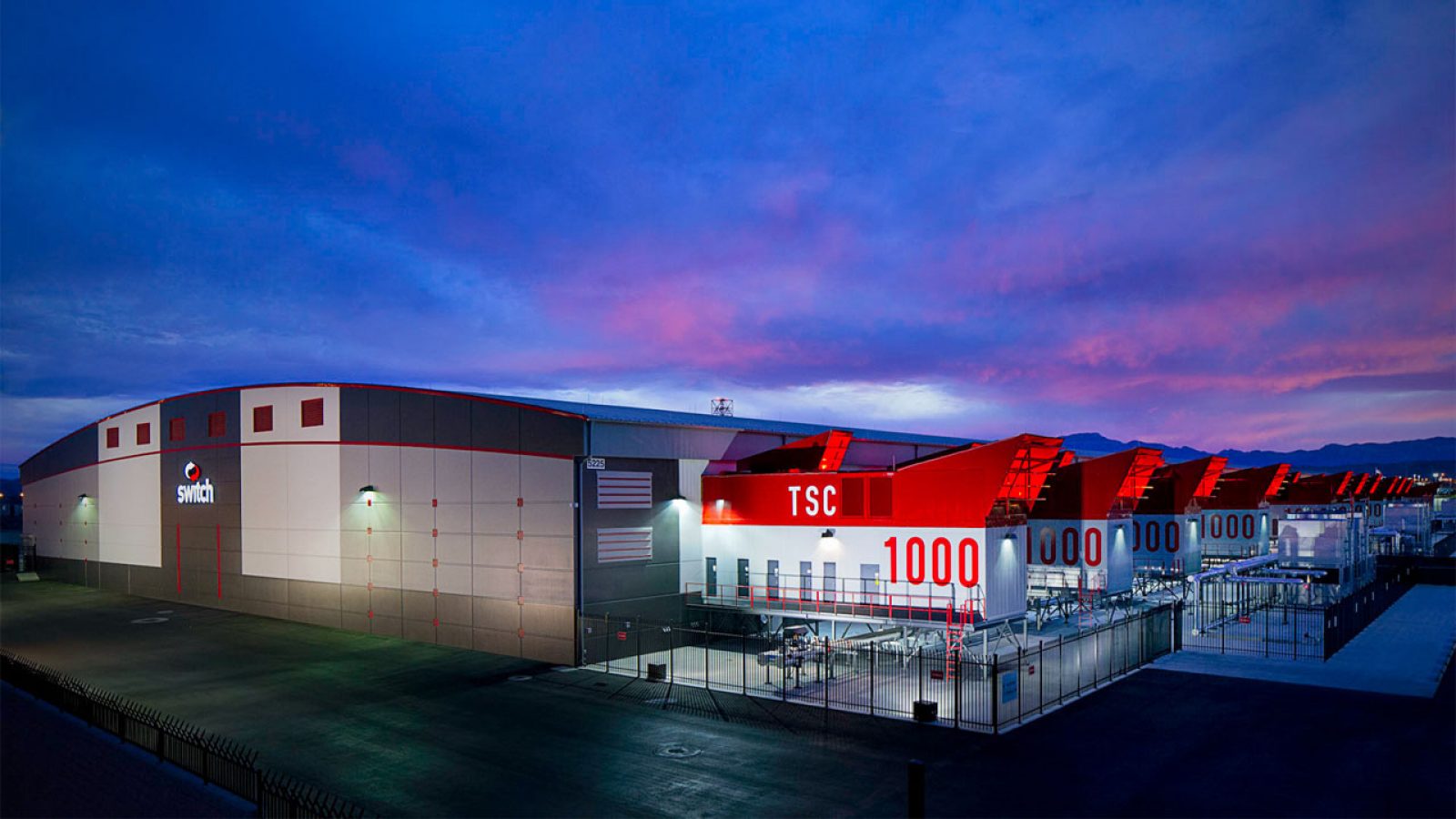
There are more than 75 data centers operating, under construction or planned across the state, primarily in the Las Vegas and greater Reno areas. And because little is known about site-specific cooling operations at each center, "We don't know how water-efficient these places are going to be," Sean McKenna, executive director of the division of hydrologic sciences at the Desert Research Institute (DRI), told The Nevada Independent.
McKenna and Erik Henzl, a research scientist and environmental economist at DRI, have spent more than a year correlating projected power needs to water usage for yet-to-be-built data centers in the state. The pair issued a report early this year, but their numbers were immediately rendered obsolete when NV Energy announced it had grossly underestimated how many power-hungry data centers were looking to come to Nevada.
Henzl and McKenna reworked their numbers in a new report issued today.
Their findings? How much water is needed depends on whether the data centers coming into Nevada utilize newer, water-efficient cooling technologies and how the power to run them is produced.
Individual facility water usage is largely opaque, forcing the pair to instead base their projections on water estimates.
"The energy demand has surged," Henzl said. "The water demand is more difficult to assess because of a dearth of information."
With data centers moving toward more efficient technologies, the pair assumed medium or low water consumption by the centers, finding that under the updated power forecast put out by NV Energy, Nevada would require an additional 4,200-to- 12,800 acre-feet of water per year on top of existing consumption. At the higher end, that would be roughly how much Carson City's businesses and 58,000 residents use annually.
"We're just kind of making our best guess on what we know," McKenna added.

New power estimates blow old forecasts out of the water
DRI's original report, which it issued in January, was the first Nevada-specific comprehensive analysis of data centers' water and power needs in the state.
The report's findings were based on projections made by NV Energy in its 2024 Integrated Resource Plan (IRP), a roadmap outlining the utility's upcoming projects and needs. In that plan, NV Energy outlined 12 data center projects seeking power by 2033 with 5,900 megawatts (MW) of requested capacity, according to the report.
But then NV Energy released an updated IRP this spring with drastically higher energy projections, largely driven by data center power needs, which are coming in much faster than NV Energy had previously anticipated.
In its 2026 IRP, the utility outlined more than three dozen data centers seeking 16,530 MW of requested capacity by 2036.
Projects range from smaller developments, such as BlueSky AI's planned 2.7 MW facility in Elko to Tract's 2,500 MW Virginia Highlands development. Various agencies and groups offer differing opinions on how many houses can be powered with one MW of power, but the general consensus is around a few hundred.
Looking even further out, data centers, which currently account for 5 percent of NV Energy's sales, are expected to account for 64 percent of the utility's power sales by 2046.
"NV Energy recognizes they will have to serve loads approximately 2.5 times current levels by 2046," according to the report.
The big unknown
Data centers are cooled differently depending on their age, local regulations, such as Southern Nevada's ban on evaporative cooling and other variables.
Novva's 100 MW Las Vegas data center, for example, uses a closed-loop system. In 2025, it consumed less than 2 acre-feet of water. Google's data center in Henderson, however, uses an evaporative cooling system and consumed about 636 acre-feet of water in 2024.
Henzl and McKenna had limited access to site-specific water usage, which McKenna said was "really a frustration with this report."
What they do know is that direct and indirect water consumption — how much is used on site and how much is used offsite to generate power for the centers — are expected to increase under NV Energy's forecasts.
Henzl and McKenna estimate that direct water use by data centers requesting to come into Nevada but not yet built, under a medium-usage model, could grow to nearly 12,800 acre-feet per year and indirect water usage could increase to nearly 22,000 acre-feet.
However, because Nevadans use roughly 9 times more power than the state produces, not all of that water burden will fall to the state. Instead, some of it will fall to out-of-state energy producers.
"The big unknown is really this indirect or grid water use?" McKenna said. "Where does our power come from and how efficient are those generating sources? That's a big question."
Behind-the-meter power
In its 2026 IRP, NV Energy proposed adding nearly 12,000 MW of new power generation, primarily through solar, battery storage and natural gas, with some geothermal. But that isn't enough to meet the company's power demands plus the data centers' requested capacity. In response, impatient data center developers are turning to what is known as behind-the-meter power — power that is generated and consumed on-site.
Behind-the-meter power allows data centers to produce the amount of energy they need without waiting in a queue with other large-load customers for NV Energy to have capacity to serve them. But because they aren't connected to NV Energy's system, the behind-the-meter systems bypass many state regulatory requirements.
"The allure is speed to power," Henzl said.
But with that speed comes uncertainty, including the amount of water needed to produce that power.
"It's just a two-sided coin and it depends what that behind-the-meter source is," he said.
Some power sources, such as solar, require little water, while sources, such as natural gas, require more. Sources such as coal require even more water, although Nevada does not have any coal-generating power facilities. However, NV Energy imports most of the state's power. If the power it imports from other states is produced by coal or other energy-intensive sources, data centers could be indirectly using more water than just what is consumed on site.
Nationwide, roughly 26 GW of behind-the-meter gas power is planned through 2030 to power data centers.
Support Independent Elections Coverage and Journalism in Nevada
You’ve enjoyed unlimited access to our reporting because we’re committed to providing independent, accessible journalism for all Nevadans.
But sustaining this work — informing communities, holding leaders accountable, and strengthening civic life — depends on readers like you.
Nevada needs strong, independent journalism. Will you join us?
A gift of any amount helps keep our reporting free and accessible to everyone across our state and funds our elections coverage.
Choose an amount or learn more about membership