
Egg shortages and Christmas trees: Looking back at Nevada's top 2025 environmental stories

Merry Christmas and a happy new year loyal Indy readers!
Remember the challenge of finding eggs during the bird flu outbreak, or when federal lawmakers were considering selling hundreds of thousands of acres of public land in Nevada? It feels like eons ago, but in reality, it was just a few months! A LOT happened in Nevada this year, so as 2025 wraps up, join me in taking a few minutes to look back at some of the biggest stories of the year.
I also wrote this month about the economic impact of outdoor recreation on Nevada — turns out, it's no slouch, eking out several other major industries. So once you finish reading this newsletter, get outside — it's good for your health, and, as I reported earlier this month, good for the state's economy!
🥚💧🎄
January — With utility infrastructure nationwide causing a growing number of wildfires, NV Energy asked state regulators to allow it to charge customers additional costs to pay for a $500 million self-funded insurance policy. State energy regulators agreed the utility needs additional insurance, but wasn't convinced that customers should pay for it. Stay tuned for a decision in 2026.
February — As bird flu swept through Nevada, trying to find eggs in early 2025 was a bit like searching for toilet paper during the pandemic.
March — Staff turnover, an archaic paper billing system and "lack of proper oversight" were highlighted in an eye-opening state audit of the Nevada Division of Forestry after it provided nearly $33 million in firefighting services it never billed for. The division has since made a sizable dent in recouping those costs.
April — Nevada wrapped up the 2024-25 water year with a fairly mediocre snowpack in much of the state, interspersed with abysmal conditions. This winter's snowpack is starting off where last winter left off — underwhelming.
May — May was a packed month. Word spread that NV Energy had overcharged customers millions of dollars over roughly two decades; later in the month, the utility's CEO abruptly departed after six years. And, a potential federal move that would have released hundreds of thousands of acres of public land across Nevada for sale and/or development faced serious pushback from both sides of the aisle. Former D.C. reporter Gabby Birenbaum wrote about it extensively, including this piece in which Rep. Mark Amodei (R-NV) defended his involvement.
June — Gov. Joe Lombardo signed a slew of environmental bills, including one to strengthen the state's wildland firefighting capabilities, two bills that stand up unfunded water buyback programs and others to increase protections for utility customers.
July — The One Big Beautiful Bill Act rolled back utility-scale solar tax credits much sooner than anticipated. Was it a coincidence that just three months later, permitting for a massive solar project planned for Southern Nevada appeared to get scrapped?
August — The third time wasn't a charm for Southern Nevada, which saw cuts for the third year in a row to its water allocations because of declining Colorado River flows. This water year isn't starting too hot either — I'll have a story on that in the coming weeks.
September — I was on vacation when the federal government announced it would take a 5 percent stake directly in Thacker Pass and another 5 percent stake in the project's developer, Lithium Americas, before it would release the initial chunk of a critical, several billion-dollar loan necessary for construction. My co-workers Eric Neugeboren and Mini Racker looked into the Trump administration's new trend of partial ownership of private enterprise while I was off.
October — The feds (sort of) announced the cancellation of a Vegas-sized solar project in rural Nevada. This one was tricky to report on because of the lack of information put out during the federal shutdown. Time will tell what, if any, parts of the project go forward in the wake of substantial federal cuts to solar tax credits.
November — The question of what to do about coyote killing contests in Nevada has been a hot topic in wildlife circles for years. Passage of regulations authorizing the contests were approved by the state wildlife commission and finalized several weeks later by state lawmakers, marking a (not-so-satisfying) end of the saga.
December — Toilet wax rings, competitive antennas and zombie trees — my co-worker Mini Racker and I had a great time writing about how a Nevada fir tree dubbed "Silver Belle" became our Capitol Christmas tree.
In the weeds:
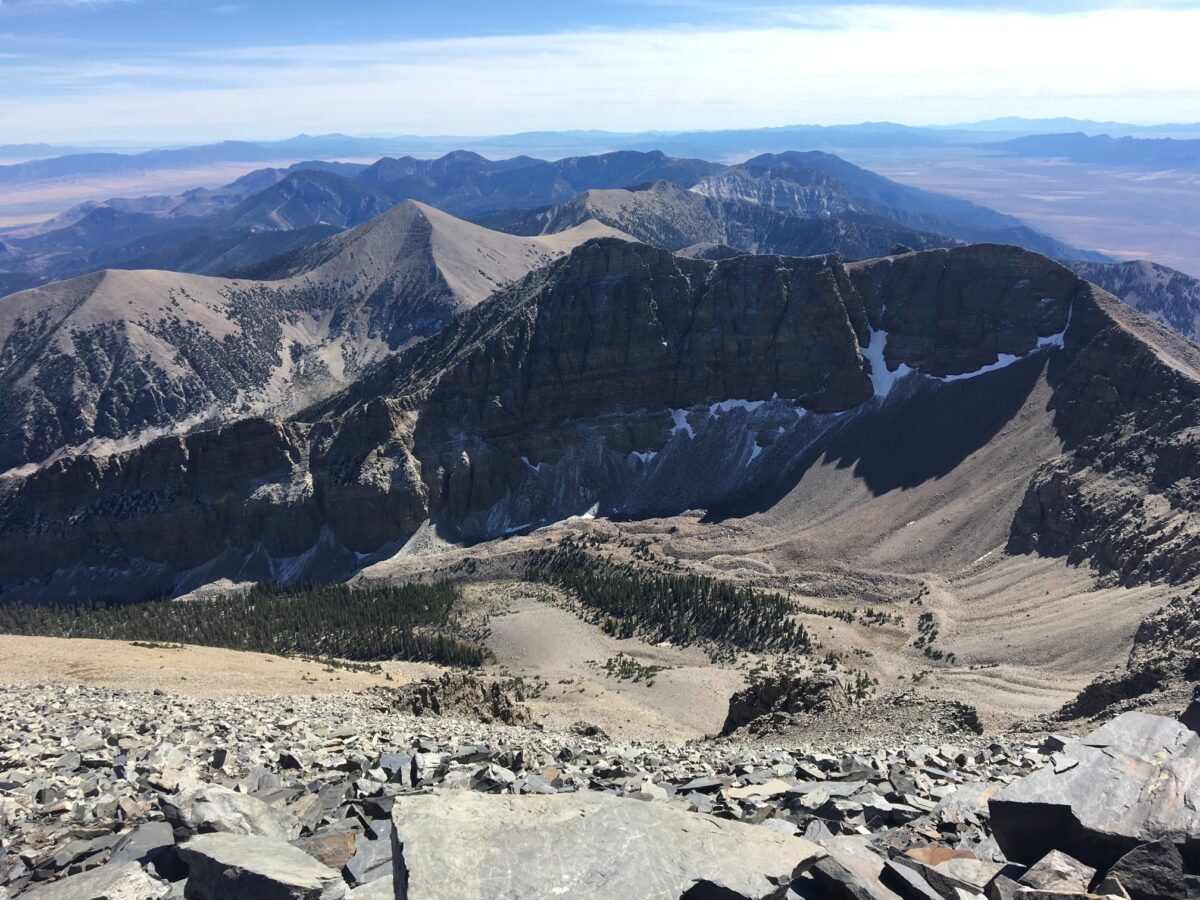
Pricey park passes — Starting Jan. 1, annual passes to enter all parks managed under the National Park system — including Nevada's Great Basin, Red Rock and Lake Mead — will cost more than three times as much for nonresidents than U.S. residents. Residents will pay $80 for annual passes while nonresidents will pay $250, according to the Department of the Interior.
Where's the beef? — With limited options for in-state meat processing and inspections, the Nevada Department of Agriculture and the United States Department of Agriculture have created the Nevada State Meat and Poultry Inspection Program, allowing locally raised meat to be processed, inspected and sold in Nevada. The initiative was a priority of Gov. Joe Lombardo.
Not so clean — The U.S. Environmental Protection Agency has settled with Chedraui USA Inc., a Mexican company that owns El Super and Smart & Final, after the company sold unregistered disinfectants with labels making unverified statements in Nevada. Under the settlement, the company will pay more than $470,000 in fines; it has also removed the illegal products from its stores.

Here's what else I'm reading (and listening to) this week:
I've shared stories on access to public land before; now, 99 Percent Invisible has a great breakdown of a yearslong legal battle between a Wyoming billionaire and some Missouri hunters he claims trespassed to access public land.
From ProPublica and High Country News: How wealthy ranchers profit from public lands with declining oversight.
The Daily Yonder writes that as winter approaches, rural Americans are struggling to afford heat.
And from the Los Angeles Times: California will now allow some mountain lions to be killed.
A closer look:

Support Independent Elections Coverage and Journalism in Nevada
You’ve enjoyed unlimited access to our reporting because we’re committed to providing independent, accessible journalism for all Nevadans.
But sustaining this work — informing communities, holding leaders accountable, and strengthening civic life — depends on readers like you.
Nevada needs strong, independent journalism. Will you join us?
A gift of any amount helps keep our reporting free and accessible to everyone across our state and funds our elections coverage.
Choose an amount or learn more about membership