
Love of working outdoors sparked career for Nevada's new state forester

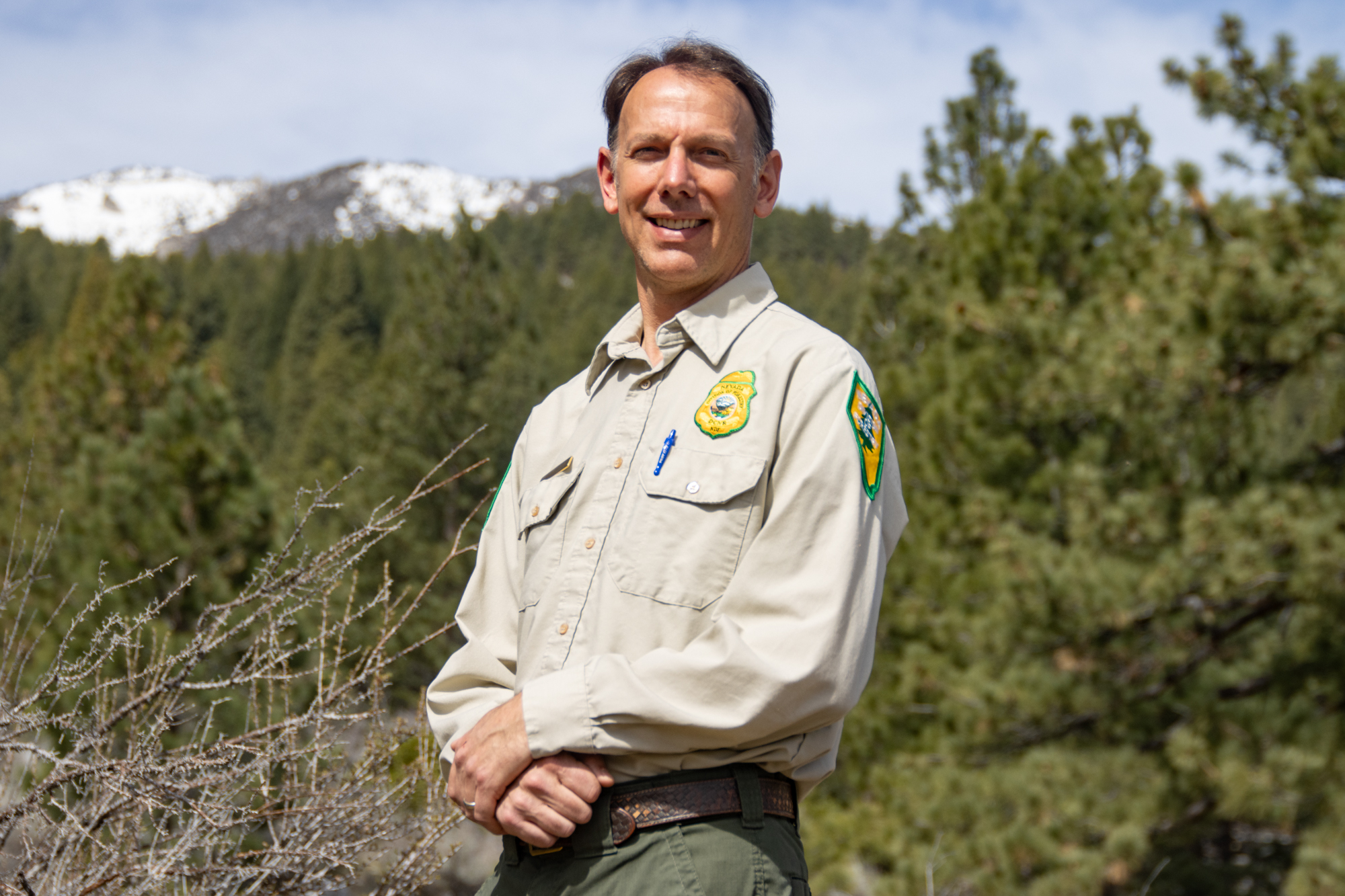
Ryan Shane grew up in the Carson City and Dayton areas helping his grandfather work in fruit orchards and assisting neighbors with their ranching operations. He hunted and camped, hiked with his mom and attended logging conferences in Reno with his dad.
"I became very much in tune with the typical Nevada land uses and ecosystems and was pretty intrigued," said Shane, 45, Nevada's newly appointed state forester and fire warden.
His hobbies were all outdoors, but by the time he reached college, he found himself working in a Mound House munitions factory while pursuing an engineering degree at UNR.
"It was a lot of computers and offices," said Shane. "I had to think, 'What does a career look like in the outdoors?'"
He pivoted to focus on range management and forestry, and several years after graduating, he spotted an ad for a forester with the Nevada Division of Forestry. He and his now-wife were living in Elko at the time while he was finishing his master's degree in natural resources and environmental science while working as a consultant.
"I read through that thing and went, 'This is probably the best fit I've ever seen for the focus of my education, my desires as a person, my interests,'" he recalled.
That was in 2008, and Shane has been with the division since. He and his family moved back to the Carson City area in 2014, where he honed his prescribed fire implementation skills. Prescribed fires, also known as controlled burns, are used to reduce fuels and restore habitat. In 2021, he was promoted to deputy administrator of operations in 2021 under the leadership of previous forester and fire warden Kacey KC.
Shane oversaw the largest logging and fuels reduction project the agency has undertaken in the Clear Creek area west of Carson City and has been involved in almost all wildfire and forestry-related legislation brought forward in the last eight years, including 2025's SB19, allowing the state to enter into two interstate wildfire compacts, and 2023's AB131, which established an urban and community forestry program.
KC left the division in February to assume leadership of the Oregon Department of Forestry. With her departure, Shane was appointed to serve as interim state forester and fire warden.
Less than three weeks after being appointed interim, he was named head of the Nevada Division of Forestry by James Settelmeyer, outgoing director of the Department of Conservation and Natural Resources. Shane is the ninth person to lead the division since its establishment in 1957.
"They believed strongly in what Kacey had guided, built and led during that time," said Shane.
"In terms of continuity, operation for the agency isn't changing. Our strategic plan isn't changing," he added.
Shane assumed his new position March 9 as Nevada enters what could be a challenging wildfire year.
Nevada has experienced an incredibly warm and dry winter, with much of the state already experiencing drought conditions. Low-elevation rainfall and lack of a robust snowpack means carryover fuel — highly flammable grasses that grew during a previous season, dried out and are still standing this spring — will be even drier and more flammable going into the summer.
"So far, the trend is concerning," he said. "The eastern half of Nevada is in drought already, and that drought center is expanding toward the west. All these contribute to additional concern for a potentially higher fire season."
The state typically sees an average of 450,000 acres burn annually, although far fewer acres have burned the last two years.
Looking beyond wildfire season, Shane said he hopes to see the division focus on restoring ecosystems through reseeding, replanting, invasive species control and soil stabilization and increase the pace at which it treats forests with prescribed fire and thinning efforts to reduce the threat of catastrophic wildfire.
"We try to help communities survive wildfire without fire engines in every driveway," he said.
Support Independent Elections Coverage and Journalism in Nevada
You’ve enjoyed unlimited access to our reporting because we’re committed to providing independent, accessible journalism for all Nevadans.
But sustaining this work — informing communities, holding leaders accountable, and strengthening civic life — depends on readers like you.
Nevada needs strong, independent journalism. Will you join us?
A gift of any amount helps keep our reporting free and accessible to everyone across our state and funds our elections coverage.
Choose an amount or learn more about membership