It took four years, but F1 and Las Vegas are finally learning to coexist

The initial build-out of the nearly 3.9-mile Formula One Las Vegas Grand Prix racing circuit in 2023 took almost seven months. Resurfacing the 17-turn course to meet with standards set by the racing organization caused numerous traffic disruptions and lengthy delays.
In June, Grand Prix officials learned they won't have to experience that process again.
Resurfacing the course, which includes a 1.2-mile stretch along the Strip, isn't a requirement, according to Formula One. The organization operates 24 Grand Prix events worldwide annually.
"This track has held up better than any of the engineers thought it would," Las Vegas Grand Prix General Manager Terry Miller, who has overseen building of the track since 2023, said in an interview last week.
Work on this year's racetrack began shortly after Labor Day, and now the circuit is ready to host racing.
Miller admitted he was "prominent in the media" saying the track would last six years and then eight after year one. "There is no foreseeable reason for us to tear up the entire track. This track is wearing very well."
And that is good news for Las Vegas businesses, residents and visitors. Formula One just signed a 10-year agreement with the Las Vegas Convention and Visitors Authority that will keep the race in Southern Nevada through 2037.
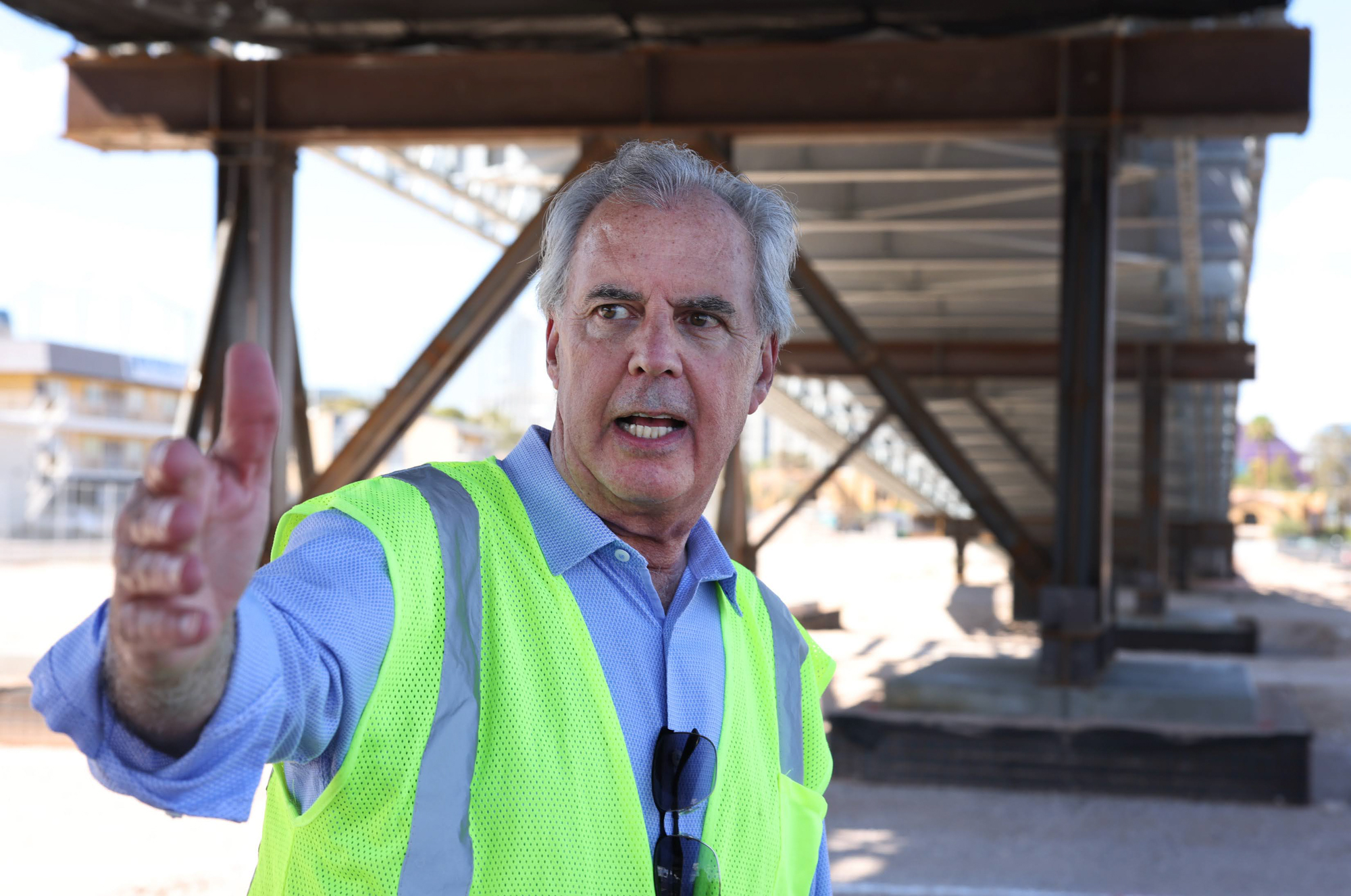
Miller, who managed expansions at the Las Vegas Convention Center going back to 2017, oversaw the creation of the F1 circuit in 2023. He previously had worked on sports stadiums and sports facilities for decades through his private company. After four years, a yellow safety vest has become an integral part of his daily attire. He never knows when he might get called out to inspect or answer a question about a portion of the circuit.
As the green flag for Saturday's race nears — practice is Thursday and qualifying is Friday — Miller's mind turns to overseeing the course teardown as soon as the checkered flag is waved.
"I think our level of understanding the nuances are becoming really clear now," said Miller, who was given the title of Las Vegas Grand Prix general manager more than a year ago. "The logistics of this are, you know, significant. But now, we've had a couple of good years where we've been able to get into the rhythm of when we need to do."
Those comments pleased Clark County Commissioner Jim Gibson, who served as chairman of the government agency at the time the race was announced in 2022. Gibson said he's happy the time frame for building and taking down the track has been reduced. For example, a temporary overpass bridge that is placed above Koval Lane at Flamingo Road is down to five days from its original 10 days to install.
Gibson said track developers and county planners are studying what could be done that would make aspects of the track, such as the Koval-Flamingo bridge, more permanent, which would mean less installation disruption.
"We'll probably talk about that more this year than ever before," Gibson said. "We're getting to a point where there could be proposed development on the west side of Koval [Lane]. We need to make some decisions about where that bridge is going to go."
Miller said one change could be in conjunction with the $4 billion development of the Hard Rock Las Vegas and the Guitar Hotel, which is replacing The Mirage on the Strip right along the main straightaway. The Mirage was open for the first year of F1 with the property's faux volcano spewing flames for the television cameras.
While he's hopeful that portions of the Guitar Hotel could be lit for the event, Miller said Formula One has been in discussions with Hard Rock developers about integrating track lighting into the new construction in an effort to reduce temporary track lights.
Miller said track development has to work around changes along the Strip. For example, entrances for Hard Rock are different from its previous incarnation as The Mirage.
"Things are changing around the track, but being here forever, we're used to change," Miller said. "They don't affect the length of the track, but it could affect the openings and closing we do every day."


Learning to coexist
After four years, casino operators and other businesses have found ways to coexist with F1.
Miller said the resort industry has worked to make it more manageable to get workers in and out of the properties while F1 staff works immediately after racing concludes to reopen streets as quickly as possible each day.
"Smooth isn't the right word for it. But I think that we are much more aware of the things that need to be put in place and the order in which they need to happen," Miller said. "The logistics of this are significant. But we've had a couple of good years where we've been able to get into the rhythm."
Before last year's event, race organizers settled lawsuits with several businesses that claimed disruption from track construction cost them millions of dollars in lost revenue in the first two years of the event.
Gibson said F1 "has been a benefit to the community" given that it offers a way to market Las Vegas "to a worldwide viewing audience that is something close to 70 million people. It's such a beautiful picture because it's framed on purpose to be that way."
He said the race has generated about $3 billion in economic impact for Clark County.
"We're doing everything we can do to lighten the burden to the inconvenience to people who work on the boulevard," Gibson said
Meanwhile, sportsbook operators along the Strip have experienced a gradual boost in wagering on the race. Chris Pearce, who oversees motorsports bookmaking for Caesars Sportsbook, said changes in the vehicles mandated by F1 have produced competitive races that have expanded the interest of casual fans.
He expects drivers attempting to overtake each other along the Strip straightaway would increase attention and live betting on the race, even with the 2026 drivers championship already secured by Kimi Antonelli, an Italian driver who competes for the Mercedes team.
After the race ends and track is removed, Miller said the focus will be on the $500 million Grand Prix Plaza, which serves as the start-finish line for F1 as well as pit row during the race. The plaza provides private event space as well as F1-themed attractions, including race simulators and an indoor/outdoor karting experience.
"It's a significant piece of infrastructure that allows us to showcase F1 to the valley and visitors," he said.
Support Independent
Journalism in Nevada
The Nevada Independent is free to read, but not free to produce. A gift of any amount keeps our reporting open to every Nevadan and funds our coverage, powered by readers like you.
(Yes, you. Hi.)
Secure donation