
Wildfires keep hitting Northern Nevada. Why do developers keep building into harm's way?

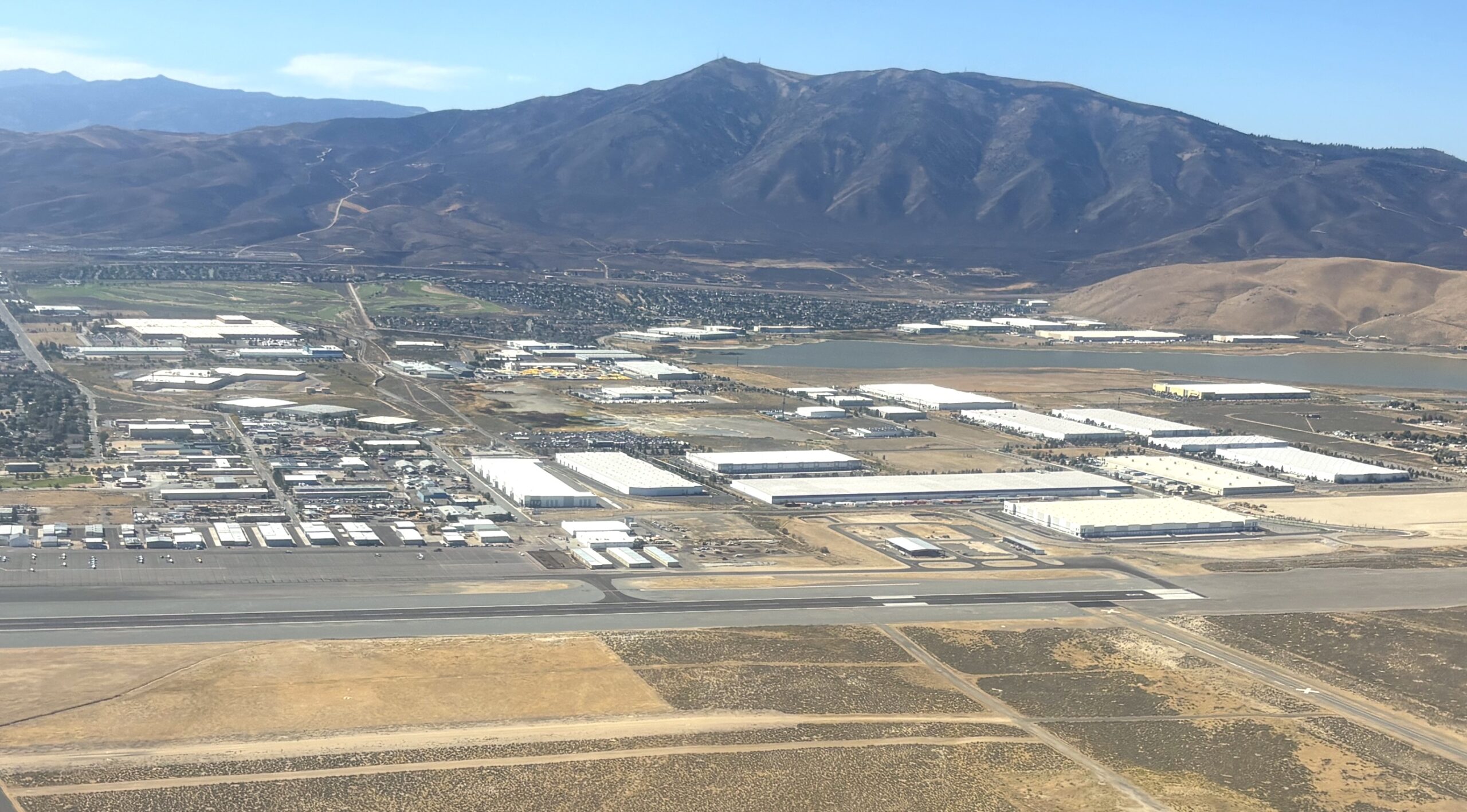
By the time the Hawk Fire crested Peavine Peak northwest of Reno, Meghan Ebert and her family had barely finished unpacking from evacuating another fire two weeks earlier.
Ebert, a Reno city councilwoman, witnessed the sky over Lemmon Valley go black with smoke, then watched flames descend over the ridge above her house. Ash began falling. She loaded her kids, dog and her daughter's two pet lizards into the car while police drove the street with loudspeakers, telling everyone to evacuate.
The power had already been cut, the traffic lights were dark, and by the time her family pulled out of their neighborhood, miles of headlights stretched ahead of them. The fire had jumped U.S. Route 395 and closed it, forcing evacuees further up the valley onto a longer, more congested route toward safety.
"My kids kept asking the whole time we were gone if our house was going to burn down, and I told them 'no,'" Ebert recounted. "My husband told me to stop saying that because I couldn't guarantee it."
Just two weeks later, Ebert was one of four "yes" votes on the Reno City Council to rezone the Moose Ridge site — a 42-acre hillside on the other side of Peavine that weeks earlier had also burned in a wildfire.
Ebert explained her decision, stating that the project actually reduced the number of homes originally proposed for the site and added a larger buffer of parks and open space, which she considered a real improvement.
But Reno carries the highest wildfire risk of any city in the country, according to Patty Hernandez, executive director and co-founder of the nonprofit research group Headwaters Economics, and Moose Ridge is just one of several recently approved development areas in Northern Nevada that sit in what fire officials call the wildland-urban interface (WUI), the zone where subdivisions meet open wildland.
Reno Fire Marshal John Beck said in an interview that's increasingly where new development is headed, whether anyone wants it or not. As the city's lower-hazard land gets built out, he said, projects get pushed into moderate zones, and eventually into high-hazard ones, because there's nowhere left to build.
"Once we run out of areas within, and we get built out in those moderate areas," he said, "then all we have is out and up."
That means more homes, and more people, in terrain that's caused Reno neighborhoods to burn repeatedly over the last few decades. In March, Washoe County commissioners approved a 940-home subdivision called Sierra Reflections on the border of Pleasant Valley and Washoe Valley — the same general area the Davis Fire tore through in 2024 — overturning a denial the county's own planning commission had issued two months earlier.
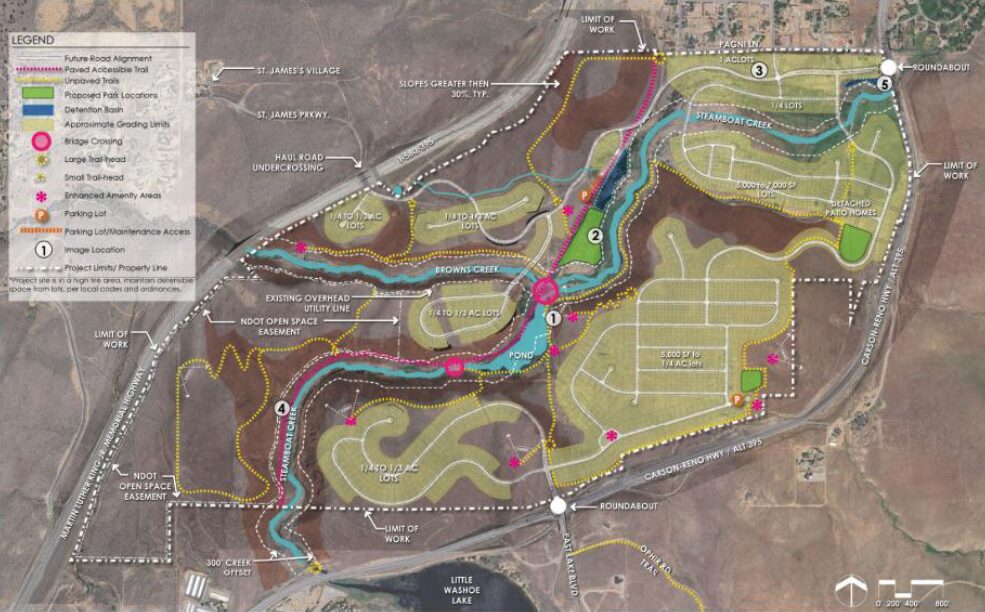
Even when a governing body tries to stop a project on fire-safety grounds, it doesn't always get the final say. Reno's council denied a 676-home development west of Somersett in 2021 multiple times, citing fire danger and hillside risk, only for a judge to rule the denial "without substantial evidentiary support" and order the city to approve the project anyway.
So how does a project on that kind of ground still make it through? Why does building continue there at all? And what resources exist for the people who end up living there?
How a hillside turns into homes
Building anything in Reno or Washoe County follows roughly the same development review process.
A developer requests a pre-development meeting where planning, fire, building and other agencies weigh in early, then the formal application goes out for agency comment and requirements, and each agency's conditions are folded into the project before it reaches the next step — a planning commission hearing.
For an actual project, a tentative map or subdivision approval, the commission's decision is the last stop unless someone appeals. After that, the developer still has to submit a final map showing the project actually meets every condition attached along the way.
Beck's office maps parcels against the city's wildland-urban interface zones — low, moderate or high hazard areas — and depending on the zone, a project has to meet construction standards for ignition resistance, defensible space and a recorded vegetation management plan. The agency's role stops at those boxes.
"I'm asked, 'Well, it's code compliant, but do you feel comfortable?'" Beck said. "I don't have that authority. That comes from planning."
Washoe County planner Trevor Lloyd said fire risk is at least a factor in review; it came up on Sierra Reflections, for instance. But asked if he could recall a project denied because of it, he came up empty.
"I don't know that I can think of one off the top of my head specifically related to fire risk," he said.
Why the building doesn't stop
Continued development in fire-prone areas isn't a mystery to UNLV economist Nicholas Irwin, who said people are drawn to the terrain for the same reasons it's dangerous — the trees, the views, the privacy. Developers build where people want to live. Reno has also largely run out of the large, flat parcels that support big subdivisions. What's left sits at the edge of the valley, in the same areas that carry the highest fire risk.
Cities have their own incentive, too. Irwin said local governments often push to rebuild a burned area rather than steer development elsewhere, because those homes and businesses are part of the existing property tax base. Losing that revenue permanently costs a city more than the risk of rebuilding in the same spot again.
"That's why we get, what I think is the best way to describe, as suboptimal development patterns," he said.
Irwin argues the fix would be to make developers absorb the costs associated with building in a high-risk area; firefighting itself becomes more dangerous and expensive, since crews are protecting people and property rather than just letting land burn. No state or local law exists to make developers absorb those expenses, though.
The costs of building in fire-prone areas don't end when the flames are extinguished either. Irwin pointed to Mount Charleston, outside Las Vegas, where past wildfires have triggered subsequent flooding and road washouts.
"You tax the developers that amount, that at least absorbs the cost," he said, "but that's a really tough platform to run on."
Nevada may add its own twist to that cost shifting.
A 2025 law, AB376, made the state the first in the country to let insurers explicitly exclude wildfire coverage from standard homeowners policies. So far, no insurer has actually filed to use it. But if that changes, Irwin said the added cost will likely land on developers or buyers rather than disappear — which could leave Nevada with a "thin market" for wildfire insurance.
A separate bill that would have created a state-backed insurer of last resort for homeowners who can't find coverage anywhere else died in the same legislative session.
The bigger picture
Nevada's problem isn't unique, but it may be more acute than most. Hernandez, executive director of Headwaters Economics, said that half of all homes already built in Nevada have significant wildfire exposure, per the state's own Division of Forestry. High housing costs and demand for access to open space are pushing growth into exactly the terrain that carries more risk.
Read more: Insurers are dropping Washoe County homeowners. Here's why.
That risk can be reduced with building codes that require fire-resistant features, such as ember-resistant vents, Class A roofs and protected windows. Those features help keep an ember from igniting a house, and new construction makes them easily enforceable. Existing homes are a different problem, though. Owners of older homes can add the same features voluntarily, but nothing requires it.
Utah addressed this problem at the beginning of the year, pairing a statewide wildfire building code with a fee. Starting in January, counties will collect a flat annual fee, based on square footage, from every property in the state's designated high-risk wildfire zones, which drops once an owner completes recommended hardening work. The money collected goes to Utah's Wildfire Fund, which pays for wildfire risk assessments and mitigation planning. California and Colorado also have mandatory wildfire building codes in effect statewide.
In Nevada, homebuilding standards depend on where the home is. The state has adopted a wildfire building code, the International Wildland-Urban Interface Code, but only in counties with less than 100,000 people, and even there, it excludes the chapter that would require homes to be built with fire-resistant materials, leaving that decision to individual local governments.
Washoe County's population exempts it from the state's authority, but only if its own code stays at least as stringent as the current International Wildland-Urban Interface Code. Reno and Washoe each adopted codes that meet that bar, and both require fire-resistant construction. Clark County did the same thing in the south, adopting its own version of the code.
Still, adopting codes doesn't change a landscape that evolved to burn. Eric Roussel, a fire management officer for the Nevada Division of Forestry, explained that the Great Basin is a fire-dependent environment, meaning fire isn't a possibility here so much as an eventuality. Megan Kay, who runs the University of Nevada's Living With Fire program, said the goal is not to eliminate fire from a landscape that depends on it.
"The goal isn't zero fires," she said. "The goal is to adapt our communities to where we can have hopefully periodic beneficial fire and not have catastrophic consequences."
Adapting to that reality isn't free, and the money doesn't always follow the risk.

The work that gets the least funding is often what helps the most, though it draws little public attention. Headwaters Economics has documented that the most effective risk-reduction strategies, such as building codes and hazard fuel reduction, get less money, while suppression often gets the most. Roussel said nobody stands on the roadside with a sign thanking hazard-fuel crews the way they thank firefighters, even though their work is often what kept a fire small enough that nobody ever heard about it.
"Mitigation isn't sexy. You don't really know that it's paying off because there isn't a fire," he said. "But to me, that means it's working."
This story was updated at 10:50 a.m. on 10/06/26 to reflect that economist Nicholas Irwin is at UNLV.
Support Independent Elections Coverage and Journalism in Nevada
You’ve enjoyed unlimited access to our reporting because we’re committed to providing independent, accessible journalism for all Nevadans.
But sustaining this work — informing communities, holding leaders accountable, and strengthening civic life — depends on readers like you.
Nevada needs strong, independent journalism. Will you join us?
A gift of any amount helps keep our reporting free and accessible to everyone across our state and funds our elections coverage.
Choose an amount or learn more about membership