
California's quest to phase out fossil fuels could make Nevada gas prices soar


The recent closure of a California oil refinery — and plans to shutter another in the near future — have some experts warning of potential fuel shortages and price spikes in Nevada and other Western states that depend on the Golden State.
California supplies roughly 88 percent of Nevada's fuel, including diesel and jet fuel. But Phillips 66 closed a refinery in the Los Angeles area in October, and earlier this year, Valero submitted a notice that it plans to close a Bay Area refinery by April 2026. Combined, the two refineries produce 284,000 barrels of oil per day, about 17 percent of the state's refining capacity.
Though there are several reasons for refinery closures, it comes as California is trying to achieve net-zero carbon emissions by 2045, including by slashing oil use.
"If you limit the supply of fuel coming out of California, you're going to see that cost increase," Paul Enos, CEO of the Nevada Trucking Association, told The Nevada Independent. "The policies that they make there have an impact [on] every citizen of Nevada."
Gov. Joe Lombardo has repeatedly raised concerns about Nevada's fuel insecurity, framing it as a safety issue if shortages cripple transportation hubs or first responder operations. Along with the Nevada Commission on Homeland Security, Lombardo recently formed a fuel resiliency subcommittee that he said is designed to "develop long-term strategies that strengthen our infrastructure, diversify supply routes, and protect Nevada's future."
The potential for a rise in prices from the refinery closures is what will mitigate potential shortages, said Elliott Parker, professor and economics chair at UNR.
"You've got to get people to drive less if you have less supply," he said. "That comes with a cost — if you don't let the prices go up, then you will have shortages."
The need for 'bipartisan, regional communication'
Almost all the gas, diesel and jet fuel consumed in the Las Vegas Valley is transported via the CalNev pipeline, which runs from Los Angeles to Las Vegas; another gas line runs from the Bay Area to Reno, and a third runs from Salt Lake City to Las Vegas.
In 2019, the fuel line that runs between the Bay Area and Reno was shut down as wildfires burned in California; in 2023, Gov. Joe Lombardo declared a state of emergency when the pipeline between Las Vegas and Los Angeles (which also serves Nellis and Edwards Air Force bases and McCarran International Airport) was temporarily shut down.
Earlier this year, the CalNev pipeline was again temporarily shut off because of wildfires.
Interspersed with the disruptions, California has passed multiple pieces of legislation targeting the oil industry, including creating an independent watchdog to monitor oil companies for price gouging; passing an electric vehicle mandate to eliminate the sale of new, gasoline-powered vehicles (which has since been blocked by the Republican-led U.S. Senate); and authorizing state energy regulators to require refineries to maintain a minimum inventory of fuel.
Lombardo, a Republican, and Arizona Gov. Katie Hobbs (D) in 2024 jointly penned a letter to California Gov. Gavin Newsom (D), expressing the need for "bipartisan, regional communication" when it came to California passing legislation that could have ripple effects on Western fuel supplies.
Four decades ago, more than 40 refineries operated in California. Now, the state is on pace to have just seven by the end of 2026 because of high operating and regulatory compliance costs, the political environment, conversions to bio and renewable fuels, and various state directives, Mische wrote in a paper.
Some companies have consolidated while others have focused on production at more efficient facilities — but the reduction has shrunk the state's refining capacity from 2.38 million barrels of oil per day to 1.64 million barrels.
The closures, though, are aligning with California's initiatives to reduce driving and lower carbon emissions. While California's population was 6 percent higher in 2024 than in 2010, gasoline sales were 5 percent lower, said Elliott Parker, professor and economics chair at UNR.
"In a sense, the California policy is working to make gas more expensive to get people to switch to electric vehicles and hybrid cars," he said.
'Scary for consumers'
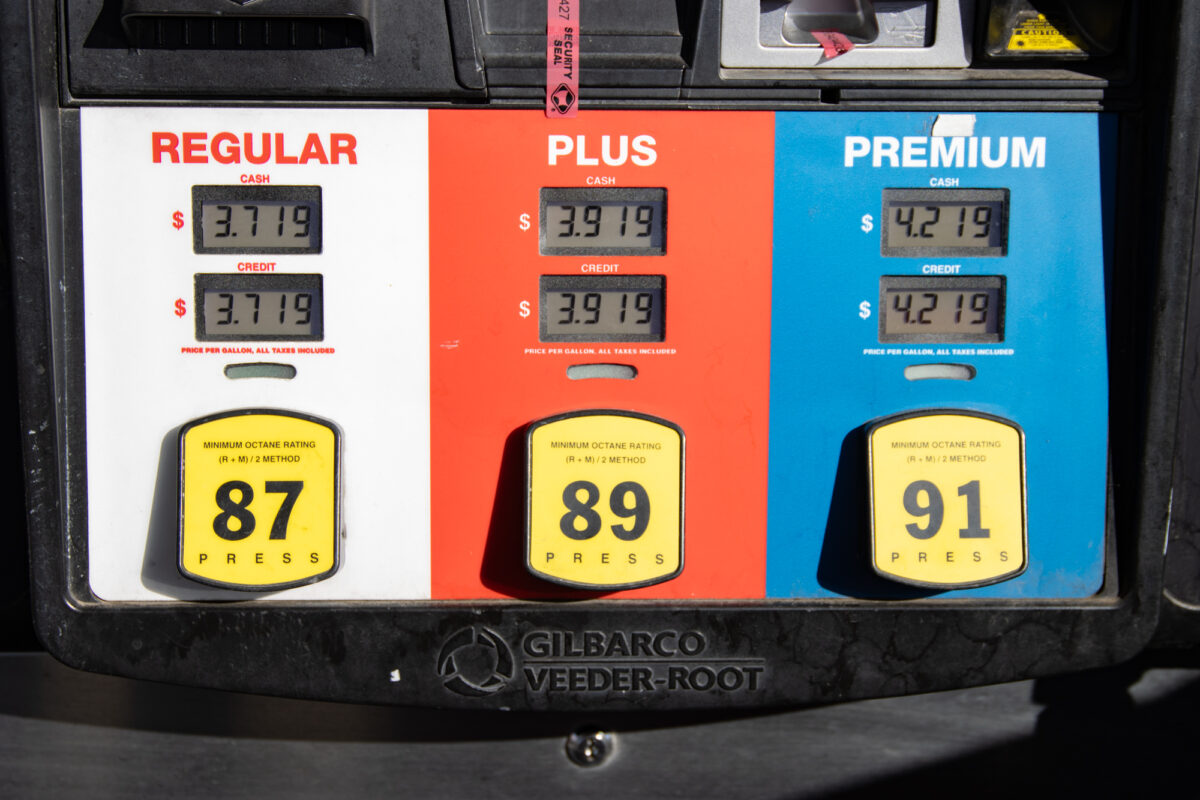
With the refinery closures, some experts are forecasting price spikes as high as $8 per gallon — others are projecting more modest increases under $1.50 per gallon.
Nevadans already pay well over the national average because of its reliance on California fuel, which consistently ranks among the most expensive for gas. As the national average for a gallon of gas dipped below $3 for the first time in four years in December, Nevadans continued to pay 75 cents to $1 more.
Nevada gets the remainder of its fuel from Utah, where at least one lawmaker is floating a bill for the state's 2026 legislative session that would reassess its gas tax structure by shifting the levy onto fuel exports, such as the gas that makes its way into Nevada.
Nevada is "in a very vulnerable situation," said Michael Mische, a University of Southern California associate professor and industry expert.
Sinclair Gas has announced potential expansions into Nevada, but any pipeline and infrastructure construction would take time. By next summer, Nevadans are likely to start feeling pain at the pump, said Miranda Hoover, state executive for the Energy and Convenience Association of Nevada, a trade association that represents liquid fuel and lubricant distributors, transporters, retailers and convenience store owners.
"It's very scary for consumers, businesses [and] families working on a tight budget," she said.
Low-income households and small businesses, which already spend a higher share of income on transportation and often have limited ability to reduce driving or absorb sudden cost increases, are hit first and hardest by price spikes, Caitlin Gatchalian, Nevada representative at the Southwest Energy Efficiency Project, wrote in an email.
"The refinery closures in California expose a real vulnerability in Nevada's transportation fuel system," wrote Gatchalian, whose group advocates for clean energy and transportation. "People and goods still need to move."
Governor braces for impact
The newly created fuel resiliency subcommittee will explore options to expand infrastructure and storage, recommend policies for emergency response and coordinate with other agencies to accelerate permitting for critical infrastructure projects. Its first meeting is expected this month.
Oil production within the state, however, is unlikely to increase. Nevada lacks substantial crude oil reserves. In 1990, the state reached a high, producing more than 4 million barrels of oil, but that amount has steadily declined. Last year, Nevada produced around 170,000 barrels, a blip in the national production of well over 13 million barrels of oil per day.
Citing threats to homeland security if fuel supplies to first responders and transportation hubs are compromised, Lombardo's office has said it's critical the state take a proactive approach.
"Energy security touches every part of daily life, and waiting until fuel disruptions are visible to the public is already too late," Chase McNamara, the governor's policy adviser on natural resources, told The Nevada Independent.
McNamara did not elaborate on who will serve on the subcommittee, but did say it could include somewhere between 10 and 20 appointments.
Meanwhile, Sinclair Gas has announced it is evaluating a multiphased expansion across Western fuel markets, particularly in Nevada and California, that would supply as many as 150,000 barrels per day. The first phase, which includes "debottlenecking" its pipeline from Salt Lake City to Las Vegas, would move a projected 35,000 barrels per day from the Rockies into Nevada with a target operational date of 2028.
If the project comes online in time and can deliver its target amounts of oil, that would go a long way toward alleviating Nevada's issues, Mische said.
Sinclair has also floated the idea of building a new lateral pipeline from Salt Lake City to Reno, and a pipeline expansion between Texas and Phoenix could benefit Nevada as major oil companies consider a pipeline between Phoenix and Las Vegas, Hoover said.
"We are looking at any and all options," she said, including "planning for the future of energy diversification in the state where we don't run into this again."
Parker, the UNR economist, questioned if Nevada's government has the clout to sway what happens outside the state. With one-tenth the population of California, "I don't think there's much Nevada can do," he said. "We're a small part of the market."
The bigger question, he said, is what California wants to do.
"Does California want to intervene to try to increase refinery capacity or do they want to say 'Yeah, it's kind of a good thing to have higher prices?'" he asked.
Support Independent Elections Coverage and Journalism in Nevada
You’ve enjoyed unlimited access to our reporting because we’re committed to providing independent, accessible journalism for all Nevadans.
But sustaining this work — informing communities, holding leaders accountable, and strengthening civic life — depends on readers like you.
Nevada needs strong, independent journalism. Will you join us?
A gift of any amount helps keep our reporting free and accessible to everyone across our state and funds our elections coverage.
Choose an amount or learn more about membership