Nevada fake elector case resumes with debate over intent behind 2020 pro-Trump ceremony

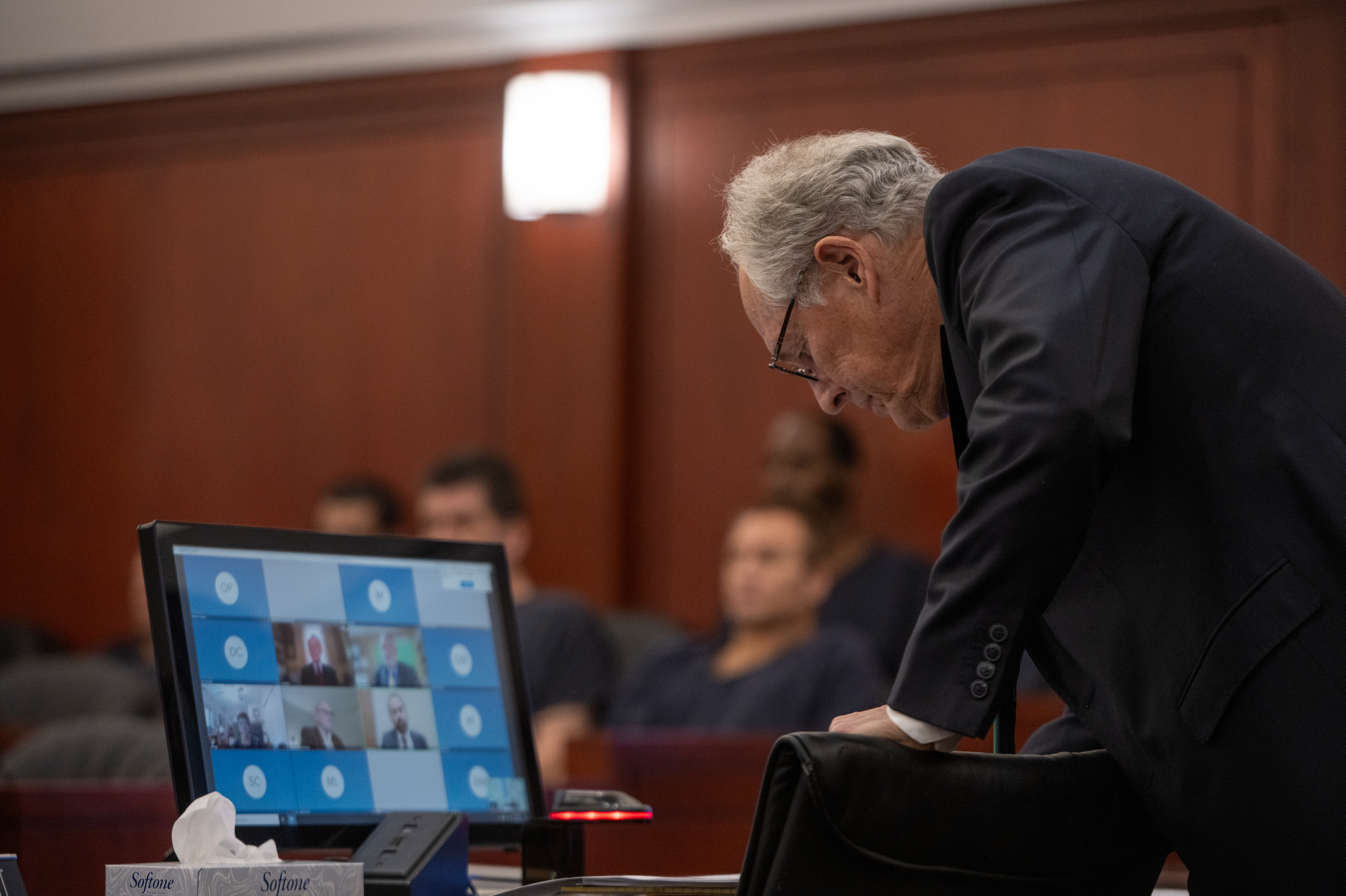
The criminal case against Nevada's six so-called "fake electors," who tried to falsely award the state's 2020 electoral votes to President Donald Trump, returned to Clark County on Monday after the Nevada Supreme Court ruled it was a proper jurisdiction to hear the case.
During Monday's hearing, lawyers for the fake electors challenged the legality of the two charges facing their clients: offering a false instrument for filing and uttering a forged instrument. Although no ruling was issued, Clark County Judge Mary Kay Holthus was skeptical of the prosecution's arguments for the second charge because it requires an "intent to defraud."
Holthus called that intent "impossible" to prove.
"They're not really thinking that they're going to pull one over, that … 'we're going to sign this document and make everybody think that Trump was elected when he wasn't elected,'" Holthus said. "That's my real battle. It's almost nonsensical to me that they would have done that, prepared it and filed it with the intent to fraud. I don't know how it would ever get there."
State prosecutors had previously argued there was an intent to defraud because the documents were sent to the state's top federal judge, secretary of state's office, vice president and National Archives.
Holthus requested that prosecutors prepare a brief by early March with evidence on the electors' intent to defraud. The next hearing is scheduled for April 10.
The hearing came more than five years after the six Republican electors convened an illegitimate ceremony in Carson City, where they purported to be the state's true electors and signed documents awarding the Silver State's votes to Trump and then-Vice President Mike Pence, even though Joe Biden had won the popular vote in Nevada, and Biden electors, who are legally bound to cast a ballot for the candidate who garnered the most votes, held a separate, legitimate ceremony.
The Republican electors included Nevada GOP Chairman Michael McDonald, Nevada GOP Vice Chair Jim Hindle and Republican National Committeeman Jim DeGraffenreid. The other three defendants are then-Clark County GOP Chairman Jesse Law, Shawn Meehan and Eileen Rice.
Fake elector cases are slowly continuing in other states, where prosecutors have faced myriad hurdles, including case dismissals. States still seeking convictions for the fake elector efforts include Arizona and Wisconsin.
Holthus had dismissed the case in 2024 on the grounds that Clark County was the incorrect venue to consider the case, but the state's Supreme Court overturned the decision in November. A jury in Clark County is likely to be less favorable to the electors than redder rural areas.
In the event the high court had ruled against the state, prosecutors brought forward a winnowed down case in Carson City. State law allows two prosecutions to be ongoing at the same time, as long as a jury has not been impaneled.
Monday's hearing centered around an element of the case that was unresolved when Holthus first dismissed it. Lawyers for the fake electors had argued that prosecutors had provided incomplete evidence to a Clark County grand jury and that the actions in question do not relate to the charges facing their clients.
Attorneys for the fake electors said the document in question was not false, but rather "a genuine document that contains false information."
"There's no evidence that defendants were doing anything other than exercising their First Amendment rights to preserve their future First Amendment rights to petition the government and challenge the results of that election," Maggie McLetchie, the lawyer for Jesse Law, testified during the hearing.
Prosecutors disagreed, arguing the document was false because it contained knowingly false information.
"They wanted those documents to be considered, because those documents themselves were forged documents," Alissa Engler, a prosecutor for the state, argued during the hearing.
The other element of the arguments centered around evidence provided to a Clark County grand jury, which was responsible for bringing forward the charges in 2023.
The electors' lawyers had argued that prosecutors failed to demonstrate to the grand jury that the intent behind the signing ceremony was to prepare for the possibility that future legal challenges would overturn Nevada's election results. The Nevada Supreme Court had rejected electoral challenges before the signing ceremony occurred, but an appeal to the U.S. Supreme Court was still possible (though it never materialized).
Defendants' lawyers also later accused the state of not showing the grand jury certain correspondence from Kenneth Chesebro, the architect of the fake elector plot and a key witness, that it said would exonerate certain defendants.
Updated on 2/4/2026 at 8:35 a.m. to correct that Wisconsin prosecutors are not seeking convictions of the fake electors themselves, but rather others involved in the effort.
Support Independent Elections Coverage and Journalism in Nevada
You’ve enjoyed unlimited access to our reporting because we’re committed to providing independent, accessible journalism for all Nevadans.
But sustaining this work — informing communities, holding leaders accountable, and strengthening civic life — depends on readers like you.
Nevada needs strong, independent journalism. Will you join us?
A gift of any amount helps keep our reporting free and accessible to everyone across our state and funds our elections coverage.
Choose an amount or learn more about membership