
Nevada has nearly doubled free pre-K seats. Why are 1 in 10 vacant?

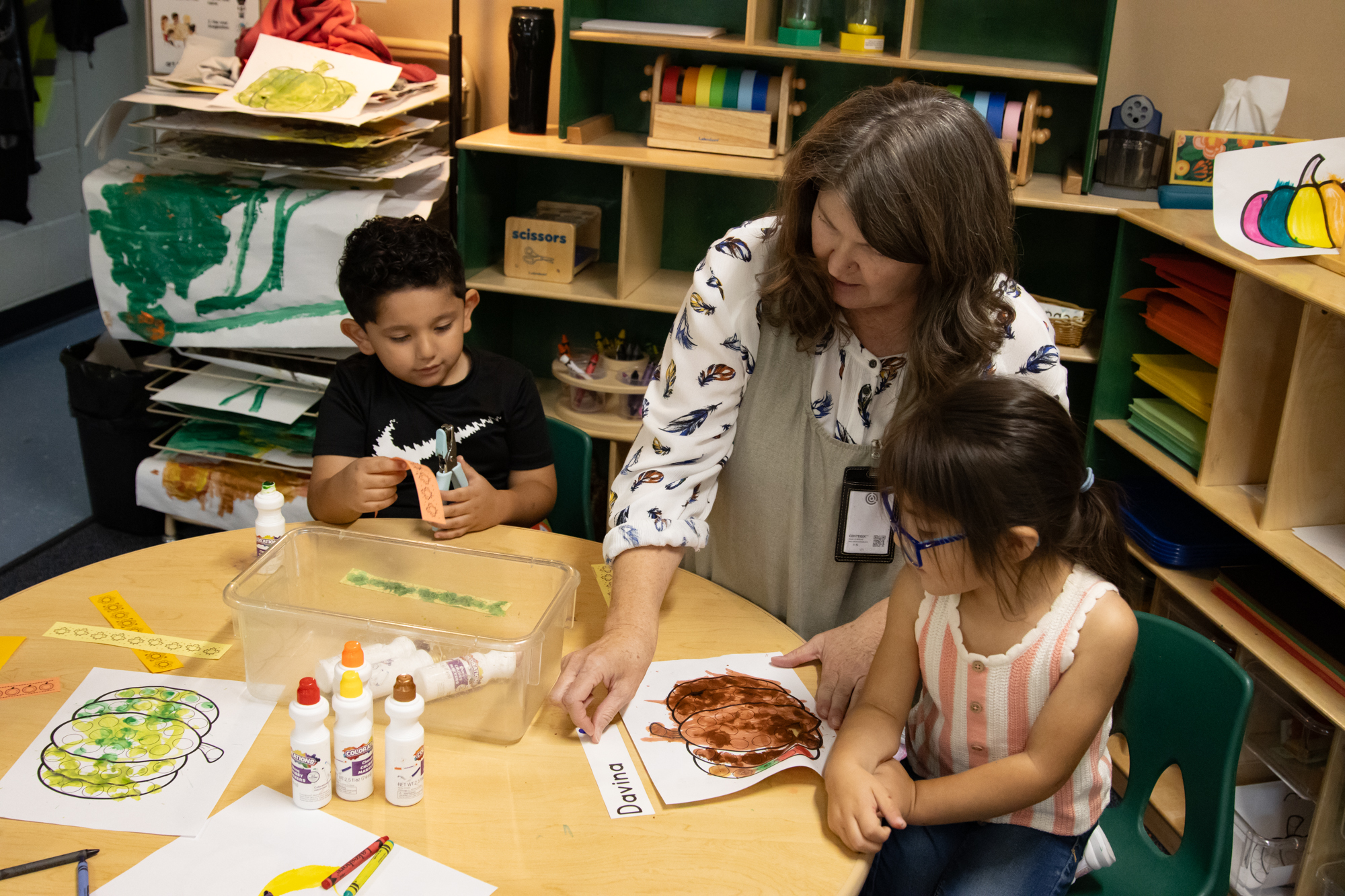
Nevada nearly doubled the number of students enrolled in its state-funded, free pre-kindergarten program this school year, although the state remains far from some lawmakers' dream of a program open to all 4-year-olds, and there have been bumps on the road to ensuring all the new seats are used.
Program managers told The Nevada Independent that delays in releasing funding and new eligibility guidelines hurt some operations last fall. Almost 1 in 10 of the state's free pre-K seats are vacant, state education authorities said.
Last year, lawmakers approved more than $76 million in funds over the next two years for Nevada Ready!, the free pre-K program the state has operated since 2001. That amount marked a $30 million increase compared to the funding authorized by the Legislature in 2023.
Through a wide-ranging education bill, SB460, lawmakers also provided $9 million toward free pre-K facilities' infrastructure needs and expanded program eligibility, most notably by raising the income cap from families making 200 percent of federal poverty guidelines to 250 percent.
The changes enabled the state to enroll nearly twice as many 4-year-olds in Nevada Ready! programs in 2025-26. Nevada Department of Education spokesperson Julie Wootton-Greener told The Indy there were approximately 3,200 students in state-funded free pre-K in 2024-25. So far this year, there are nearly 5,900 students enrolled, about one-sixth of the roughly 35,000 4-year-olds in the state.
The program will grow even more next year, to approximately 8,500 seats. The state-funded pre-K classes are open to 4-year-olds and must provide at least 25 hours of instruction weekly. Many programs exceed that hourly target or meet it by providing four full days of care per week.
Another 2,000 children ages 3 to 5 are also currently enrolled in the federally funded Head Start program geared toward low-income families.
While educators and experts told The Indy they welcome any expansion of free pre-K, the investments in last year's legislative session fell well below what some lawmakers initially proposed. Senate Majority Leader Nicole Cannizzaro (D-Las Vegas) had initially pushed for universal pre-K, but backed away from that goal and pivoted toward expanding eligibility after the state's budget woes became clear last spring.
As of 2025, 12 states and the District of Columbia have universal pre-K (guaranteeing spots for all 4-year-olds) or place no restrictions on pre-K eligibility.
"Free and accessible pre-K is valuable for Nevada families because early learning should not depend on a family's income or ZIP code," Wootton-Greener wrote. "High-quality pre-K gives children a strong start during the most critical period of brain development."
Advocates say Nevada Ready! is critical given ballooning child care costs and the weakness of the state's existing early childhood infrastructure. Nevada is considered a child care desert, and its higher-than-average share of families where both parents work mean more families need care.
Parents of 4-year-olds in Nevada spend $10,605 annually on average for licensed child care. The state offers a federal child care subsidy, but in 2024, it reduced eligibility for that subsidy to families making up to 41 percent of the state's median income. That's a threshold around $33,000 for a family of three.
Limited child care options make free pre-K more valuable, said Connie Zeller, a consultant who oversees the Nevada Ready! pre-K programs offered at charter schools.
"In many cases, there aren't other services available," she said.
Nevada also lags behind the national average in children's readiness for kindergarten, Census data shows.
Denise Tanata, an early childhood expert with the nonprofit The Children's Cabinet, said pre-K can establish a more level playing field for students whose families couldn't invest as much in early learning.
"It's really a critical period for the foundation for learning, for healthy behavior, for social interactions," Tanata said.
Program expansion was less than smooth
Managers of Nevada Ready! pre-K classes welcome the additional seats and told The Indy they hope it inspires further investments in early childhood education. But they said the program needs better coordination and communication.
Nearly 600 seats funded by Nevada Ready! are vacant, approximately 9 percent of total capacity. In 2024-25, the vacancy rate in the free pre-K program was around 3 percent.
Many of these empty seats are in rural areas, The Indy found. In Clark County, only 14 of roughly 2,000 seats are available, and hundreds of families are on waitlists. In contrast, there are 100 vacancies out of 300 seats operated in more sparsely populated counties by the United Way of Northern Nevada and the Sierra.
Program managers told The Indy this year's enrollment gaps were partly due to the last-minute negotiations around SB460, which didn't pass until the final day of the legislative session in June. The bill took effect in June, delaying programs from knowing their seat numbers until just weeks before reimbursement requests were due in July and programs launched in August.
That quick turnaround left little time for outreach, Tanata said, "so a lot of families did not know that eligibility was expanded."
Wootton-Greener said the state was not late to disburse funds, but acknowledged the reimbursement process "can take longer in certain circumstances."
Zeller said she was told charter schools had received hundreds of new seats last July, weeks before schools opened.
"Obviously that's a heavy lift, if it's a brand-new program, to let families know and figure out classroom space," she said. As a result, Zeller gave schools a "grace period" to begin in September rather than August.
Delays and difficulties managing the Nevada Ready! seats could explain why the program's vacancy rate this year is almost triple last year's.
"Parents may have enrolled already in another program and by the time we're up and running, they've already settled in there and got a routine going, they don't want to take their child out," said Julie Houchins, pre-K director with the United Way of Southern Nevada.
She's hoping for fewer funding uncertainties going forward, citing the Legislature's enactment of a law last year aimed at coordinating and quickening the disbursement of state grants.
Another complicating factor was the state's slowness to release new pre-K eligibility guidelines, meaning some programs were unable to effectively advertise to all qualifying families.
The programs were aware the state was raising the income cap for eligibility early enough to advertise it for fall classes. But other eligibility changes came too late.
For instance, the law stated that free pre-K be available to children from "vulnerable or underserved communities" but did not define those communities until a month ago.
The new guidelines say Nevada Ready! programs are available to children in rural areas, in areas with low-rated elementary schools, in foster care, who live with only one parent or no parents, and whose families have asylum or refugee status.
For schools, administering pre-K can be expensive
Even without funding delays, operating free pre-K programs is challenging, say program managers.
Nevada Ready! has strict requirements for pre-K classes, including mandates that all teachers be college educated and the student-to-teacher ratio not exceed 10-1.
Zeller described such requirements as a heavy lift, especially considering free pre-K seats receive a lower per-pupil funding rate than K-12 seats.
Nevada set per-pupil funding for pre-K students at $8,410 in the 2021 legislative session and has not changed it since. In contrast, the state made a historic increase to K-12 per-pupil funding in 2023, bringing the base allocation to approximately $9,400 this year.
Pre-K programs have shorter school days than K-12 programs or only operate four days a week, but managers say per-pupil funding is still inadequate. Dr. Kimberly Regan, director of pre-K programming at Sierra Nevada Academy Charter Schools in Reno, said budget gaps may disincentivize schools from launching expensive pre-K programs.
"If our pre-K program goes over costs, it comes out of the general fund of the school to pay for that difference," Regan said. "So it is very tricky. We're grateful for it, but in Nevada in general, we don't fund education as much as we should."
Zeller said a bright spot in the state's new pre-K initiatives was the inclusion of $9 million toward infrastructure needs.
"We've really struggled with facility needs, and we have a plethora of schools that have been interested in free pre-K for some time but just didn't have the space or the right components," Zeller said.
She noted, though, that money for new pre-K infrastructure wasn't paired with additional funding for the Quality Rating and Improvement System, which assigns star ratings to Nevada's licensed child care centers.
The program traditionally conducts an initial assessment for new child care programs, allowing schools to fix problems before being officially rated. Inadequate funding for the quality review system means new pre-K programs might not be able to receive that early guidance, Zeller said.
Wootton-Greener told The Indy that the state "continues to work with partners to maximize existing resources, prioritize coaching for programs with the greatest needs, and support ongoing quality improvement across the system."
Last year, schools and child care centers also lost money for free pre-K for 3-year-olds, after a $17 million grant from the 2023 legislative session expired. Multiple program managers told The Indy they commonly receive complaints from families about losing those seats.
"We need consistent funding, you know, not the Legislature being able to say, 'Well, we're not going to offer it this session, but we're going to offer it next session,'" said Regan. "Parents and children need predictability and stability, especially when you're talking about disadvantaged families."
This story was updated at 12:33 p.m. on 2/24/2026 to correct Dr. Regan's first name, which is Kimberly.
Support Independent Elections Coverage and Journalism in Nevada
You’ve enjoyed unlimited access to our reporting because we’re committed to providing independent, accessible journalism for all Nevadans.
But sustaining this work — informing communities, holding leaders accountable, and strengthening civic life — depends on readers like you.
Nevada needs strong, independent journalism. Will you join us?
A gift of any amount helps keep our reporting free and accessible to everyone across our state and funds our elections coverage.
Choose an amount or learn more about membership