
Nevada inmates and families say tablet program is more 'predatory' than practical


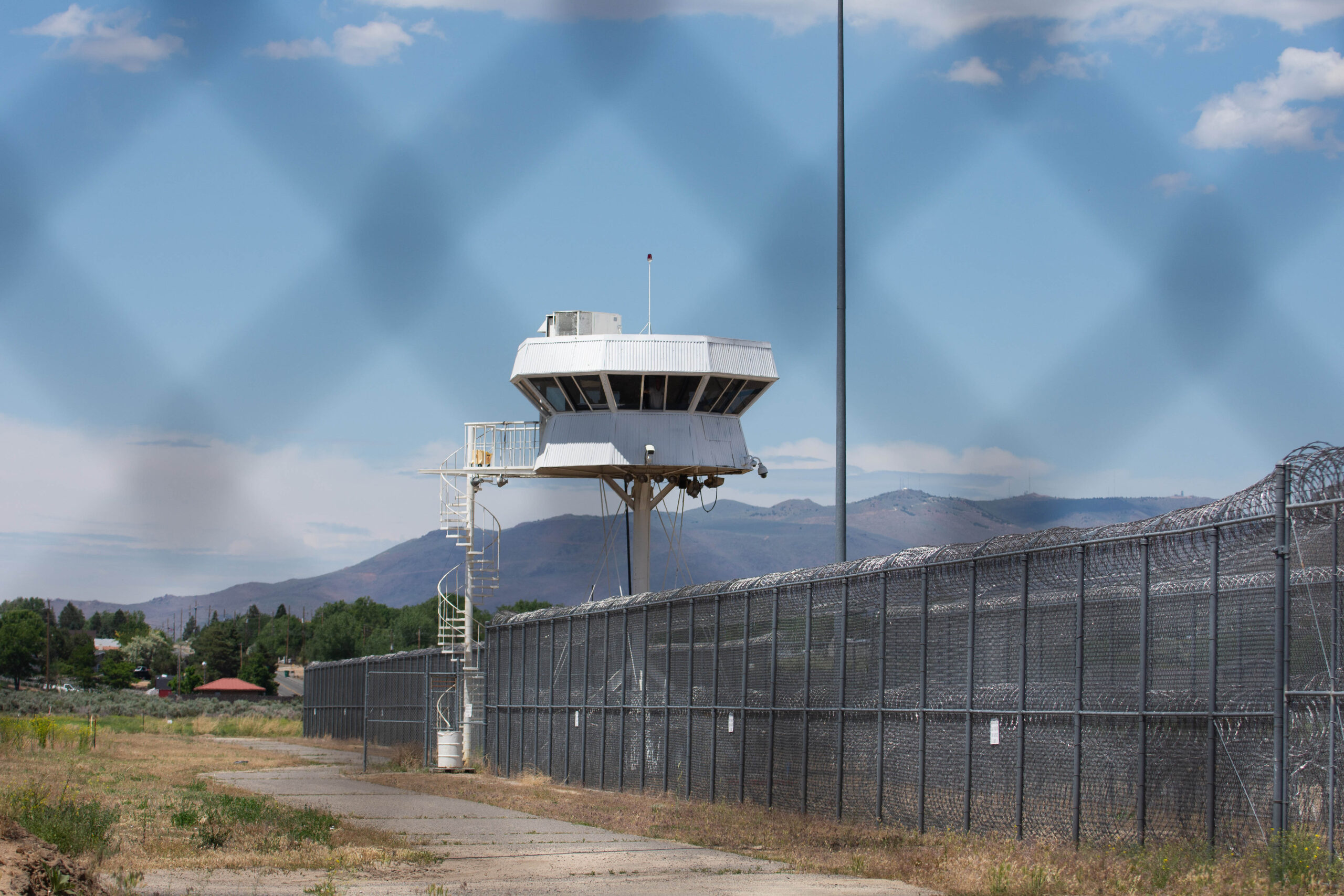
For Ricardo Perez, an inmate at Ely State Prison, video calls keep him tethered to his loved ones.
"Being able to see my family at home, look at moms cooking, watch my niece get happy feet for getting her favorite food, see my nephew after he begs for me to watch him kick a soccer ball into a mini goal, all that helps my heart go into a better place," Perez wrote in a message shared with the The Nevada Independent over text.
The ability for incarcerated people to make video calls came via a widely supported 2023 measure that allowed for use of tablets in Nevada's prison system. State prison officials promised lawmakers that adopting tablets — Nevada was the 49th state to allow prisoners to use them — could reduce recidivism, improve education and medical care, provide greater access to music and movies and make it easier to talk to loved ones by offering a cheaper alternative to phone calls.
As of January, the tablets are in all but two facilities — Jean Conservation Camp and Carlin Conservation Camp. The Nevada Department of Corrections (NDOC) told The Indy that the system has nearly 10,000 tablets in circulation and director James Dzurenda previously said in state meetings that every person in the system should eventually have their own tablet.
Now, people in custody, their families and criminal justice reform organizations told The Nevada Independent that the once-celebrated system has become rife with glitches and prohibitively expensive to use — so much so that advocates are planning technology boycotts starting this week. It comes as prison reform advocates have focused on predatory pricing practices, although NDOC told The Indy that they have not received any revenue from the tablet contractor, ViaPath.
Complaints have surfaced about overly cropped images during video visits, calls costing 10 cents per minute (up from 6 cents in a move advocates said was not announced), video visits at 16 cents per minute and 5 cents per minute for perusing and streaming video content. The costs can quickly balloon — two hours of daily streaming costs an estimated $2,184 a year, out of reach for most who are incarcerated.
NDOC officials, who told The Indy that they are negotiating a contract amendment this week with the tablet provider, have attributed the pricing to changes in federal regulations. In 2025, the Federal Communications Commission (FCC) rolled back caps on the cost of phone calls in prison and jails, something for which Dzurenda blamed the hike.
"That's where the phone call adjustments came up," Dzurenda said during a January meeting to an interim panel of lawmakers. "It was based on the FCC ruling and not based on us."
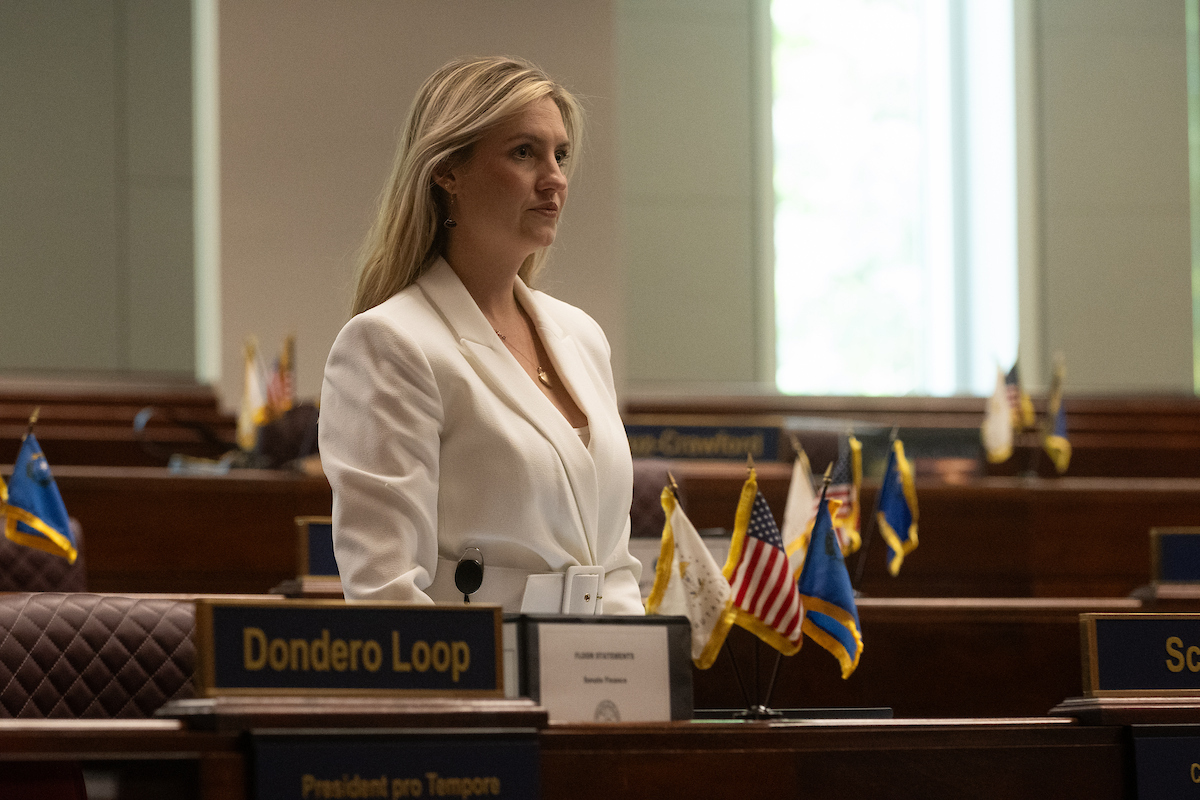
State Sen. Melanie Scheible (D-Las Vegas), who has worked on criminal justice issues and chairs the Senate Judiciary Committee, said in a statement to The Nevada Independent that when the Legislature made the statutory changes to allow for tablets, it was with the intent and understanding that costs would decrease for families to communicate with their incarcerated loved ones.
"What the interim judiciary committee heard at our last meeting was that many of the features of the tablets that [legislators] discussed and voted on have not come to fruition," Scheible said. "Whether it's through regulatory changes or additional legislation, I'll continue working with stakeholders to find solutions to these problems."
Rickie Slaughter, who is serving a sentence in High Desert State Prison, told The Nevada Independent in an interview that the cost concerns over tablets and other telecommunications are because a vast majority of incarcerated people do not have paying work and instead rely on community or loved ones for financial support, he said.
"It's not so much you're just preying on the incarcerated. You're preying on the community," Slaughter said. "The community is the ones who are sending money into the prison for this thing.
The rollout
In 2023, state prison officials touted 28 potential uses for the tablets, among them email access, services for veterans, religious content, college courses and translation options.
Though no guarantees were made, recent research from the Fines and Fees Justice Center and ReturnStrong! shows that only five of those listed possibilities are in effect and six services are partially available.
But beyond the limited services, advocates are upset that the state has not implemented bulk or subscription pricing even though state regulations and the contract with the vendor, ViaPath, call for it.
A cost proposal from the contractor, ViaPath, indicated that there could be an option at 1 cent per minute and there would be a bulk subscription option that would allow incarcerated individuals to watch movies at a significantly lower rate than 5 cents per minute. State regulations implemented in September 2025 outline bulk per-minute purchasing options at 1 cent per minute and a $19.99-per-month premium subscription, but those have not yet been offered.
In testimony on a separate 2023 bill, representatives of the Fines and Fees Justice Center, an advocacy group that aims to minimize fines and fees in the criminal justice system, raised concerns that the tablets would be used as a money-maker for the state and the private company that provides them. Though the center has requested records related to the revenue generated by the program, the department has yet to provide any records.
Nick Shepack, Nevada state director of the center, added that the state's prison system is systemically pressured to extract funds from inmates because $3 million worth of full-time employee salary is supported through fees charged to incarcerated individuals, including for the tablets. Shepack said past requests for these positions to be funded through the state's general fund have been rejected.
NDOC did not immediately respond to a request for comment asking about the revenue generated from the tablet program and whether they plan to reduce costs, but in January, Dzurenda said that the 10-cent-per-minute phone call charge helped cover personnel expenses.
"We got to make sure we have enough revenue coming in to pay for the personnel services," Dzurenda told legislators in a January interim judiciary committee meeting. "If we jump to the bulk rate at the 1 cent, I don't think we would be solvent."
When asked by Assm. Elaine Marzola (D-Las Vegas) at the January interim judiciary committee meeting, Dzurenda said that the state has received no revenue from the program so far.
"The state got zero, so the state has not received anything," he said.
Shepack said bulk pricing options and subscription models established within the regulations should have been the end of the matter, and then discussions should have moved on to whether the prices were fair or should be lowered. Instead, he and others are fighting for basic compliance.
"It has been OK'd by the Legislature, the state," he said. "The largest ask that people have right now, both incarcerated individuals and advocacy organizations and families on the outside, is simply that they follow the rules that they set for themselves."
Shepack argued that there is evidence that education and entertainment reduce violence and help incarcerated people re-enter society. He said it also helps create a situation on the inside that more closely mirrors what it's like on the outside, which can reduce recidivism and help people re-enter society.

Boycott for services
Jodi Hocking, executive director of prisoner advocacy group Return Strong!, said there have been numerous issues with communication services including that free phone calls offered once a day are limited to three minutes, classes through the tablets do not count for higher education credit, blocks on calls with people who use AT&T as their phone carrier and there can't be grievances filed via the tablets. The tablets themselves, she added, are "junk." Headphones given with the tablets break constantly and some units are missing chargers, she said.
The proverbial straw that broke the camel's back, Hocking said, was blurring out everything but a person's face during a video call.
"That's not a video visit," she noted, pointing out that not allowing people to have full interactions with their kids or loved ones affects not only those who are incarcerated but also their loved ones.
She's helping launch a weekly communications blackout starting March 4 as a way to protest current offerings.
"If some of these problems start getting resolved, people — either ViaPath, NDOC, the state, the finance committee — whoever comes to the table and wants to have discussions about what is really going on and what is really happening to all of us, then great," she said. "Then we can hopefully move forward. If not, we will continue to escalate."
Charmaine Simmons, who lives in Texas, said she loves video visits because it's difficult to find the time and money to visit her son, who has been incarcerated in Nevada for 19 years.
Through video call, Simmons has been able to show her son her home and even take him to football games alongside her. Though the ways to stay in touch increased with the introduction of tablets, Simmons said that the background-blurring has radically changed the experience.
She added that at 20 cents to send a picture and 60 cents to send a video, only to have it be redacted without explanation or a refund, is also frustrating.
"We're already paying a price," she said. "Some guys don't even be on the tablets like that anymore because they're charging too much just to browse to find something that they want to see. And it's just ridiculous."
Robert Jackson, who is incarcerated at the Southern Desert Correctional Center, added that the costs can be crippling — with one of his friends spending $165 on phone calls in a month alone — and force those in correctional facilities to choose between buying food and toiletries at the canteen and talking to their family or loved ones.
Other prison systems, Jackson noted, have more consumer-friendly practices.
State lawmakers in Virginia, which is subject to the same master agreement with ViaPath as Nevada, passed a bill forcing contractors to offer the lowest possible rates for phone and video calls. Though the bill did not cover entertainment, a finalized contract sets rates much lower than those in Nevada and offers many subscription types and bulk-minute purchasing.
There are rehabilitative and behavioral benefits to the tablets, Jackson said. There's a meditation app that allows people to meditate, but while other systems make these types of apps free, Nevada doesn't have that.
"It just seems like a double standard," Jackson said. "You think that if a contract exists, that contract has to be abided by and when it's not … you wonder, where's the oversight."
Support Independent Elections Coverage and Journalism in Nevada
You’ve enjoyed unlimited access to our reporting because we’re committed to providing independent, accessible journalism for all Nevadans.
But sustaining this work — informing communities, holding leaders accountable, and strengthening civic life — depends on readers like you.
Nevada needs strong, independent journalism. Will you join us?
A gift of any amount helps keep our reporting free and accessible to everyone across our state and funds our elections coverage.
Choose an amount or learn more about membership