
Nevada school budget heyday was short-lived. Why several districts are now in dire straits

Proposals to close Northern Nevada schools. Elimination of a Reno program for gifted students. Job cuts. Canceled teacher raises.
Three years after Nevada school leaders celebrated a historical, 26 percent K-12 education funding increase, a number of their districts now face financial outlooks so dire that at least one is eligible for a state takeover and several are mulling options more often seen during a recession.
What happened?
Superintendents across the state say flat K-12 education funding, increased costs that have chipped away at their reserves, declining student enrollment and policy changes under the state's new funding formula have created a perfect storm for their budgets.
Carson City, Douglas County, Elko County and Washoe County are among the school districts that are facing budget deficits forcing them to make tough decisions.
The Washoe County School District announced last week it has reduced its budget deficit projected for next year from $18 million to $5.7 million by doing things such as eliminating programs, shifting certain expenses outside of the general fund and reducing positions. It's also preparing to consolidate schools and close down older campuses that need costly repairs and have declining enrollment.
In December, the Douglas County School Board rejected proposed contracts with its teachers and bus drivers unions, which included modest pay increases for some, as the district is grappling with a $5 million budget deficit that's expected to reach about $7 million by 2027 if it doesn't make any changes.
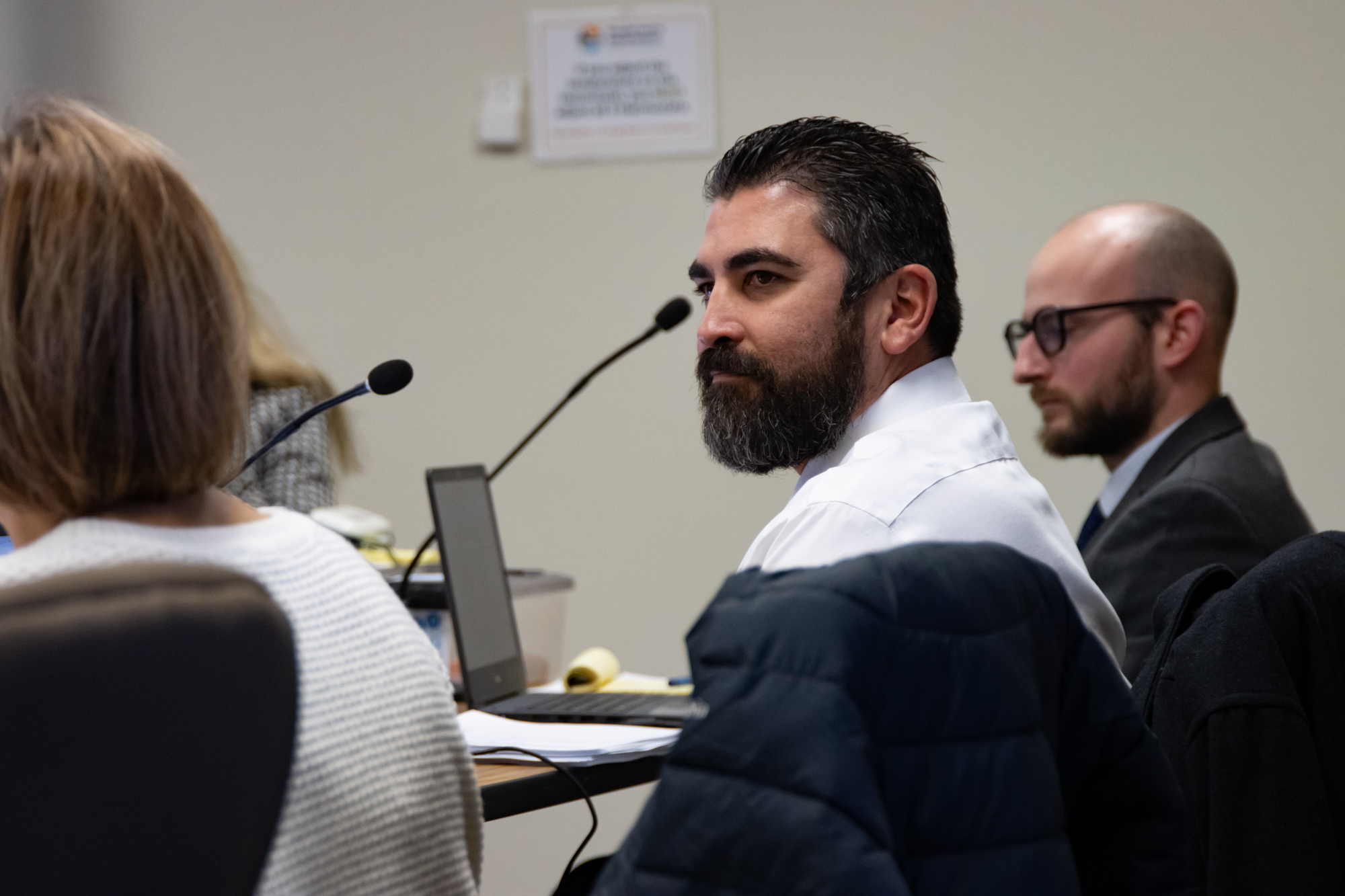
Last month, the board voted to declare a fiscal emergency. Superintendent Frankie Alvarado said this designation allows the district to renegotiate previously approved bargaining agreements with its employee unions.
The school board is also expected to vote this week on proposals such as consolidating two Gardnerville K-5 schools, and possibly adding sixth grade, and consolidating two Gardnerville middle schools.
Dave Jensen, the former superintendent of the Humboldt County School District and a school finance expert, said while some adjustments to the state's funding formula can help, he said he doesn't think the problem will be fixed as long as the state doesn't take action to increase revenue for education.
"We're going to see more and more school districts become insolvent," Jensen said.
Increased costs
After the 2023 legislative session, the pressure was on for school districts to approve much-need raises for their staff.
In addition to historic per-pupil funding increases passed during that session, the Legislature also approved a $250 million matching fund that districts could tap into to provide those pay bumps. Lawmakers renewed that funding during the 2025 session, but the base per-pupil funding amount is staying relatively flat for the next two years: $9,416 per student for 2025, a $2 increase, and $9,486 in 2026, a $70 increase.
But Jensen said this funding is far from enough to cover the compounding costs of the salary increases districts gave out, which includes other pay bumps teachers received for longevity and continuing education, and recent contribution rate increases for the state's pension.
Elko County School District Superintendent Clayton Anderson said that while his district wants to be fiscally conservative with the new funds, it gave teachers and support staff raises of 11 percent to stay competitive with other school districts that were approving double-digit raises.
"It made it real tough for us to look at our staff and say, 'Yeah, sorry, we gotta put this towards the ending fund balance. We can't help you out,' because then you risk losing staff to every other district," Anderson said.

Student enrollment declines
Meanwhile, school districts across Nevada and nationwide are experiencing student enrollment declines amid lower birth rates and as students move to charter schools, private schools or even out of the area altogether because of factors such as housing costs.
State data shows enrollment statewide was on the rise until the 2019-20 school year, when it peaked at about 500,000 students. This school year, the state has about 474,000 public school students.
While it's not experiencing a budget deficit, the Clark County School District's per-pupil funding decreased by about $43 million after its student enrollment dropped to fewer than 280,000 this school year, more than 4,000 students less than it had projected. That pushed some schools to make cuts after classes were already in session.
The Elko County School District's enrollment for this school year, about 9,000, is about 1,000 less than it had six years ago, and it predicts it will continue to decrease by 1 percent or more per year for the next several years.
Anderson said the district is looking to cut $15 million after its projected revenues decreased to about $125 million, $7 million of which was driven by enrollment-related per-pupil funding decreases. It has already implemented $3 million in cost-saving measures.
The Douglas County School District's enrollment has fallen by about 1,000 students during the past decade, a 17.4 percent decrease. For the 2025-26 school year, the district's enrollment dropped by 165 students, resulting in a revenue decline of about $1.8 million, and the prior year, its enrollment declined by 117 students and revenue dropped by $1.2 million.
Documents show the district's finances have been on a rollercoaster. Its revenues have bounced up and down since 2018, reaching $59 million in 2025, and its ending fund balance reached as high as about $11.6 million in 2022.
Alvarado said when he interviewed for the Douglas County superintendent job less than two years ago, he remembers thinking that metric showed the district's finances were "healthy."
"There were no red flags up in the air," he said. "My first six weeks on the job … I was told every meeting that we don't anticipate any budget issues and we have positive financial reporting."
But an analysis shows that in 2023, the district's expenditures began outpacing its general fund revenue. By 2025, the district had depleted its ending funding balance and had a deficit of just under $1 million in its general fund and just under half a million in its special education fund.
The district's financial state meet the conditions needed for the Department of Taxation to declare a severe financial emergency, which would allow the department to assume control over the district's financial management, but Alvarado said the department is choosing not to place the district under receivership at this time because it believes it can fix its budget over time.
"I was hired to come in and clean this place up, and unfortunately I have to make all the unfavorable decisions to put us in a stabilized budget position," Alvarado said.
Shifting to a new funding formula
School leaders say the new funding formula that the Legislature approved in 2019 to replace the previous 50-year old model has also created challenges for their districts.
Jensen said that prior to the Pupil-Centered Funding Plan (PCFP), the state used a single enrollment count day to determine a school district's per-pupil funding base for the entire school year.
"So if you had some declining enrollment, you weren't penalized for it and from our perspective, that made sense because I couldn't reduce a teacher mid-year … and if I had to make some adjustments, we would at the end of the year in preparation for the new school year," he said.
But under the new formula, districts' enrollment is looked at on a quarterly basis, which can result in funding fluctuations throughout the school year. One of the core principals of the PCFP is that dollars follow the students.
"And so now school districts cannot effectively budget for a declining enrollment because we don't know how many we're going to lose yet each quarter," Jensen said.
The state's previous funding formula included a mechanism that partially protected school districts from per-pupil funding decreases through a one-year "hold harmless" provision that allowed them to be funded at the same enrollment level as the preceding school year unless the decrease is greater than 5 percent, in which case their funding could be based on the higher of the prior two years' enrollment.
"What that did is it gave districts some stability and it smoothed out that revenue volatility … so you wouldn't have to do any kind of draconian reductions," said Carson City School District Superintendent Andrew Feuling.
Under the new funding formula, a similar provision only kicks in when a school district's enrollment drops by at least 5 percent.
The superintendents say that's a threshold that's too high to hit. Anderson said the Elko County School District's enrollment declines have hovered between 3 percent and 4 percent.
The Douglas County School District has gotten closer, 4.75 percent.
Elko County School District's Chief Financial Officer Cassandra Stahlke, who sits on the state's Commission on School Funding, told the panel of school finance experts during its Jan. 16 meeting that a hold harmless trigger between 3 percent to 4 percent would be more helpful to school districts, but also recommended there should be some funding decrease to encourage school leaders to make budget adjustments for the next year.
More funding need
Superintendents say the overall problem is that while the state did make progress in increasing K-12 education funding, it's still not where it should be to meet the needs they are facing.
Since 2021, the Commission on School Funding has produced reports on what funding level would be optimal for K-12 education and what policies could be implemented to get there. One such policy is property tax reform.
But Democrats, including Senate Majority Leader Nicole Cannizzaro (D-Las Vegas), and Republicans, including Gov. Joe Lombardo, have either not committed to supporting legislation in line with the commission's ideas or have downplayed them and called them nonstarters.
Cannizzaro and Lombardo did not respond to requests for comment by publication time on whether districts' current financial outlook will make them reconsider these types of legislation.
Jensen said without a significant funding boost, the only way school districts can mitigate their funding challenges is by letting staff go as their salaries and benefits typically make up the majority of district expenses.
"We're a people-centered profession," Jensen said. "If you're going to save money, that equates to people. There's not a lot of wiggle room."
Support Independent Elections Coverage and Journalism in Nevada
You’ve enjoyed unlimited access to our reporting because we’re committed to providing independent, accessible journalism for all Nevadans.
But sustaining this work — informing communities, holding leaders accountable, and strengthening civic life — depends on readers like you.
Nevada needs strong, independent journalism. Will you join us?
A gift of any amount helps keep our reporting free and accessible to everyone across our state and funds our elections coverage.
Choose an amount or learn more about membership