
New ICE data shows extent of Trump's immigration crackdown in Nevada's region


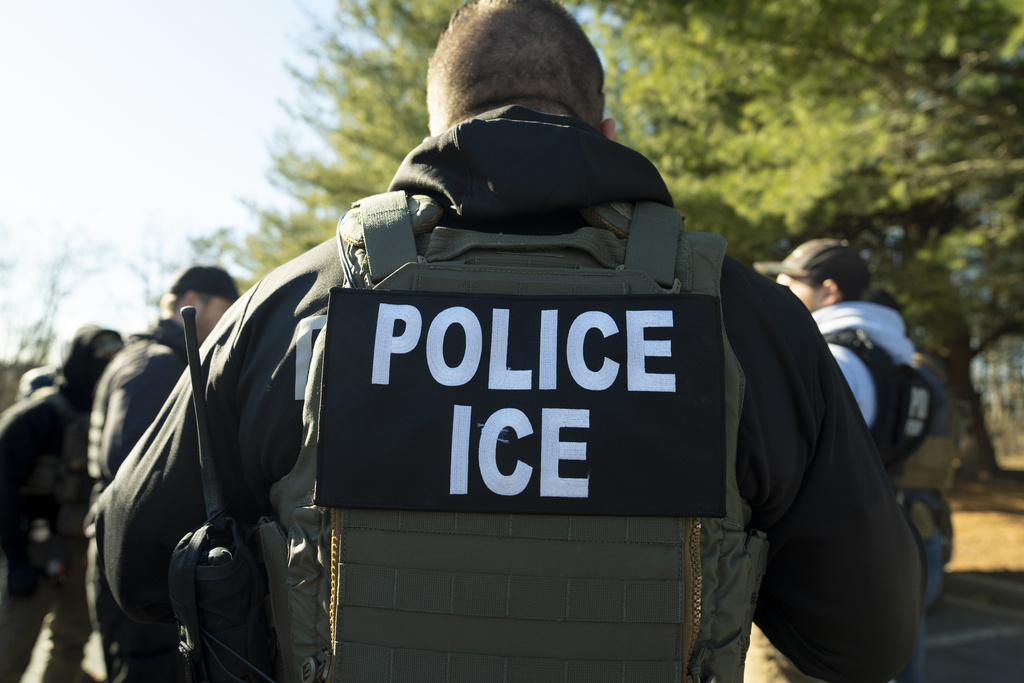
Early on in President Donald Trump's administration, top officials eyed 75 daily immigration arrests across each of the 25 field offices run by U.S. Immigration and Customs Enforcement (ICE).
However, an analysis of daily arrest data through mid-October shows that many field offices (including the one covering Nevada) are failing to meet this threshold.
The Salt Lake City field office — whose operations cover Nevada, Utah, Montana and Idaho — has not made more than 53 arrests in a single day since Trump took office in late January, according to a Nevada Independent analysis of recently released ICE data. In fact, the average daily total is 23 arrests, less than one-third of the Trump administration's initial goal.
The numbers released earlier this week from researchers at the Deportation Data Project, an initiative run out of the University of California, Berkeley, underscore the difficulty in achieving the administration's lofty mass deportation goals, even as an influx of federal dollars has recently poured into immigration enforcement efforts.
Still, ICE arrests in the region are up across the first nine months of the Trump administration — the number of arrests has grown more than 150 percent compared with the same period in 2024 under former President Joe Biden.
ICE did not immediately respond to a request for comment asking if they are satisfied with the current arrest rate.
More than one third of ICE field offices did not hit the 75-arrest goal on any day this calendar year through mid-October, and 60 percent of them failed to do so more than three times.
Instead, high arrest numbers have largely come from field offices in the south and southeastern U.S. Because the data only goes through mid-October, these numbers are likely an underestimate considering the rapid acceleration of immigration enforcement activities during the past several weeks in areas such as Chicago and North Carolina.
The 75-arrest daily goal — which The Washington Post reported was directed from top Trump administration officers to senior ICE leaders — came as the administration reportedly wanted between 1,200 and 1,500 daily immigration arrests nationwide. Months later in May, the administration upped its daily goals to 3,000 daily arrests in an account confirmed by top official Stephen Miller, undercutting the administration's claims made in court filings that it has not set daily immigration arrest targets.
Michael Kagan, the director of the UNLV Immigration Clinic, said that the daily arrest numbers are largely a "talking point" and pointed to differences in population sizes in different ICE enforcement regions that may make meeting those quotas unrealistic.
Although Las Vegas has not received the same level of scrutiny as Los Angeles or Chicago — self-described sanctuary cities where ICE has conducted highly public large-scale raids — Kagan said that the scale of immigration enforcement in Las Vegas is still on the rise. The more than $30 billion increase in immigration enforcement funding from the "Big Beautiful Bill" is also likely to further intensify immigration arrests, he said.
"I think that it's arbitrary … I think the real story is that there's an increase in arrests, maybe not as much as in the highest-profile cities deployed special units, but there's definitely an increase in arrests," Kagan said in an interview with The Indy.
Similar to past releases of ICE data, the latest data undercuts claims from the Trump administration that it is targeting the worst offenders.
About 14 percent of people arrested under the jurisdiction of the Salt Lake City field office during Trump's second administration had no criminal record. Specifically in Nevada, that was about 12.4 percent, down about 2 percentage points from data released over the summer, but about 5 points higher than in the final 16 months of Biden's administration.
Unauthorized presence in the U.S. is a civil offense, not a criminal one.
In the Salt Lake City region, more than half of ICE arrests under Trump have been of people with a prior criminal conviction, but the data continues to show that many of the convictions were for nonviolent offenses.
By far the most common offense committed by people arrested by ICE with a listed prior criminal conviction was traffic-related, followed by drug crimes. About 80 percent of the crimes were not violent or sex crimes.
"The arrest data we have now shows that the vast majority have no convictions, and those with convictions are usually for traffic or nonviolent offenses," Kagan said. "The people that ICE likes to talk about — people with violent offenses or sexual criminal histories — are a tiny minority."
Support Independent Elections Coverage and Journalism in Nevada
You’ve enjoyed unlimited access to our reporting because we’re committed to providing independent, accessible journalism for all Nevadans.
But sustaining this work — informing communities, holding leaders accountable, and strengthening civic life — depends on readers like you.
Nevada needs strong, independent journalism. Will you join us?
A gift of any amount helps keep our reporting free and accessible to everyone across our state and funds our elections coverage.
Choose an amount or learn more about membership