


OPINION: Attorney General Ford argues that legal cannabis users have no gun rights

It seems Nevada Attorney General Aaron Ford has found a Trump administration policy he agrees with: Those darn potheads can't be trusted with constitutional rights.
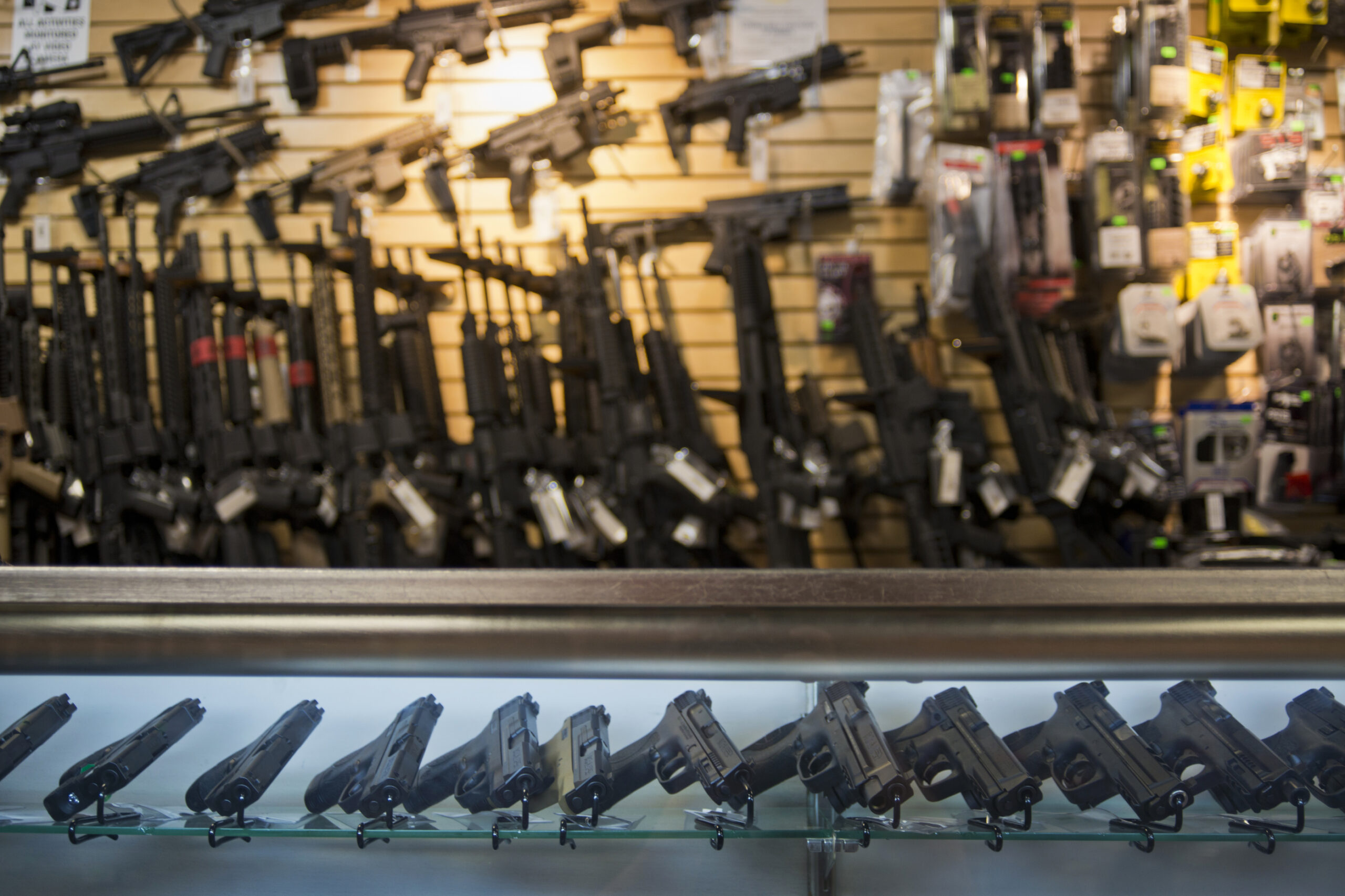
Nevada is one of 19 states joining the administration in urging the Supreme Court to uphold a federal ban on gun possession by users of cannabis products — including those users who reside in states where medical and recreational use of the drug has been legalized.
On March 2, the court will hear a case involving the federal government's efforts to prosecute a Texas man for violating a federal statute that prohibits gun possession by users of illegal drugs. It's a statute that has caused serious consternation for civil libertarians in states where voters have decided to decriminalize and legalize drugs such as marijuana — a substance that up until recently the federal government regarded as illicit and dangerous as heroin.
The government argues the sweeping ban should be upheld by the high court and that even occasional users of a substance that has been made legal on the state level should have their Second Amendment rights revoked.
And to be clear, the argument isn't merely that users of marijuana should be prohibited from handling or carrying a gun while intoxicated. Such a narrow rule would, like driving while impaired, be a reasonable limit on the right to keep and bear arms.
Instead, the argument is that even when sober, users of legal recreational or medical marijuana can't be trusted with their constitutionally protected right to own a firearm.
Considering Nevada's legalization of cannabis products and our rather robust rates of firearm ownership, Ford's decision to join such a legal effort is a political head-scratcher.
More worrying, however, is the fact that the amicus brief signed by Ford reads like some strange amalgamation of radical gun control talking points and Nixon-era drug war propaganda. Far from being a clinical reading of federal statutes, the brief literally compares legal cannabis users to heroin addicts, domestic violence abusers and vagrants who were historically locked up for "habitual" alcohol abuse.
The brief even cites a case in which a criminal who was high on heroin and cocaine tried to trade guns for drugs with an illegal dealer, arguing that such illicit behavior is inherent among users of any controlled substance.
That rationale hasn't been particularly persuasive among lower court judges. As one judge noted in his 2023 ruling against the Biden administration, categorizing large swaths of the population as too "untrustworthy" to be afforded constitutional protections relies on the same sort of appallingly racist rationale used historically against marginalized groups such as Native Americans, slaves and religious loyalists.
The amicus brief, however, does acknowledge that if voters find the law to be unfair, they are free to "request that democratically elected representatives" change the law. But, to an extent, haven't Nevadans already made such a request?
Indeed, voters and "democratically elected representatives" in 42 states have legalized the use of cannabis to some degree. And while that certainly puts local laws out of sync with federal preferences, it also raises an important question for officials such as Ford. If use of cannabis is dangerous enough to warrant the unconditional revocation of someone's constitutional rights, shouldn't that substance be recriminalized on the state level?
Ostensibly, that's not Ford's position. Over the years, he has argued in favor of extending and protecting banking protections for the cannabis industry and has even praised efforts to extend pardons to individuals convicted of marijuana-related crimes.
Perhaps Ford is merely expressing his desire to ensure federal laws are followed diligently — even when they run contrary to local statutes. Of course, if that were the case, every dispensary in the state would likely be guilty of some federal crime, as production, distribution and consumption remain illegal, according to an often antagonistic federal government. Would Ford be supportive of some future drug-warrior president pursuing charges against Nevada citizens who dare to purchase or sell legal cannabis products within our state?
It's doubtful.
And yet, Ford has nonetheless decided to join the Trump administration's effort to use hackneyed anti-drug stereotypes as a way to strip otherwise law-abiding and nonviolent citizens of basic civil liberties.
As far as unlikely areas of bipartisan agreement are concerned, it's pretty disappointing if that's the best our elected officials are able to muster.
Michael Schaus is a communications and branding expert based in Las Vegas and founder of Schaus Creative LLC, an agency dedicated to helping organizations, businesses and activists tell their story and motivate change. He has more than a decade of experience in public affairs commentary, having worked as a news director, columnist, political humorist and most recently as the director of communications for a public policy think tank. Follow him on Twitter @schausmichaelor on Substack @creativediscourse.
Support Independent Elections Coverage and Journalism in Nevada
You’ve enjoyed unlimited access to our reporting because we’re committed to providing independent, accessible journalism for all Nevadans.
But sustaining this work — informing communities, holding leaders accountable, and strengthening civic life — depends on readers like you.
Nevada needs strong, independent journalism. Will you join us?
A gift of any amount helps keep our reporting free and accessible to everyone across our state and funds our elections coverage.
Choose an amount or learn more about membership