


OPINION: They want to change the definition of 'water.' That's catastrophic for Nevada.


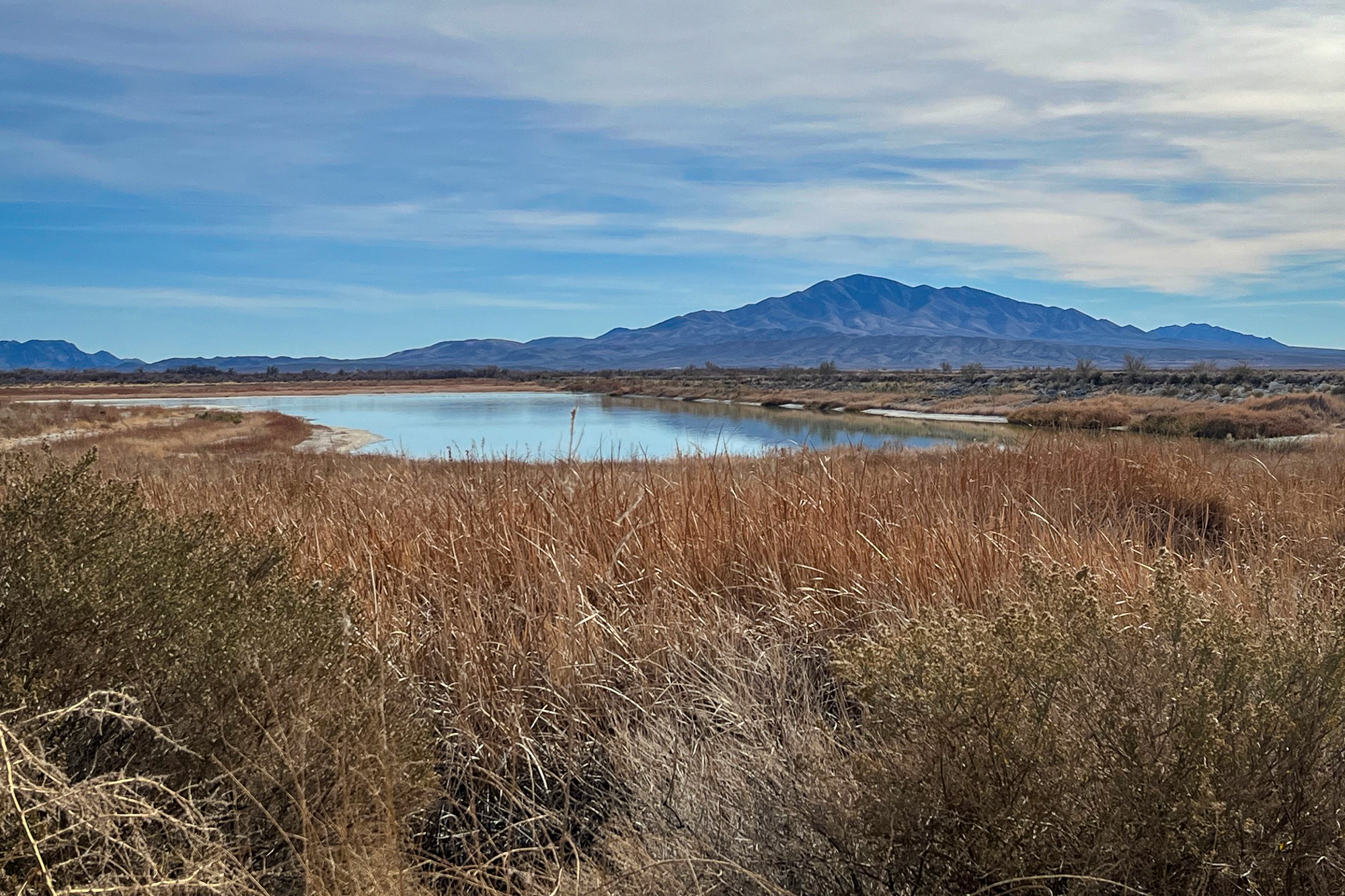
In the desert, water is everything — even when it's not here. You can see the history of its good works in the dry streams and vast playas carved throughout the Southwest. These ancient formations persist as key runoff collection sites, forming what are called ephemeral waters. Unlike conventional streams and lakes that hold standing water, ephemeral channels temporarily hold water only when rain, snowmelt or flooding is sufficiently plentiful to fill the watercourse.
Since prehistory, these features have directed water across critical surface access points and into the underground reservoirs that every well in the West relies on. The odds of seeing these watercourses run is virtually nonexistent outside times of storms or snowmelt, yet during such events ephemeral channels resurge with collected runoff and temporarily elevate water tables. These old guardians prevent floods and replenish groundwater before returning to an arid vigil, awaiting the next cycle.
Ephemeral waterways are now under threat. A new rule proposed by President Donald Trump's administration would strip Clean Water Act (CWA) protections from nearly all ephemeral waters in America.
The CWA sets minimum water quality standards and prohibits unpermitted release of pollutants into waters of the United States. These permits, issued by the Environmental Protection Agency and Army Corps of Engineers, ensure accountable pollutant management, including for sediments that can obstruct entire streambeds. The act also spares tribes and states the expensive process of setting and enforcing water regulations from scratch.
Removing CWA protections will imperil Southwestern water as we know it. Ephemeral waterways make up 81 percent of all streams in the Southwest, supporting basins from the humblest pool to the grandest reservoir. In addition to fundamental drinking resource concerns, the proposed rule threatens our most special places. The crown jewels of Nevada nature, including Ash Meadows and Lake Tahoe, rely on ephemeral hydrologic networks.
Ash Meadows, aka the Galapagos of the Mojave, is a wetland oasis sustained by ancient groundwater and the ephemeral Amargosa River. Even a single inch of rain in this basin can trigger flooding, dispersing nutrients and briefly reconnecting isolated pockets of lush habitat to make this hyperarid corner of Nevada a haven for biodiversity. Yet this balance only survives because of interplay between ephemeral streams and groundwater.
For Lake Tahoe, ephemeral waters are the difference between legendary clarity and irreversible degradation. Tahoe is fed by dozens of often-dry creeks and snowmelt channels. These carry water through forest soils that naturally filter pollutants before reaching the lake. As a basin increasingly stressed by climate change and development, Lake Tahoe relies on ephemeral streams as the first line of defense against erosion, pollution and ecological collapse. Stripping clean water protections from this tributary network would unravel decades of restoration work to preserve one of the world's most iconic alpine lakes.
The Trump administration's redefinition abandons ephemeral water on multiple fronts. First, the rule restricts "relatively permanent" waters of the United States to mean "bodies of surface water that are standing or continuously flowing year-round or at least during the wet season." This leaves major ambiguities as to what suffices as a "wet season" for clean water protections and implicitly excludes ephemeral waterways. Second, the proposed rule explicitly removes "surface waters flowing or standing only in direct response to precipitation (e.g. rain or snow fall)" from waters of the United States.
Each definition jeopardizes Ash Meadows, the Amargosa River Basin, Lake Tahoe and other Southwest landscapes. Ephemeral waterways may go years without running, rarely connect along the surface to "relatively permanent" water and largely flow via runoff.
None of this, of course, makes their flood control, sediment filtration, nutrient distribution and water retention functions any less vital. After all, it's only through surface water inflow that a water body becomes "relatively permanent" to begin with.
The proposed rule's language is taken from the case Sackett v. EPA, where the Supreme Court ruled waterways must have a "continuous surface connection" to "traditional interstate navigable waters" for CWA protection. That definition itself comes from a plurality opinion in the 2006 case Rapanos v. United States, where Justice Antonin Scalia opined that "waters of the United States" should mean "only those relatively permanent, standing or continuously flowing bodies of water." Moreover, Scalia specifically excluded "dry arroyos in the middle of the desert" from his definition.
Put plainly, the court's definition neglects Southwest realities and confidently states Congress intended the CWA to perceive water with the object permanence of a toddler: only what we can see in front of us, most of the time.
The conservative legal movement is important to understand as the source Trump's new definition flows from. Purporting to "clarify" the CWA, this proposed rule just dries up protections for some of the most unique and vulnerable waterways in nature. The extractive fossil fuel and animal agriculture industries are already celebrating.
Exploitation thrives in ignorance, especially when that ignorance infects the law. The blinders this new definition would force on the Clean Water Act compounds risks to all ephemeral waterways and particularly enables modern sprees of mining and development in the deserts of the United States.
With Nevada's most precious resource already bearing unprecedented strain from drought, overdraft, water-guzzling lithium mines and insatiable data centers, Trump's threat to our unique waterways is more dire than ever. You can follow developments in this rulemaking process on the EPA page for "Updated Definition of 'Waters of the United States.'"
If Trump and the Supreme Court have their way with the West's water, what was once "relatively permanent" may cease to exist altogether.
Dexter Lim is a second-year Juris Doctor candidate at the University of California, Berkeley School of Law concentrating on environmental and tribal justice issues in the West. Prior to law school, Lim worked as an environmental activist in Nevada and graduated from UNLV with a bachelor's degree in earth and environmental science.
Mason Voehl is executive director of Amargosa Conservancy, a nonprofit organization working toward a sustainable future for the Amargosa River watershed through science, stewardship and advocacy.
Olivia Tanager is director for the Toiyabe Chapter of the Sierra Club, focusing on Nevada, the Tahoe Basin and the eastern Sierra Nevada. It is a grassroots group that advocates for increased access to renewable energy, public transportation and land, water and wildlife conservation.
Support Independent Elections Coverage and Journalism in Nevada
You’ve enjoyed unlimited access to our reporting because we’re committed to providing independent, accessible journalism for all Nevadans.
But sustaining this work — informing communities, holding leaders accountable, and strengthening civic life — depends on readers like you.
Nevada needs strong, independent journalism. Will you join us?
A gift of any amount helps keep our reporting free and accessible to everyone across our state and funds our elections coverage.
Choose an amount or learn more about membership