
Outside study paints damning picture of staffing at Nevada prisons

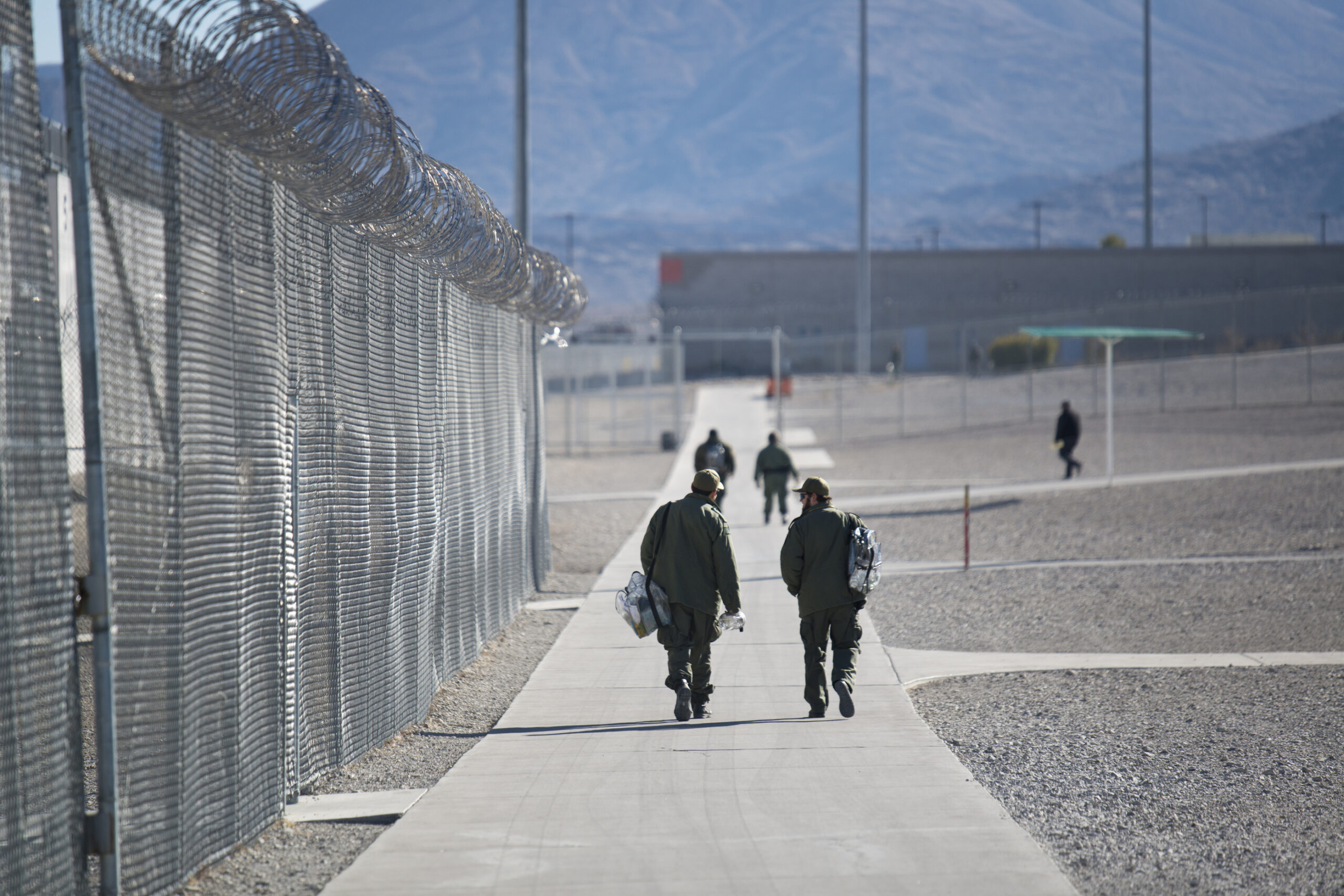
Nevada's prison system has a "staffing crisis" that is leading to worsening conditions for incarcerated people, skyrocketing overtime costs and declining morale among employees, according to a third-party study conducted earlier this year.
In a more than 230-page report completed in late June, which The Nevada Independent received through a public records request and has not been previously published, outside analysts from Corrections Consulting Services uncovered a lack of supervisors on duty at night, possible lapses in compliance with federal requirements to reduce prison sexual assaults and yearslong waits to resolve prisoner grievances, among other issues it said were detrimental to staff and prisoner safety.
The agency's vacancy rate stands at 18.8 percent, a decrease from the 2023 peak of about 33 percent but a slight increase from earlier this year. The report recommended adding about 800 new positions, which would require legislative approval and cost the state tens of millions of dollars every year.
NDOC Director James Dzurenda said at a legislative hearing earlier this year that the findings would be included in a six-year implementation plan across the next three budget cycles. NDOC did not respond to multiple requests for an interview with Dzurenda.
Beyond that, it's an open question what the study will mean for the agency's plans, and lawmakers — who backed significant criminal justice reforms in 2019 to curb prison population and expenses — said the report's recommendation to add hundreds of positions would be a tall order.
"That's always the balance we're trying to strike — you can't give everybody everything," Assembly Speaker Steve Yeager (D-Las Vegas) said. "What can we do across executive agencies to make sure folks are staffed to the degree we can afford the staff?"
Nevada has long struggled to sufficiently staff its prisons, with competition coming from local law enforcement agencies that pay more and challenges in recruiting workers to facilities located in remote parts of the state. For the past three legislative sessions, lawmakers have sought clarity on the prison system's staffing shortages, but the timing of the report means any potential legislative response won't come until 2027.
"At the end of the day, the executive branch should have prioritized this coming out of the 2023 legislative session," Sen. Rochelle Nguyen (D-Las Vegas) said in an interview. "As a legislative body, we were trying to fix things with half information because that study wasn't there."
The governor's office did not respond to a request for comment about the study's findings.
The agency's staffing shortages have been front and center this year as it faced a $53 million budget hole because of spiraling overtime costs that have shown little signs of relenting. Although there have been efforts to limit overtime costs — such as adding new positions during the legislative session and prioritizing cracking down on overdoses to limit hospital trips — the study's findings underscore the problems go far beyond high overtime costs.
Activities affected by the staffing shortages include everything from prisoners' access to classes and showers to phone usage. The report said this makes everyone in the facility less safe by creating "an environment of continued lockdowns and idleness."
"Having phone calls, having recreation, having access to medical care, having education and library — all of those things are basic functions that should be happening in a prison," said Jodi Hocking, the executive director of Return Strong, a nonprofit inmate advocacy group.
There is also skepticism that certain recommendations will be adopted.
Months after the initial study was completed, lawmakers approved funding for another analysis focused on High Desert State Prison (the largest prison in Nevada), which Dzurenda told lawmakers would provide more tailored recommendations on how to right the staffing ship.
The June report recommended 12-hour shifts across all facilities, mandatory days off for correctional officers and an audit of internal agency operations, in addition to the hundreds of new positions.
"The fact that they're going to another company again should tell you all you need to know," said Paul Lunkwitz, the president of the Fraternal Order of Police Nevada C.O. Lodge 21, the union representing correctional officers. "They didn't hear what they wanted to hear."
Asked whether it intends to adopt recommendations that do not require legislative approval, NDOC said it is still in the collaboration and decision-making process, and that any changes to schedules must comply with collective bargaining agreements.
It also declined to comment on the second study because it has not seen any findings.

Study details
All detention facilities are required to have an official tasked with ensuring compliance with the federal Prison Rape Elimination Act, but these positions are still needed in nine of the 14 facilities covered in the report, according to the report.
"While these requirements are demanding for agencies, they are crucial for maintaining a safe and humane environment for offenders and for preparing them for successful reentry into the community," the report said.
NDOC said it has an official to oversee the state's compliance with the requirements, and that each facility has an employee focused on compliance on top of their regular duties. The law mandates that the designated official have "sufficient time and authority to coordinate the facility's efforts to comply."
Minimal staffing has also prolonged the prisoner grievance process, with some formal written complaints pending for about six years — far beyond the required time limits, which differ depending on the type of grievance. The report recommended more positions to coordinate inmate grievances, noting the wait times could expose the state to litigation.
"The grievance process is really their constitutional right to due process. It is the way that we make sure that we balance power and that people who are incarcerated have an avenue to get their concerns addressed," said Hocking from Return Strong, who added that her organization has also seen grievances never get logged in the first place.
NDOC said it contracted with an ombudsman to address the grievance delays. Hocking added that her group's request to learn more about the ombudsman's work has gone nowhere.
There were also instances of no supervisors on call for night shifts. The presence of supervisors is critical to ensure proper procedures are being followed and to advise inexperienced officers, according to the report, which recommended adding an additional sergeant on staggered schedules to cover night shifts.
"The safeguard against misconduct, corruption, abuse, or even apathy is the presence of first line supervisors," the report said.
There are also facility-specific staffing concerns.
At Ely State Prison, which houses about 1,200 people, there is only one mental health professional, much lower than one recommended ratio of a mental health professional per every 150-160 inmates. In addition, employees think "shortcuts are being made to train the new staff and deploy them in a shorter timeframe to meet staffing needs" and staff members must escort high-risk people with less than the recommended three officers.
At High Desert State Prison, which is located northwest of Las Vegas, correctional officers have had to work extra shifts on days off. And at Jean and Carlin conservation camps, there is a significant lack of visitors pat-downs because of limited staff, which could make it harder to find contraband, according to the report.
Skepticism
Lunkwitz said the agency's actions make him skeptical the report will lead to significant changes.
He specifically pointed to the length of officers' shifts. Similar to what the report recommended, the union has long preferred 12-hour shifts — which offer more days off — but Lunkwitz said the agency has been hesitant. The Northern Nevada Correctional Center in Carson City recently went from 12-hour to eight-hour shifts, prompting the departure of about 20 officers, Lunkwitz said.
"When we want a work-life balance and ask to have this work-life balance established and keep it that way, and you get denied, you get what's called 'administrative betrayal,'" Lunkwitz said. "You don't trust your administration to look out for your best interest."
During an October legislative hearing, Dzurenda had his own skepticism about the first report's findings on new positions.
The analysis calculated its job recommendations by determining the number of positions necessary to cover a single post. However, Dzurenda said the analysis occurred when the agency had a higher vacancy rate, so it inflated the numbers on how many new positions are needed now.
Nguyen was also skeptical about the recommendation for hundreds of new positions because there would still be an estimated $13 million in overtime costs.
Hocking also cautioned that adding staff isn't going to help without other changes, such as better supervision and training.
"More officers don't equal safer conditions," she said.
Support Independent Elections Coverage and Journalism in Nevada
You’ve enjoyed unlimited access to our reporting because we’re committed to providing independent, accessible journalism for all Nevadans.
But sustaining this work — informing communities, holding leaders accountable, and strengthening civic life — depends on readers like you.
Nevada needs strong, independent journalism. Will you join us?
A gift of any amount helps keep our reporting free and accessible to everyone across our state and funds our elections coverage.
Choose an amount or learn more about membership