


SCOTUS protects free speech for bigots, religious zealots and artists
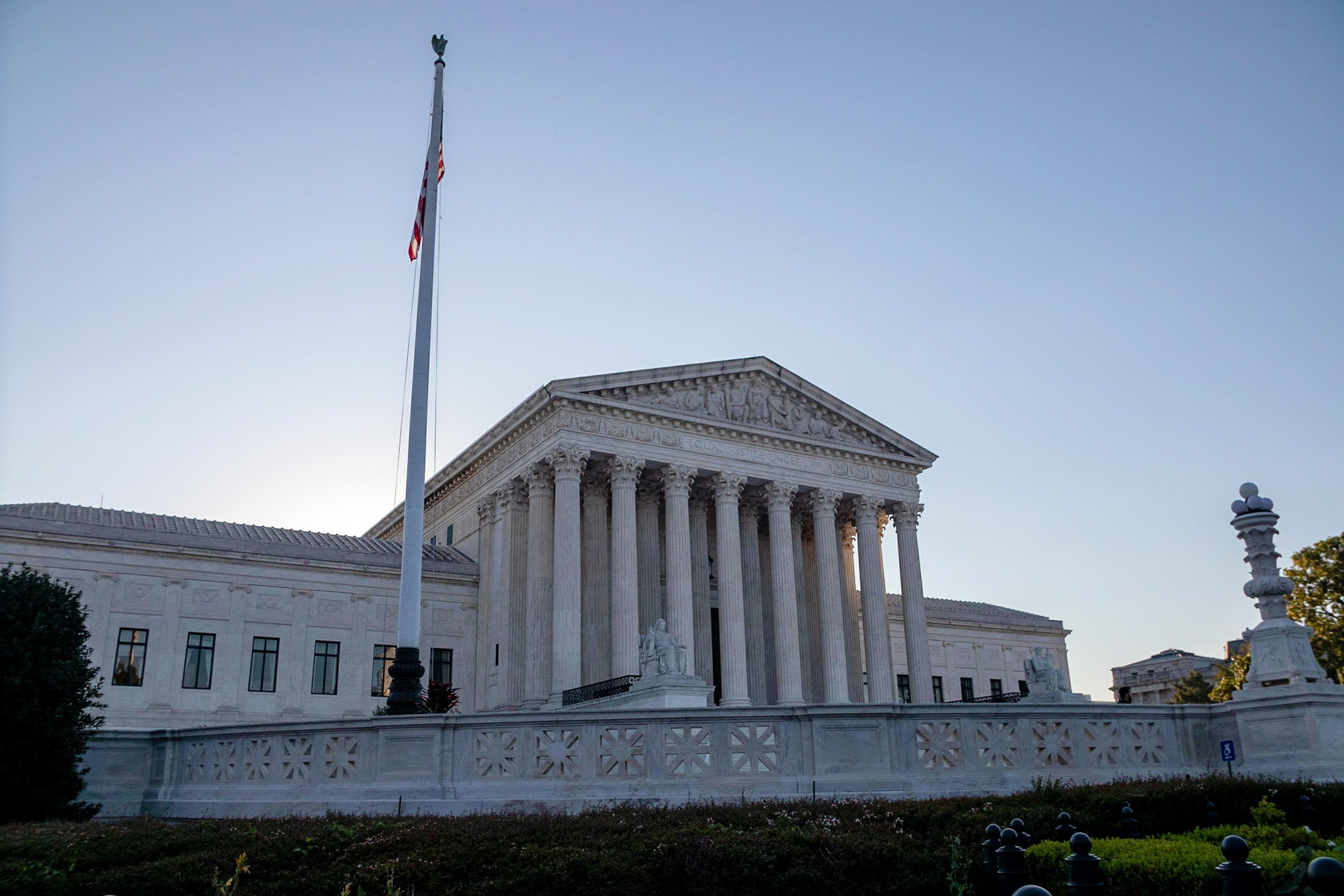
The free speech clause of the First Amendment was designed by the framers to protect the freedom to think and speak. The framers of the Constitution believed that freedom of speech is not only a fundamental human right, but also a vital tool for discovering and spreading political truth.
Allowing diverse views to be expressed, even when considered repugnant to public opinion and bigoted, fosters individual and national growth by testing and improving our thinking. The government should not interfere with the free exchange of ideas as it is a crucial principle in our constitutional system.
But the government has indeed sometimes attempted to challenge these fundamental free speech and thought principles. For example, in 1943, the Supreme Court of the United States (SCOTUS) stopped the state of West Virginia from forcing schoolchildren to salute the nation's flag and recite the Pledge of Allegiance. The court held that state authorities had exceeded their constitutional limits by trying to compel students to salute the flag and recite a pledge.
In 1995, a similar situation arose with the Irish-American Gay, Lesbian, and Bisexual Group of Boston and a St. Patrick's Day parade under Massachusetts law. SCOTUS ruled unanimously that the First Amendment protected private citizens from being required to include a group expressing a message that they did not wish to convey. The court specifically said, "… a speaker has the autonomy to choose the content of their message and, conversely, to decide what not to say."
In 2000, the court held that the Boy Scouts were an expressive association protected by the First Amendment. Accordingly, the court found that forcing the organization to accept a gay man as a leader would interfere with its right to refrain from expressing views that contradict its beliefs as an organization.
Earlier this year, despite the foregoing historical consensus on the breadth of protection the First Amendment provides to free speech, thought and association, SCOTUS was presented with a case from Colorado asking the court to decide whether applying the Colorado Anti-Discrimination Act to force an artist to speak or stay silent violated the free speech clause of the First Amendment.
Facts of the case
Through her business, 303 Creative LLC, Lorie Smith offers website and graphic design, marketing advice and social media management services. Smith's company specializes in creating custom and tailored websites that are expressive and designed to convey a specific message. Each website is an original artwork created by Smith and her company name is displayed on every one to ensure authenticity.
The Colorado Anti-Discrimination Act (CADA) prohibits businesses that are open to the public from discriminating based on protected characteristics, including sexual orientation. This includes not only refusing goods or services but also publishing any communication that suggests a person's patronage is unwelcome due to a protected characteristic.
Smith and her company challenged CADA in federal court, alleging multiple constitutional violations, including a violation of their free speech rights. The federal district court ruled in favor of Colorado, and the Tenth Circuit Court of Appeals upheld the decision. Smith and her company appealed to SCOTUS.
SCOTUS' decision and reasoning
In a 6-3 opinion, the Supreme Court sided with the graphic designer. Justice Neil Gorsuch wrote the majority opinion. The court focused on the Colorado law's "accommodation clause," reasoning that the constitutionality of the "communication clause" depended on the state's ability to apply the first clause.
The court explained, "A hundred years ago, Smith might have furnished her services using pen and paper. Those services are no less protected speech today because they are conveyed with a voice that resonates farther than it could from any soapbox." The court concluded that all manner of speech — from "pictures, films, paintings, drawings, and engravings," to "oral utterance and the printed word" — qualify for the First Amendment's protections; therefore, no less can hold true when it comes to speech, like Smith's, conveyed over the internet.
Smith desired to express her First Amendment rights, and Colorado's law forced her to speak in a way she did not want to. The state put her in a difficult situation in which she was required to either speak as demanded or face penalties for expressing her own beliefs. These penalties included mandatory training, submitting compliance reports and paying fines.
Dissenting opinion
In the dissenting opinion, Justice Sonia Sotomayor, along with Justices Elena Kagan and Ketanji Brown Jackson, argued that Colorado's law targets conduct rather than speech for regulation. Sotomayor discussed the history and purpose of public accommodations laws, which is to ensure equal access and dignity in the public market and prevent businesses from engaging in unjust discrimination. She stated that the majority opinion confused the denial of service with protected expression and that Colorado's law is a valid regulation of conduct.
Justice Sotomayor claimed that allowing public businesses to exclude a protected group from the expressive quality of its goods or services would nullify public accommodations laws, which means that a department store could sell passport photos for white people. While she acknowledged that upholding Colorado's law would require the company to create and sell speech, the critical factor, in her view, was that Colorado was only applying the law to the refusal to provide same-sex couples the full and equal enjoyment of the company's publicly available services and consequently only compelling speech incidental to the content-neutral regulation of conduct.
In response, Justice Gorsuch commented:
"It is difficult to read the dissent and conclude we are looking at the same case. Much of it focuses on the evolution of public accommodations laws, post, at 7-13, and the strides gay Americans have made towards securing equal justice under law, post, at 14-17. And, no doubt, there is much to applaud here. But none of this answers the question we face today: Can a State force someone who provides her own expressive services to abandon her conscience and speak its preferred message instead? When the dissent finally gets around to that question — more than halfway into its opinion — it reimagines the facts of this case from top to bottom."
The dissent's approval of a government's attempt to eliminate unpopular ideas is indicative of a troubling trend where only favorable messages are defended under the guise of upholding free speech. "If liberty means anything at all, it means the right to tell people what they do not want to hear," according to Justice Gorsuch.
Political reaction to the decision
This ruling comes at a time of great uncertainty for LGBTQ+ rights. A Department of Homeland Security briefing in May reported an increase in threats of violence against the queer community over the past year. Additionally, over 400 bills aimed at limiting gender-affirming care and drag have been introduced this legislative session.
Moreover, there are significant worries about the potential for explicit discrimination and the possible negative impact on public discourse about the LGBTQ+ community.
In an official statement, Nevada's attorney general expressed this concern: "The Supreme Court's recent decision in 303 Creative LLC v. Elenis has raised serious concerns about the legal protections offered to LGBTQ+ Americans against discrimination. Though the full implications of this decision are still not fully understood, it is important the public understand what the decision means in its immediate aftermath. In Nevada, the Supreme Court's decision will not invalidate any specific provision of the state's public accommodations law, though it will disallow certain applications of the law."
Meanwhile, in response to the foregoing concerns, the Alliance Defending Freedom, which represented Smith and her business, believes that the recent decision by SCOTUS is a victory for all Americans. While this decision should not be used as an excuse for bigots to justify unlawful discrimination, the government should not have the power to force Americans to express ideas they disagree with. Free speech is vital to a free country and benefits everyone. Therefore, it is wrong for the government to deny free speech rights to Americans who create art for a living.
For example, should the government have the power to force an LGBTQ+ designer to create a website promoting the Catholic Church's beliefs on marriage? Or a Jewish designer to create promotional flyers for another faith because he previously designed one for the synagogue? Or a Democratic artist to design posters promoting the Republican Party? The answer is no, no and no. Every American, regardless of their beliefs or background, should have the freedom to express their ideas without fear of government intervention.
What does this decision mean for Nevadans?
SCOTUS' opinion was intentionally narrow. It is a strong affirmation of Smith's First Amendment rights in her case. However, it doesn't offer a lot of guidance for the dozens of similar cases that are already winding their way through lower courts or conflicts that have already arisen in the wake of these decisions.
In Nevada, businesses cannot discriminate against individuals based on their race, religion, sexual orientation or any other protected characteristic. However, they have the right to decline participation in activities that they do not agree with, and the state cannot penalize them for it. For instance, a bar cannot deny service to someone from the LGBTQ+ community, but a movie director cannot be compelled to create a pro-LGBTQ+ rights film.
The attorney general's office anticipates more legal cases in the future to determine what constitutes expressive activity under the law.
If a plaintiff can demonstrate that they are engaging in protected expression, the free speech clause will not be confined to religiously motivated expression concerning same-sex marriage. In the future, a web designer might object to designing a website that would "celebrate and promote" an interracial marriage, a gay pride parade or a religious charity.
The ruling in the 303 Creative case could also potentially affect attempts to regulate social media platforms.
While most questions surrounding free speech protections and public accommodations laws are focused on their interaction, there are also other questions that arise in the employment context. The ruling in 303 Creative could potentially expand the ability of employees who work for places of public accommodation to refuse services to customers based on religious reasons. This is especially true in light of the Supreme Court's recent decision in Groff v. Dejoy.
The First Amendment envisions a diverse and vibrant nation where individuals can think and speak freely. SCOTUS has always recognized the importance of independent thought and freedom of expression, which are fundamental to maintaining a strong democracy. Even though the Constitution guarantees freedom of speech, we may come across views that we find unpleasant, misguided or hurtful. However, our response as Nevadans should be based on grace and tolerance, not derision and force.
Jason D. Guinasso is the managing partner of law firm Hutchison & Steffen's office in Reno. Licensed in Nevada and California, he is a litigator and trial attorney. He also teaches business law at the University of Nevada, Reno and is a graduate student at Regent College in Vancouver, British Columbia.
Support Local Journalism
You’ve enjoyed unlimited access to our reporting because we’re committed to providing independent, accessible journalism for all Nevadans.
But sustaining this work — informing communities, holding leaders accountable, and strengthening civic life — depends on readers like you.
Nevada needs strong, independent journalism. Will you join us?
A gift of any amount helps keep our reporting free and accessible to everyone across our state.
Choose an amount or learn more about membership