
Trump tax program could grow private schools. Critics fear it could tie Nevada's hands

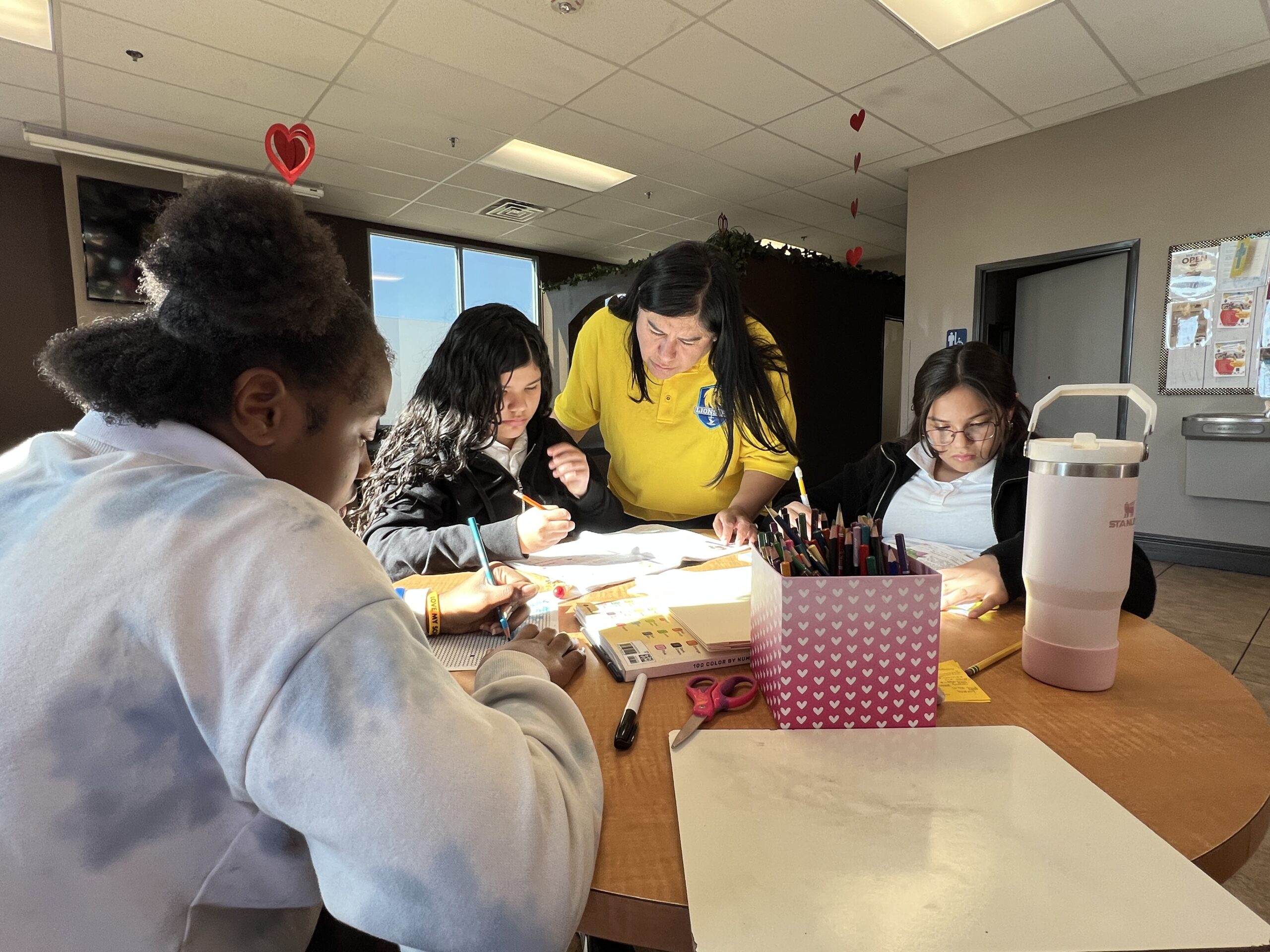
Homeschooling mom turned school administrator Wendy Florez prides herself in the small class sizes her private school, Zion Christian Academy, is able to offer. On a recent Tuesday morning, about a dozen students in black and white uniforms sat at round tables working on their assignments inside the cafeteria of the His Word Christian Center in North Las Vegas.
Florez, 46, said she and the school's co-teacher are able to offer their students more individualized attention than they could receive at a public school or even at a different private school. That's been especially beneficial to some who arrived at her school behind in reading and math when it opened in August 2023.
"When they come to this school, we have to work and help them to be able to learn," she said. "If they don't understand what they're reading, they're not able to do other books so they need to learn the basics in math and English."
Florez is hopeful that a new federal school choice program that Republican Gov. Joe Lombardo recently opted into could increase the number of students who can afford to attend a school like hers by allowing individuals to donate to scholarship funds in exchange for a dollar-for-dollar tax credit. She said it would also bring in more funding so her K-12 school of 14 students can move to a facility that has amenities it's currently missing, such as a library and a playground.
But a public education advocacy group is concerned the program may not shape up to be as beneficial for the state as proponents think.
Amanda Morgan, executive director of Educate Nevada Now, said states could have limited oversight over how the program works, and scholarship granting organizations could be allowed to discriminate against public school students if the Trump administration adopts ideas from a conservative think tank founded by the president's close associates.
Morgan criticized Lombardo for signing Nevada up for a program before fully knowing how it will be structured.
"We think that the governor really prematurely opted into this," she said.
Drew Galang, communications director for the governor's office, said in a Wednesday statement opting in ensures that Nevada families are positioned to benefit from the program once it is implemented, rather than being left out of opportunities available to families in other states.
"The Governor will continue to closely monitor the development of federal regulations and remains focused on ensuring that any program affecting Nevada students operates in a way that serves families' best interests," Galang said.
Expanding school choice
This school year, some of Florez's students were able to get financial assistance from the Nevada Educational Choice Scholarship Program, better known as the Opportunity Scholarship program. Geared toward low-income households, the scholarships helped cover all or part of their tuition, $10,000 per school year.
That made it possible for Florez to pay herself a salary for the first time since she opened her school.
But others weren't as lucky. Florez said she offers a discount to families who can't pay the full tuition cost with or without a partial Opportunity Scholarship, but it means less funding for Florez to invest in the school. Lack of tuition money has prevented the school from getting its own facility, which keeps her from adding students from her waitlist because of limited space.
Lombardo has advocated for expanding the Opportunity Scholarship program, which served about 1,300 students during the 2024-25 school year, lower than the two previous school years. But his efforts have been blocked by the Democrat-controlled Legislature. Although the program isn't directly funded through state money, the tax breaks businesses get in exchange for donating to scholarship organizations means less revenue flows to the state, which still ranks among the nation's lowest in per-pupil funding.
Last month, Lombardo announced he was signing up Nevada to be a part of a new federal school choice tax credit program created by President Donald Trump's One Big Beautiful Bill Act. Dubbed the Education Freedom Tax Credit, the program would allow individuals to donate funding for scholarships that K-12 students can use for educational expenses, such as private school tuition, and get a break of up to $1,700 on their taxes. It gives Lombardo a way to expand school choice in Nevada without needing to win over Democrats in the Legislature.
Florez said she's hopeful this will lead to more students being able to afford the education that best fits their needs.
"If we get more students with the state scholarships, and they get those federal funds, that would be amazing," Florez said. "We can help more students."

Program rules unknown
School choice advocates say the new federal program, which is expected to go into effect in 2027, will complement the state's existing Opportunity Scholarship program, which has limited state support and is only available for families whose income does not exceed 300 percent of federal poverty guidelines.
Close to 30 states, all but two Republican led, have opted in to the program so far, according to a tracker by Education Week.
Kim Dyson, president and CEO of the AAA Scholarship Foundation, one of the administrators of Nevada's Opportunity Scholarship program, said she's heard that scholarship granting organizations (SGOs) for the states that opt in are already gathering information from individuals interested in donating, giving them an idea of how much funding they will have available and how many students they would be able to support before the federal program is officially up and running.
Full details about how it will work are still limited as the treasury department and the IRS work to develop regulations for the program. But the federal law's language suggests it won't only be open to low-income families and it could include public school students who use the funds for tutoring or support services for students with disabilities.
"Until those rules are out, we don't really know," Dyson said. "But we think it would complement what we're doing right now, and … if we could work with some public schools as well to enhance public school students' education, then we would be all for it."
But Morgan flagged the public comment submitted by the America First Policy Institute, a think tank founded by former Trump administration officials, as an example of where the program could be headed.
The group calls for regulations that would prevent states from deciding which scholarship granting organizations will collect donations and award students. Those decisions, the group argues, should be left to the feds "rather than agencies in covered states." It also states that nothing in the regulations "should permit, allow, encourage, or authorize any state or federal entity to mandate, direct, or control any aspect" of a nonpublic school or impose any new requirements or regulations on these existing schools.
Morgan said she's concerned that the treasury department and the IRS won't have the resources to monitor the program as closely as states can, leaving room for fraud and abuse similar to what's been found in state voucher programs in Florida, and that those bad actors will be allowed to administer the federal scholarships despite their track record.
"At least with those programs, there's been state audits and some level of oversight, which is why we even know about the issues," she said.
Morgan also took issue with the institute suggesting that the scholarship granting organizations "should have discretion to award scholarships to students receiving educational services from specific providers or attending specific schools," which she worries could open the door for them to exclude public schools and their students from accessing this funding even if their state opts in.
Morgan said given the America First Policy Institute's connection to Trump administration officials, it's likely that the regulations' final language will match or closely resemble those proposals.
Dyson downplayed Educate Nevada Now's concerns. She said that the institute's public comment was one out of the more than 2,000 that the treasury department and the IRS received.
"Given the volume and variety of perspectives ranging from state agencies to advocacy groups, we believe each will be given fair consideration as the formal regulations are developed," Dyson said in a Wednesday statement.

Nevada governor candidates weigh in
In a Wednesday statement, Galang called the governor's decision to opt Nevada into the federal program a no-brainer because it expands school choice for Nevada families with no direct cost to the state.
The scholarships are going to be funded through donations from individuals who, in return, will receive a dollar-for-dollar federal tax credit of up to $1,700 annually.
The federal law didn't put a cap on how much could be raised in total across the country, or how much each student could receive. According to a fact sheet by the Department of Education and the Department of the Treasury, the Education Freedom Tax Credit will generate an additional $24 billion in education funding annually. It says every $1 billion in scholarships could fund tuition at a school of choice for 77,000 students or cover tutoring for more than 300,000 students.
While the program is not being funded directly from federal funds, Morgan said the tax credit means there will be less federal revenue to support essential social services such as Medicaid.
"Those are funds that are being sucked away from other social services, so it should be held accountable," she said.
Tai Sims, a spokesman for Attorney General Aaron Ford's gubernatorial campaign, said in a Jan. 28 statement the Democratic candidate supports public school choice such as charter schools and opposes programs that drain resources to fund private schools. He also took a jab at Lombardo, saying, "His unwavering support of Trump's reckless policies will only drag our education system further down national rankings and harm our public schools."
Washoe County Commission Chairwoman Alexis Hill, who's also running for governor as a Democrat, had initially been open to the federal program, but said she reconsidered her stance after learning about Educate Nevada Now's concerns.
"Here's the thing about this administration … they like to put conditions on funds and Nevada typically has to be at the whim of these kinds of conditions and grant requirements," Hill said in a Wednesday phone interview. "It's draconian and can be really exclusionary and not be good for all Nevadans."
However, private school educators such as Florez are hopeful the federal program can deliver on helping more students attend the school of their choice, so more schools like hers can grow.
"We need more schools to be opened so kids are not crowded in classrooms," she said. "We need more help."
Support Independent Elections Coverage and Journalism in Nevada
You’ve enjoyed unlimited access to our reporting because we’re committed to providing independent, accessible journalism for all Nevadans.
But sustaining this work — informing communities, holding leaders accountable, and strengthening civic life — depends on readers like you.
Nevada needs strong, independent journalism. Will you join us?
A gift of any amount helps keep our reporting free and accessible to everyone across our state and funds our elections coverage.
Choose an amount or learn more about membership