
'We have a light now': Maduro capture brings relief, uncertainty for Venezuelans in Vegas

Oscar Pineda was a radio host in Venezuela when he was captured and tortured during President Hugo Chavez's administration, then dumped outside the city and left for dead. When he fled the country with "absolutely nothing" and arrived in the U.S., he became one of the first Venezuelans to be granted political asylum.
Now 63, and a resident of Las Vegas for nearly 20 years, he said he had long hoped for the downfall of Venezuelan President Nicolás Maduro and was relieved when U.S. forces captured him over the weekend.
"Do the people prefer to stay with that system or have a country come in and rid the cancer and try to change things?" Pineda told The Indy in a Spanish-language interview.
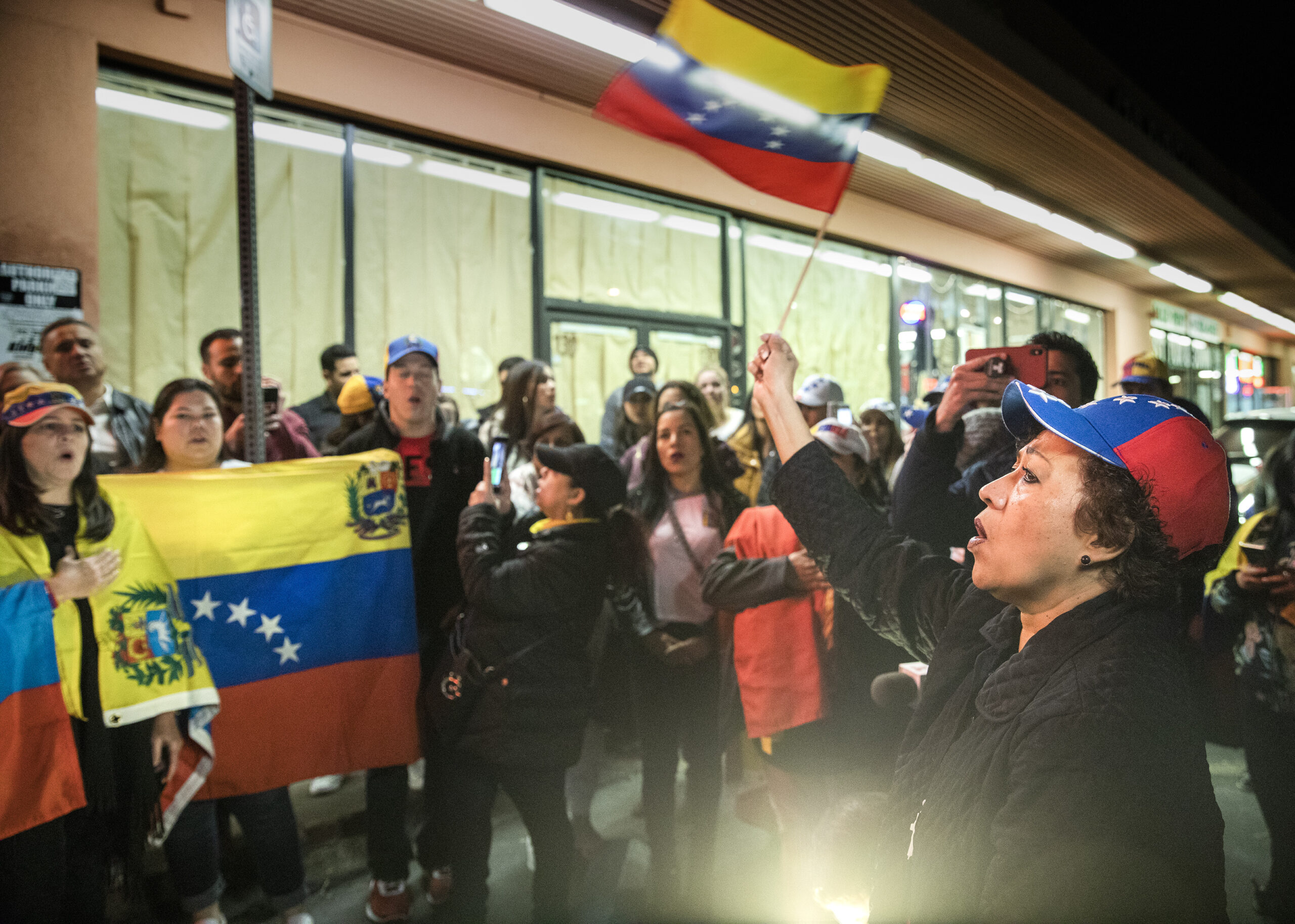
Despite initial celebration among Venezuelans, the U.S. operation that ousted Maduro has sparked divided reactions. In Nevada and beyond, many have lauded the dictator's capture while rebuking President Donald Trump's failure to secure congressional approval for the operation. Earlier this week, Trump also announced he plans to assume control of Venezuela's oil sales indefinitely, raising questions about his motivations in the region.
Others fret that Maduro's allies will stick around, especially given that Trump appointed Maduro's vice president and ally, Delcy Rodríguez, as interim president.
Right after he heard the news of Maduro's capture, Pineda called his brother who lives in Caracas. His brother described an "apparent calm" coming over the city, Pineda said. Still an unease lingers as Maduro's allies remain in power. People remain afraid to go out onto the streets, storefronts are shuttered, and people are afraid to speak their minds.
"The people who critique and poorly analyze — especially if you don't live there — you don't know what's going on with those people — it's a huge relief," Pineda said.
When Las Vegas resident Zoraida Caldera first heard the news of Maduro's capture, she was "overjoyed."
But in the following days, Caldera, a native of Venezuela, began to worry. After Trump told The New York Times that he planned on governing the country for the foreseeable future, her opinion soured. She had been optimistic the popular opposition leader, María Corina Machado, would have been allowed to assume power.
"Venezuelans don't want to be a U.S. colony. We have our own sovereignty," Caldera said in an interview in Spanish. "The Venezuelan people have demonstrated the great struggle we've all put up for our freedom. … We need to be sure no government comes along and says, 'Venezuela is mine, Venezuela belongs to me.'"
Nevada Dems wanted Maduro gone, but not like this
Rep. Susie Lee's (D-NV) reaction to the operation encapsulated how Democrats in Nevada's congressional delegation feel: "I believe that Maduro should have gone," she said, "but I wish there would have been more than a concept of a plan for what we do next."
Speaking to The Nevada Independent, the Democrats were particularly pointed in their criticism of Trump's decision not to tell them about the operation ahead of time.
"You know who had time to call? Oil companies," Sen. Jacky Rosen (D-NV) said on a press call this week.
On Thursday, the Senate voted to advance a war powers resolution that would require the president to seek approval from Congress before taking further military action in Venezuela. Lee said she thinks a few Republican votes might help the measure pass the House, however, Trump would likely veto it.
Nevada Democrats are also skeptical of Trump's decision to recognize Rodríguez as the new head of Venezuela, where enforcer Diosdado Cabello Rondón remains interior minister.
"Is he in there for regime change?" Rosen asked. "Because the people who are there now — it's the same regime. Rodríguez, Cabello — they're no better than Maduro."
Trump has not provided any commitments about when he expects Venezuela to hold elections again. Former U.S. Secretary of State Antony Blinken recognized opposition candidate Edmundo González Urrutia as the victor of Venezuela's 2024 presidential election, which Maduro allies insisted he'd won.
"I think they should move toward free and fair elections," Rep. Dina Titus (D-NV) told The Indy. "And the person who won the election before, Mr. González, who was a stand-in for Maria Machado, seems to me to be the rightful heir to it. They've already won the election. She unified the opposition, which hasn't been done in years, and won the [Nobel] Peace Prize, and is still popular. So I don't know why we would move in any other direction."
What's next?
Nearly a week later, Congress is still largely in the dark about what comes next. A classified briefing Wednesday left lawmakers with more questions than answers. Rosen called the session "inadequate."
"We requested more information and requested them to declassify what they can and put some sunlight on all of this, because the American people want to know," she said.
Speaking to The Indy, Sen. Catherine Cortez Masto (D-NV) rebuked Trump's Times interview.
"He doesn't have any exit strategy or time frame around it," Cortez Masto said. "His statements are very clear. He's going to run the country. … And I question why he's more focused on 31 million people who actually live in Venezuela who need some sort of certainty around a government … instead of spending the time and money here in the United States to lower costs for families."
Nevada Democrats promised to do what they can to hold the president accountable. Lee, who serves on the House Appropriations Committee's Defense Subcommittee, said she will try to do so through the appropriations bill that lawmakers hope to pass this month.
"To the extent we can put some guardrails in there to reinstate Congress' power of the purse with respect to funding any potential future military action, we'll try to do that, along with oversight," she said.
She added that she will press the administration to find out exactly how much the operation cost.
"I'd guess there's 'B' on the front end," Lee said.
Titus, who serves on the House Foreign Affairs Committee's Western Hemisphere panel, said she has called for hearings. She also raised concerns about how the uncertainty Trump has created throughout Latin America could hurt tourism, reducing travel from Mexico and elsewhere in the region.
The precarity is even more pressing for residents who hail from Venezuela after the Trump administration eliminated Temporary Protected Status for Venezuelans living in America last year. Homeland Security Secretary Kristi Noem defended that decision over the weekend, saying that all of the people who were in the country under the protected status can apply for refugee status.
"I think it's setting up false hopes," Titus said of Noem's comments. "Refugees come from outside the country, so these people have to be sent back and then apply. And don't forget, he's already put a cap on the number of refugees who can come into the country. It's a very low number, 7,500, and he's set a priority for those people to be from South Africa."
She noted that most of Nevada's Latino population is Mexican or Salvadoran, but that she has been working with some Venezuelans "who don't know what's going to happen to them."
All four women in the congressional delegation signed onto a brief last year urging a federal court to uphold the Temporary Protected Status for Venezuelans. Lee said this week that she is optimistic some Republicans might vote to restore it.
"A lot of the Florida representatives have a lot of Venezuelans in their communities, and I don't think any of them want to see these Venezuelans have to go back to Venezuela until the government has been stabilized and democracy is restored," Lee said.
Maduro has pleaded "not guilty" on U.S. drug trafficking charges. His next court date is set for March 17.
Pineda is optimistic the American government will help Venezuelans in the U.S. given the recent intervention. Still, some uncertainty lingers for Pineda and Caldera on when, or whether, Maduro's allies will be removed.
"We have a light now," Pineda said. "And that light belongs to the Venezuelan people."
Support Independent Elections Coverage and Journalism in Nevada
You’ve enjoyed unlimited access to our reporting because we’re committed to providing independent, accessible journalism for all Nevadans.
But sustaining this work — informing communities, holding leaders accountable, and strengthening civic life — depends on readers like you.
Nevada needs strong, independent journalism. Will you join us?
A gift of any amount helps keep our reporting free and accessible to everyone across our state and funds our elections coverage.
Choose an amount or learn more about membership