
A disabled Nevada veteran had nine teeth pulled. How did he get stuck with the bill?



Robert Himschoot, an 81-year-old Navy veteran who lives in Boulder City's Southern Nevada Veterans Home, calls himself a "physical wreck."
With a 100 percent disability rating, he struggles with Parkinson's disease, diabetes, as well as hip and knee pain — and has had nine of his teeth removed.
But because of an ongoing coverage dispute between the state-operated skilled nursing facility for veterans and the VA Southern Nevada Health Care clinic, owned and operated by the Department of Veterans Affairs (VA), Himschoot ended up stuck with the dental bill.
With nine teeth missing, Himschoot said it's difficult to chew and food will often get trapped in the holes left behind by the absent teeth, leaving him to pick the food scraps out of his mouth with toothpicks for up to an hour.
"I don't even want to talk about it," Himschoot said in a sometimes emotional interview with The Nevada Independent. He said his family is looking into getting his dental issues resolved outside of the veteran's healthcare system.
The dispute is happening not only in Boulder City but across the country as the federal VA has recently reinterpreted existing policies on who should pay for medical care, according to experts.
In a statement to The Nevada Independent, Nevada Department of Veterans Services spokeswoman Terri Hendry said that the VA's "reinterpretation" of the rule has affected routine dental care for up to seven residents at the veterans home, though she said emergency dental services have been available to patients throughout.
Quinn Slaven, a press secretary for the U.S. Department of Veterans Affairs, said that the responsibility for veterans' dental care should fall to the states.
"State Veterans Homes (SVHs) are owned, operated, managed and financed by the states," Slaven said in an email. "SVHs are required to provide and obtain dental services for Veterans residing there when they receive a federal per diem."
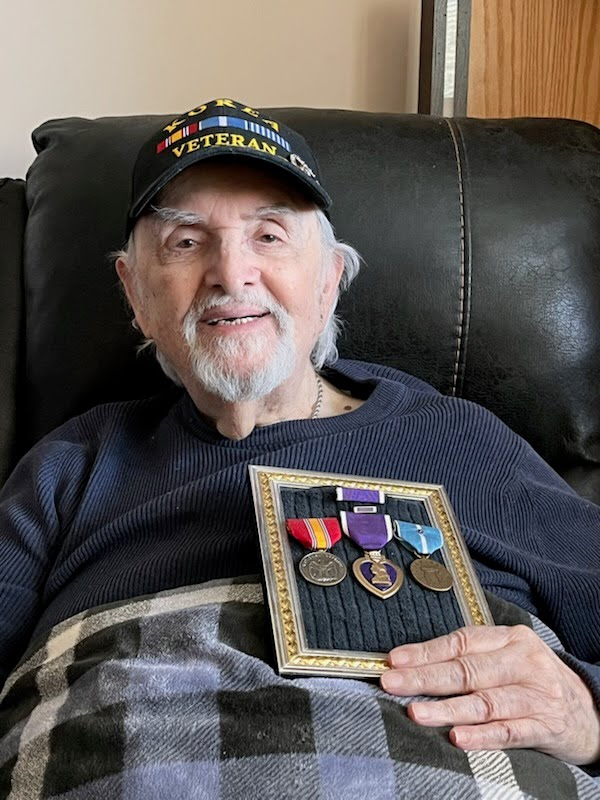
Caught in the middle are veterans such as Southern Nevada Veterans Home resident David Violette, a 95-year-old Korean War veteran. His niece, who began trying to help arrange dental care for her uncle last October after he experienced on-and-off tooth pain, said it was frustrating as his treatment would be covered if he lived anywhere but at the veterans home.
"We did not know at the time that because his address changed to this nursing home that his benefits would be taken away," Jennifer Mullen said about her uncle.
Who pays?
According to the Nevada Department of Veterans Services, the federal VA has reinterpreted two existing laws: one that applies to a sharing services agreement between the two agencies outlining which agency pays for what, and one that applies to the funds that the state veterans home receives from the federal government.
Established during the Civil War, state veterans homes were first funded exclusively by the states. However, federal support to state veterans homes has been around since the 1880s, when Congress first approved payments of $100 per veteran per year, more than $3,419 in today's currency. Now, that stipend is a per diem, or payment per day, for each veteran. In Nevada, it was $654.04 in 2025, and was expected to go up to $674.97 in 2026, to cover "the care" of eligible veterans living in state homes.
The federal VA says that these per diem rates should cover at least part of the dental care costs and that existing law says that the state should cover dental care.
In this case, the federal VA reinterpreted a law outlining that state veterans facilities are mandated to "provide or obtain from an outside resource … routine and emergency dental services to meet the needs of each resident." Previously, the Nevada Department of Veterans Services said the federal VA was footing the bill.
"Under this interpretation, the provision of routine dental care directly through VA facilities, absent an approved sharing agreement, is considered by the VA to constitute a duplication of federally funded services under federal appropriations law," Hendry, speaking about the federal interpretation, said in an email.
Hendry also said that the state and the federal government were "working together" on finding a solution to the sharing agreement issue. However, she said the federal government's interpretation of the law is new.
"For more than two decades, since [Southern Nevada Veterans Home] opened its doors in 2002, eligible residents routinely received VA dental services without a sharing agreement," Hendry said.
She said the state is now in the "final stages" of finding an outside provider to cover dental services for veterans and "exploring" a sharing services agreement with the federal government.
A national issue
Veterans homes across the United States have been struggling with the VA reconfiguring existing health care coverage agreements. The issue extends beyond just dental care to a wide range of medical issues, including wheelchair costs, mental healthcare and other medical issues.
100 percent service-connected disability veterans, a term designated by the federal VA, are covered by federal funding, not state funding, though recent agency reinterpretation muddies that issue.
Mullen, who has been navigating this issue with her uncle for almost a year, said it's been incredibly taxing to figure out how to get the care her uncle needs. She's now looking into getting private medical care.
"I have a family member in this nursing home who needs his teeth cared for, and this just needs to be done," Mullen said. "Who are the adults in the room?"
This story was updated at 2:05 p.m. on 7/14/26 to remove a word characterizing what type of coverage the VA provides.
Support Independent Elections Coverage and Journalism in Nevada
You’ve enjoyed unlimited access to our reporting because we’re committed to providing independent, accessible journalism for all Nevadans.
But sustaining this work — informing communities, holding leaders accountable, and strengthening civic life — depends on readers like you.
Nevada needs strong, independent journalism. Will you join us?
A gift of any amount helps keep our reporting free and accessible to everyone across our state and funds our elections coverage.
Choose an amount or learn more about membership