
A man-made lake in Red Rock? A luxury home developer says it will help fight fires.

As one of the driest counties in the driest states in the nation, Clark County has strict water conservation rules. But one luxury home developer is looking to bypass some of those stringent policies by framing a proposed man-made lake as a firefighting resource.
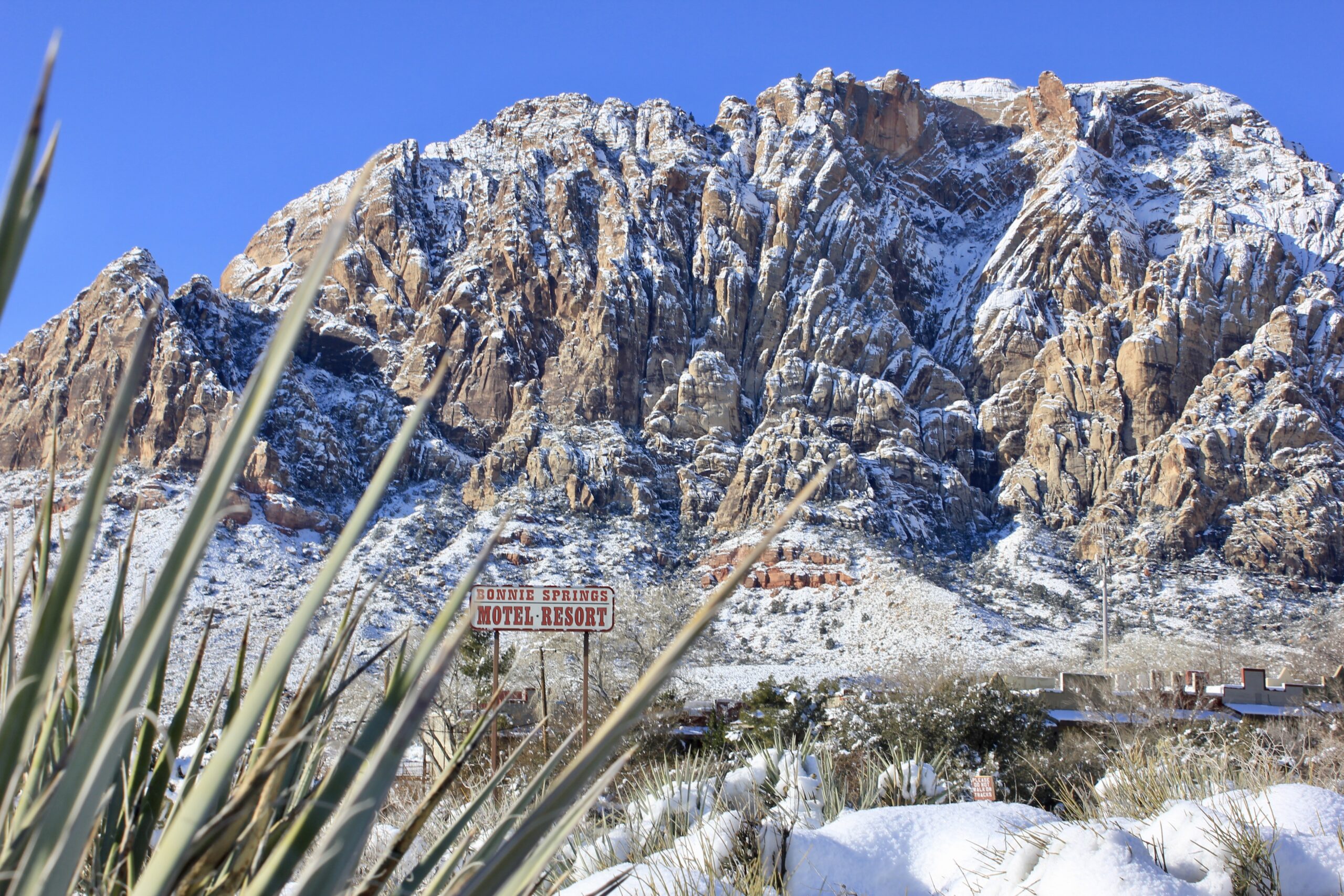
The developers behind The Reserve at Red Rock are looking to construct what they say is a "dip pond" — a water source used by firefighters for fighting wildland blazes — at the former Bonnie Springs Ranch. The ranch was once a family-friendly tourist attraction with horseback riding and a small zoo at the base of Red Rock Canyon Conservation Area before shuttering in 2019.
Now, the ranch is being converted into an elite development with just 16 homes sprawling across 65 acres. Undeveloped lots cost upward of $9 million apiece. The development also includes amenities such as a spa, restaurant and, according to the development's website, water features.
Clark County code, however, prohibits non-essential outdoor water features. The developers, who need an amendment to build their water project, have proposed language that would allow certain non-essential water features for "fire suppression and life safety purposes."
The Reserve at Red Rock has water rights totaling more than 100 acre-feet annually, and its developers say the dip pond will have no effect on the strapped Colorado River, which provides most of the water for the Las Vegas Valley.
However, the nonprofit group Save Red Rock says the project will negatively affect the conservation area's water sources, and residents of nearby Blue Diamond note that their community has had a moratorium on new water permits since 2020 because of the lack of available groundwater in the area.
Pauline Van Betten, a Realtor and Blue Diamond resident, told the Clark County Planning Commission it's "irresponsible for the county and it's irresponsible for Red Rock" to consider the change.
The county's planning staff agreed, noting that allowing the pond doesn't comply with the county's hazard mitigation or master plans. However, the county planning commission — the entity that provides formal recommendations to the Clark County Board of County Commissioners — approved the proposed language, 6-1, and now the county's board of commissioners is poised to vote Wednesday on the matter.

'Private, standalone water source'
The 16 estates being built at Red Rock Reserve and their amenities are the only private developments allowed within Red Rock National Conservation Area.
Blue Heron, builder of one of the Reserve's model homes, notes that "homeowners will enjoy views unavailable to residents of nearby communities" and that, "paths and roads will meander past water features fed by the canyon's natural springs, perfect for leisurely walks."
Its website shows sprawling residences with floor-to-ceiling windows, swimming pools and private water features. A site plan shared with The Nevada Independent shows a large body of water with an island complete with a footpath to it.
Bob Gronauer, a land-use and zoning attorney representing the applicants, Joel Laub and Randall Jones, framed the water feature — and the language change necessary for its approval — as a matter of public safety.
Laub serves as a Nevada board member for The Nature Conservancy. He and Jones have each reserved one of the available lots for themselves, the Las Vegas Review-Journal previously reported. Also on the Conservancy's board is Jess Molasky, whose father, Alan Molasky, a Las Vegas developer, purchased one of the 16 lots.
As proposed, the text amendment specified that the request was for a "body of water, served from standalone private water rights, within 1,000 feet of a National Conservation Area, intended for fire suppression and life safety purposes as agreed upon with a State or Federal Agency."
In an interview, Gronauer told The Nevada Independent that the applicant is working with the county to narrow the language even further to address concerns that the text amendment would open the door for other developers to construct decorative water features.
"This is not a man-made lake text amendment. This does not allow someone to build a lake and also use public water that's water from the Colorado River system," Gronauer told the planning commission in October.
He stressed to planning commissioners that the pond is to help battle wildfires and would serve as a "public benefit."
"The threat here that we're talking about are wildfires that are located in these conservation areas or nearby," Gronauer added, citing a string of blazes that have burned in the area since 2005, including the 2013 Carpenter 1 Fire and 2020 Cottonwood Peak Fire. Since those fires, Clark County has continued to experience excessive drought conditions.
However, as proposed, there "is no indication of how these water features would be designed, the capacity of these water features, or other potential uses for the stored water," according to the county's planning staff.
Gronauer told the planning commission that when it's not being used as a dip pond, it would be used for irrigation for the commercial and residential developments on site. It would hold about 780,000 gallons of water — roughly 2.4 acre-feet. It would be filled with a portion of the 114 acre-feet of water rights allocated to the ranch property.
Gronauer told The Nevada Independent that the Reserve, including the pond, will actually use less water than what was previously being used by the ranch when it was in operation.
According to the Southern Nevada Water Authority, the average in-ground pool in Las Vegas — much smaller than the proposed dip pond — loses nearly 23,000 gallons of water per year to evaporation.
"We are very wary of this particular solution," Michelle St. Angelo, executive director of Save Red Rock, told the planning commission. St. Angelo did not respond to a request for an interview from The Nevada Independent. "The asserted need for an additional artificial reservoir … has not been clearly demonstrated."

No water for nearby Blue Diamond
Sitting just a stone's throw from Bonnie Springs and Red Rock, the community of Blue Diamond is home to several hundred people.
The community could be further built out, but for the past six years, a water moratorium has prevented expansion.
Groundwater is the sole source of water for Blue Diamond, and two shallow wells serve the township. The local water table is high, and the region's aquifer is very responsive to drought and precipitation, according to Bronson Mack, spokesperson for the Southern Nevada Water Authority and the Las Vegas Valley Water District, which serves Blue Diamond.
According to the district, Blue Diamond's wells are recharged from precipitation and snowmelt runoff in the Mount Potosi and Red Rock Canyon areas.
The water table dropped about 20 feet between 2020 and 2023 because of ongoing drought conditions. At the start of that decline, a temporary moratorium was put on any new water service in the community, Mack said.
That moratorium is still in place.
"We want to make sure if there is new development that the water infrastructure can support that," Mack said. "We don't want to be in the position of providing new water service connections to the detriment of existing customers."
Mack said there is no timeline for when the moratorium could be lifted.
According to the group Save Red Rock, the proposed dip pond sits in the same watershed as Blue Diamond. The natural springs that feed Red Rock Canyon's seasonal streams and waterfalls also depend on the same groundwater.
"Filling and continually replenishing an artificial lake could place additional demands on groundwater resources that are essential to the surrounding environment," according to Save Red Rock. "The long-term consequences of weakening countywide water protections extend far beyond a single proposed development. In a desert community where every gallon matters, creating new opportunities for large artificial lakes is inconsistent with responsible water stewardship."

Partners in firefighting
The Nevada Division of Forestry (NDF) has already entered into an agreement to utilize the dip pond for firefighting, according to Joseph Livreri, the division's southern region fire management officer.
He told the county's planning commission that the agreement is "a good partnership."
"It's not often we enter an agreement like this with no cost, especially with private ownership," he said, adding that the access to Bonnie Springs will "greatly benefit" initial attack efforts and "decrease acres burned."
NDF has a handful of land use agreements throughout the area that allow it to access water sources and staging areas in case of wildfires, Ryan Shane, state forester fire warden, told The Nevada Independent. Access to an additional water source would benefit any responding firefighting agency because of NDF's agreements with local and federal firefighting partners, he said.
NDF and Gronauer had different perspectives on how the partnership came to be. Gronauer told The Nevada Independent that the dip pond is being built at the request of NDF and that the pond "has been no secret."
NDF, however, said it was approached by the project's developers earlier this year about partnering for the Red Rock Reserve pond. The division was on board because it would be in "a very strategic location," Shane said.
NDF added that because of staffing changes within the division, it could not confirm "the exact timeframe and circumstances before early 2026, if any, that gave rise to the opportunity for NDF and its wildfire response partners to collaborate with the Bonnie Springs landowners on this issue."
St. Angelo and others pointed out that firefighters already have access to water at Torino Ranch, a nearby sanctuary with two lakes that have historically been tapped for firefighting efforts. The ranch is about 10 miles from Bonnie Springs as the crow flies. Livreri said NDF also pulls water from the Spring Mountains Raceway.
Opponents to the project recognize wildfire protection is critical, but still question the need for a large, open body of water in the face of ongoing drought.
"While wildfire preparedness is essential, it should not be used to justify the weakening of our longstanding water conservation standards," St. Angelo said.
Support Independent Elections Coverage and Journalism in Nevada
You’ve enjoyed unlimited access to our reporting because we’re committed to providing independent, accessible journalism for all Nevadans.
But sustaining this work — informing communities, holding leaders accountable, and strengthening civic life — depends on readers like you.
Nevada needs strong, independent journalism. Will you join us?
A gift of any amount helps keep our reporting free and accessible to everyone across our state and funds our elections coverage.
Choose an amount or learn more about membership