
As wildfires burn in Northern Nevada, insurance experts say document what you can — safely

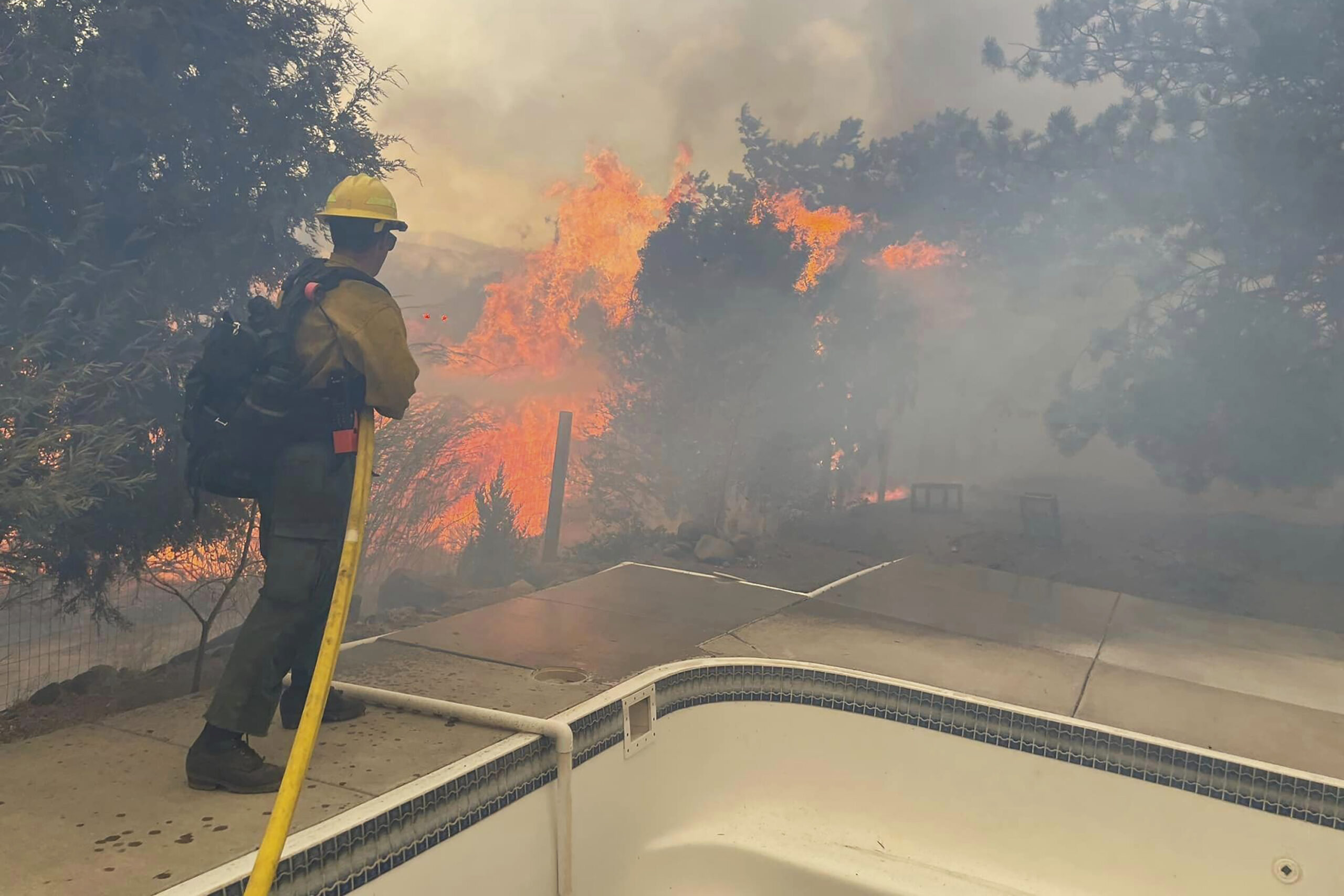
With the Bug and Stallion fires north of Reno already claiming homes, there's a piece of advice being shared on social media by homeowners in nearby evacuation zones: If there's time before you have to leave, document your home and belongings, however you're able.
That matches what the country's leading insurance consumer advocacy group tells people threatened by wildfires.
"We strongly recommend that you take your cellphone, put it on video, and walk around the house and narrate as you go," said Amy Bach, executive director of United Policyholders, a nonprofit that helps wildfire survivors deal with their insurance companies. "You want to create a comprehensive inventory of your possessions and of what the inside and outside of your house looks like."
Bach said the practice might sound "nerdy," but it closes a gap that trips up most claimants after a disaster: memory.
"After a traumatic loss, it's impossible to remember everything you had," she said. "So most people never collect their full insurance benefits."
The Bug Fire, which absorbed the Fred Mountain Fire this week, had grown to more than 66,000 acres as of Wednesday morning, while the Stallion Fire had burned more than 33,000 acres, though both fires are uncontained. The fires have destroyed multiple homes, though a formal damage assessment has not yet produced an official count, and more than 6,000 people have been evacuated, with thousands more under evacuation warnings.
As of Wednesday morning, evacuation orders were in effect for residents of Spanish Springs and Nixon, with warnings covering Cold Springs, Canyon Hills, White Lake, Silver Knolls and other nearby areas. Following Gov. Joe Lombardo's state of emergency declaration Monday evening, the Federal Emergency Management Agency (FEMA) approved federal fire assistance grants for both fires.
Safety first, paperwork second
Roger Hayashi, deputy commissioner of consumer service at the Nevada Division of Insurance, was direct about where documentation ranks if a home is threatened by wildfire.
"We don't want anyone to delay evacuating if they're in a dangerous situation because they're trying to gather things at the last minute," Hayashi said.
If there's time, bring a copy of your insurance policy and your agent's contact information so you can report a claim quickly, take a quick video walk-through of the home and document any high-value or rare items. But if you're told to leave, you should drop everything and leave. No exceptions.
"It's important for people to follow that, listen to local authorities and ensure that they remain safe after the fact," he said.
What the state is telling insurers
The Nevada Division of Insurance issued guidance Tuesday urging Nevadans affected by the fires to check their homeowners, renters or condo policies. It also called on insurers to work "proactively" with affected policyholders and to be flexible on premium payments for people displaced for an extended stretch.
As of Tuesday, the division hadn't seen complaints tied to these fires.
"The fires are still relatively new, and a lot of folks haven't had a chance to file claims yet," Hayashi said. "I do anticipate that'll change … and if they run into difficulties, that's when we'll see an uptick."
The complaints that do come in after a wildfire, Hayashi said, tend to center on delays, disputes over a home's valuation and disagreements over how long additional living expenses should be covered. That last one hinges on a distinction homeowners may not know about: If you're displaced under an evacuation order but your home isn't damaged, a "prohibited use" provision typically covers added costs for a limited stretch.
If the home is actually damaged, "additional living expenses" coverage kicks in for longer. Both vary by policy, which is why he recommends pulling your declarations page and calling your agent rather than assuming what's covered.
A live test for Nevada's new insurance law
The guidance comes as one of the first real tests of AB376, a law that took effect Jan. 1 letting insurers carve wildfire coverage out of standard homeowner policies and sell it back only as a separate product. Critics warned homeowners might not realize their coverage was missing until they tried to file a claim. As of The Indy's July reporting, no carrier had used the exclusion.
Read more: Insurers are dropping Washoe County homeowners. Here's why.
That hadn't changed as of Tuesday, and every policy in Nevada still includes wildfire coverage, Hayashi confirmed. No insurer has invoked the exclusion yet, he said, though the division is "in conversation with some insurance companies that are expressing some interest in that area."
"Your adjuster may be friendly, but they're not your friend"
Bach, the executive director of United Policyholders, says the process is less about paperwork than posture — insurers are businesses, and homeowners treating a claim passively is the biggest mistake she sees.
"If you paid for insurance, chances are you're going to have to be proactive to get everything you're entitled to," she said. "It doesn't mean picking a fight right out of the gate. It means understanding what it's going to cost to restore your property to its pre-loss condition, and doing some of that legwork yourself, rather than relying on the insurance company to tell you what they owe you."
Bach flagged a source of conflict specific to fires that burn through neighborhoods rather than open forest: smoke damage. Smoke from burning cars, garages or businesses can carry substances that aren't safe to live around, she said, and insurers have been slow to treat it as seriously as she believes it warrants.
Other advice she offered is to photograph everything before debris is removed or hauled away, since that's a common and costly oversight, and get a second opinion from an independent contractor before accepting an insurer's repair estimate, which is often generated by software.
If a settlement is lowballed or delayed, Bach recommends escalating in stages. Put concerns in writing and ask for a supervisor, file a free complaint with the Division of Insurance, and only then consult an attorney or public adjuster. Professional help comes at a cost, so for many it should be a last resort.
Legal advice
Matt Sharp, a Reno-based attorney specializing in complex bad faith litigation who has represented wildfire claimants, said the process is supposed to favor homeowners from the start.
"You bought the insurance for financial security and peace of mind, and it's now their time to deliver on that promise," Sharp said. "It should be a very non-adversarial process."
Sharp was less absolute than the online advice about video, noting that most people can recall at least some of what they owned even without a picture. Photos help most with high-volume categories, such as clothing, and for establishing accurate value rather than a vague description, he said. But like Hayashi, he stressed that safety comes first.
"I don't want people to think that they should forfeit their own safety in order to preserve their claim," Sharp said, calling wildfires hazardous enough to "take a life of their own."
Where claims tend to break down, Sharp said, is on rebuilding costs. Insurers often use national pricing models that don't reflect Nevada's higher construction costs, creating a gap between what's offered and what a local contractor charges.
Sharp's advice is to ask detailed questions about the numbers and treat a reluctance to answer as a warning sign.
"If your insurance company is not willing to help you, that's kind of a red flag that you're not getting good service," he said, "and that's a red flag that maybe there's some bad faith conduct going on."
Support Independent Elections Coverage and Journalism in Nevada
You’ve enjoyed unlimited access to our reporting because we’re committed to providing independent, accessible journalism for all Nevadans.
But sustaining this work — informing communities, holding leaders accountable, and strengthening civic life — depends on readers like you.
Nevada needs strong, independent journalism. Will you join us?
A gift of any amount helps keep our reporting free and accessible to everyone across our state and funds our elections coverage.
Choose an amount or learn more about membership