


OPINION: Blame our 'Buy American' mania for high gas prices

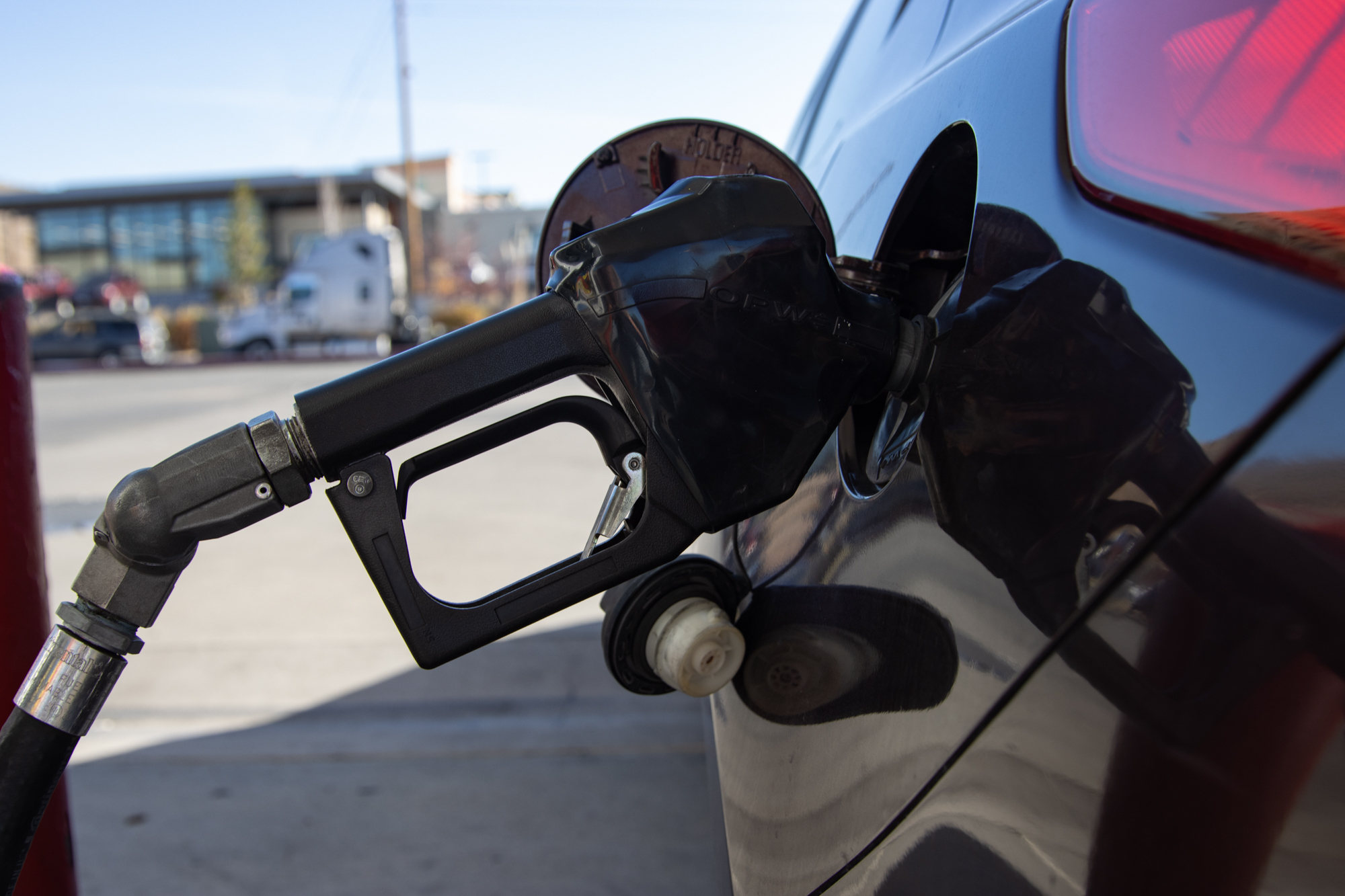
Last week, I read Emily Diaz-Loar's and Patrick Donnelly's column in The Nevada Independent about why Nevada's gas prices aren't just a product of California's declining refinery capacity. It's worth reading in no small part because it accurately describes the future — as electric vehicles (EVs) become increasingly popular, the economics behind producing and refining petroleum fuels will become increasingly unstable.
Saying "as" instead of "if" in the previous sentence may seem to be a curious choice right now. GM, Ford and Stellantis have lost billions of dollars because of limited demand for the companies' EVs following the expiration of electric vehicle tax credits at the end of September.
Even so, according to the U.S. Energy Information Administration, about 22 percent of light-duty vehicles sold in the United States in 2025 were hybrid, battery electric or plug-in hybrid vehicles — a 2 percent increase since 2024. Though fully electric vehicle sales declined following the expiration of tax credits in September, hybrid electric vehicle sales are a large and growing segment, especially in the non-luxury vehicle market.
Either way, demand for gasoline is declining.
That said, federal policy is almost willfully against helping Nevadans get some relief at the gas station or transition away from California's aging refineries — and it has been for longer than people think.
For example, according to the Nevada Current, Nevada's share of the funding originally allocated to the National Electric Vehicle Infrastructure (NEVI) program was reduced by a third. Additionally, according to The Verge, new "Buy American" requirements added to the program will almost certainly ensure that none of that money will ever be disbursed. Because there are no EV charging stations made wholly out of U.S.-originated materials and components, it is currently impossible to purchase a single charging station under NEVI.
That, however, is only the most recent attempt by the federal government to try to will a virtually nonexistent domestic industry into existence at everyone's expense.
A more long-standing issue — one that makes fuel prices unnecessarily expensive in Nevada and that Republicans and Democrats should be able to work together to solve — is the environmental and economic damage caused by the Jones Act.
The Jones Act of 1920 — named for its sponsor, U.S. Sen. Wesley Jones (R-WA) — mandates that any cargo transported by sea between U.S. ports must be transported using U.S.-built, -owned, -insured and -operated vessels.
If the U.S. still built commercial vessels or maintained a domestic merchant marine at any sort of scale, this sort of policy might be defensible. According to The Wall Street Journal, however, U.S. shipyards only produce 0.1 percent — hardly any at all, in other words — of the world's commercial shipping tonnage. Most domestic production is instead focused on meeting the needs of the Navy. Additionally, despite pledges from South Korea to help invest in new commercial shipbuilding capacity in our country, shipbuilding costs in the U.S. remain four to five times higher than they are in China or South Korea.
Today, there are only 54 Jones Act-compliant oil tankers out of more than 7,000 tankers globally. Each one costs three to four times more to operate than a comparable foreign-built vessel — and, according to Argus, an independent media organization that specializes in covering global energy and commodity markets, costs 10 times as much to hire.
That's why, according to Bloomberg, it's cheaper for California to import gasoline refined in the U.S. via the Bahamas than it is to simply ship refined gasoline from Houston to Los Angeles or San Francisco — and, from there, to Las Vegas or Reno. This results in thousands of additional container-miles, with accompanying air and water pollution, as well as higher shipping costs and decreased demand for domestically refined gasoline and diesel.
As far as the Jones Act's negative effects on Americans, somewhat higher fuel prices in Nevada are a relatively modest problem. In Hawaii, according to the Honolulu Civil Beat, it's impossible to import liquefied natural gas (LNG) from domestic suppliers since there are no Jones Act-compliant LNG tankers to ship it. This is only one of several reasons why, according to the Grassroot Institute of Hawaii, the Jones Act costs Hawaiian families almost $1,800 per year.
Meanwhile, Alaska's legislators have repeatedly called for the Jones Act to be waived against the state or repealed. As the Alaska Policy Forum explains, the Jones Act was explicitly designed to limit competition among cargo carriers to what is our largest state by area — which, unsurprisingly, has raised already high costs to the stratosphere and imposes unnecessary costs on the state's oil industry when it tries to ship its product to domestic consumers.
In short, to prop up a virtually nonexistent domestic shipbuilding industry, the Jones Act makes it uneconomical for Hawaiians to buy American fuels, makes it uneconomical for Alaskans to ship American fuels, drives Californians to ship domestic fuels halfway across the Caribbean before they can be shipped to the West Coast and raises the price Nevadans pay for gasoline.
The Jones Act is bad for our environment, it's bad for our economy and it's bad for Nevadans' pocketbooks. It's well past time to abolish it.
David Colborne ran for public office twice. He is now an IT manager, the father of two sons and a recurring opinion columnist for The Nevada Independent. You can follow him on Mastodon @[email protected], on Bluesky @davidcolborne.bsky.social, on Threads @davidcolbornenvor email him at [email protected]. You can also message him on Signal at dcolborne.64.
Support Independent Elections Coverage and Journalism in Nevada
You’ve enjoyed unlimited access to our reporting because we’re committed to providing independent, accessible journalism for all Nevadans.
But sustaining this work — informing communities, holding leaders accountable, and strengthening civic life — depends on readers like you.
Nevada needs strong, independent journalism. Will you join us?
A gift of any amount helps keep our reporting free and accessible to everyone across our state and funds our elections coverage.
Choose an amount or learn more about membership