
Could Nevada's tech epicenter run out of water? That's the big question in an ongoing suit

A bitter legal battle has emerged over water availability in Nevada's technology epicenter, raising questions about whether companies critical to diversifying the state economy have enough water to survive into the future.
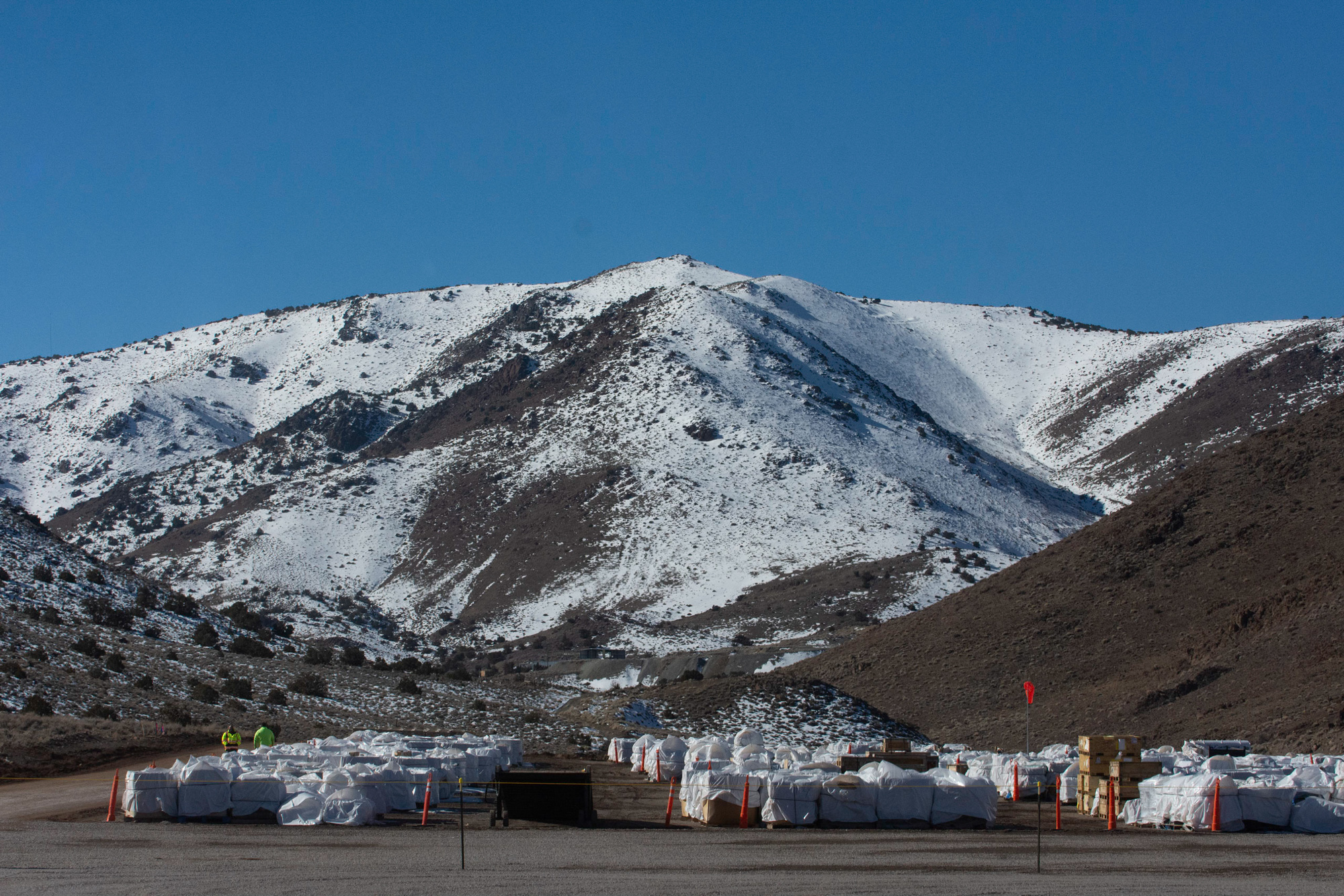
For nearly two years, the developer of the Tahoe-Reno Industrial Center (TRIC) — a sprawling complex east of Reno that houses Tesla's "Gigafactory" and Switch data centers — has traded legal barbs with the quasi-governmental entity that provides water to companies.
It has included a lawsuit, countersuit and myriad subpoenas, with a trial set for next spring.
The most notable parts of the case deal with whether the developer of TRIC has been able to deliver the amount of water it promised, and whether it's responsible to make up for alleged shortfalls.
The answers depend on whom you ask.
TRIC has remained adamant in court filings that no water shortfall exists, saying that companies have been using less water than what they are entitled to.
However, the entity providing water to companies, a quasi-municipal body called the Tahoe-Reno Industrial General Improvement District (TRIGID), has argued that couldn't be further from the truth. The district says that some shortfalls have already happened and will accelerate as the park grows.
It's a lawsuit that raises questions about how companies central to Nevada's economic future will get water in the long term.
"If TRIGID loses this lawsuit, it will become increasingly difficult for TRIGID to serve the water entitlements sold by the Master Developer to TRI Center landowners," Clay Mitchell, a Storey County commissioner and board member of the general improvement district, said in a statement.
The case is, in some ways, the epitome of a Nevada conflict.
After the Great Recession, which decimated the state's tourism-dependent economy, there was a widespread desire to bring more diverse industries to Nevada. State lawmakers sought to attract companies by providing billions of tax credits to businesses looking to move to TRIC, most notably Tesla. It was also an attractive place for companies to move because of the land availability and proximity to California.
But Nevada is the nation's driest state. Concerns over water availability and water rights — a setup where people buy access to water and can sell those to other parties — have spanned decades.
And now those concerns have hit TRIC.
Because it's located in rural Nevada, TRIC is not under the jurisdiction of the state's largest water authorities, which are often better staffed and have much more water to give customers.
That means the general improvement district — whose annual staffing budget is 1/38th the size of the water authority serving the Reno area — is responsible for providing water to companies. In another Nevada quirk, all the members of the water utility board used to list their residence as a brothel owned by the face of the industrial park, but now the members are the Storey County commissioners — including one who is the son of the founder of the park, Lance Gilman.
Economic development officials in Reno have largely been unconcerned about water availability because of the nearby Truckee River, but the situation is murkier in more rural areas such as Storey County, where much of the supply comes from groundwater basins.
Fred Steinmann, the director of UNR's Center for Economic Development, said in an interview that he has not heard of businesses deciding not to start or expand in Nevada because of water availability concerns.
However, he noted that in places with heavy industrial development, such as TRIC, "there's always a question" about water availability.
"We obviously don't have the quantities of water that other parts of the country do," Steinmann said. "There's a definite limit, and when you have pressures like climate change and reduced annual snowfall and you can go 100-plus days without any rainfall, these are going to be natural concerns."
Domestic water
A key element of the case centers on the amount of water that companies at TRIC can use for domestic purposes such as toilets and sinks, as opposed to industrial purposes, such as cooling machinery.
Under a 2020 agreement, the developer behind TRIC agreed to set aside a certain amount of water for domestic uses. In determining this amount, which the developer is willing to fulfill, it assumed companies would use much less water than the maximum amount they are entitled to receive from the water provider under the 2020 deal — something that lawyers for the general improvement district have criticized in legal filings.
The developer has said in legal filings it would honor any contract commitments related to industrial water shortfalls, but it argues it is not responsible for making up shortfalls in water used for domestic purposes. In the event there is a shortfall of this water, according to the developer, the companies are on their own.
About half of TRIC's developable land has not been touched, but the general improvement district has argued that full buildout is inevitable — leading to conflict over whether a shortfall will exist as the center continues to expand.
The general improvement district says it will. It commissioned a third-party water availability study that found domestic water use is growing — both in terms of total water usage and each customer's water footprint. These findings led researchers to conclude that if the center reaches full buildout, the amount of available domestic water will not be enough — even if existing customers do not increase their own footprint.
The district has also said in legal filings that it notified the developer of three water shortfalls, but the developer has not taken steps to find alternate sources of water. The water provider says that it has come up with stopgaps to erase these shortfalls on its own, but that is unsustainable, meaning if shortfalls continue, it will have to cut back on water allocations to the park and its tenants.
In its lawsuit, the district is asking the court to award damages to make up for water shortfalls and assert the developer's responsibilities in resolving the shortages.
Meanwhile, the developer behind TRIC has argued there is no shortfall. That's because companies are not using the full amount of water they are entitled to, leading the developer to instead say there is a "a substantial surplus of water rights." It also says this surplus should allow the water district to accommodate any alleged shortfall.
Plus, the developer has said it has no obligation to make up for any domestic water shortfalls.
The 2020 agreement says the district has no obligation to make up for "later-discovered shortfalls" in domestic water. It also says the developer is not allowed to use its prior allocation to make up for future shortfalls — a clause that means it is still responsible to make up for future shortfalls, the district argues.
Industrial water
The other main water availability dispute relates to "process water," which is non-drinkable water used for commercial and industrial purposes.
At the center of this dispute is a complex arrangement with several other governments to provide billions of gallons of this water to the park.
Forty percent of this water comes from an agreement between the developer, data center company and industrial park tenant Switch and the cities of Reno and Sparks to obtain treated effluent wastewater from a Truckee River water reclamation facility. As part of this deal, the developer agreed to provide an equivalent amount of water in return so that there is no net loss to the river.
To meet their end of the deal, the TRIC developer is reliant on water owned by the Nevada Department of Transportation, but there has long been an expected shortfall there as well. The developer is responsible for making up the shortfall, but the water district has concerns about the developer's ability to do so.
The full amount of Department of Transportation water is unknown, but the district alleged that the amount already provided is "inadequate."
Similar to its arguments on the domestic water front, the developer is arguing that no shortfall exists yet because companies are not using their full allotment of water. However, it acknowledges that if one eventually arises, it will honor any contractual commitments to make up the deficit.
Meanwhile, the district is asking the court to require the developer to immediately provide enough water so that the multigovernment agreement can be fully realized, or to provide an alternative supply for this industrial water.
There haven't been many updates to the case in recent months, but activity will likely pick up closer to next May, when a jury trial is scheduled. It's also possible for the case to end in a settlement.
Updated on 8/25/26 at 5:10 p.m. to correct a description of what the 2020 agreement said about making up for domestic water shortfalls.
Support Independent Elections Coverage and Journalism in Nevada
You’ve enjoyed unlimited access to our reporting because we’re committed to providing independent, accessible journalism for all Nevadans.
But sustaining this work — informing communities, holding leaders accountable, and strengthening civic life — depends on readers like you.
Nevada needs strong, independent journalism. Will you join us?
A gift of any amount helps keep our reporting free and accessible to everyone across our state and funds our elections coverage.
Choose an amount or learn more about membership