
How Southern Nevada local governments work with ICE

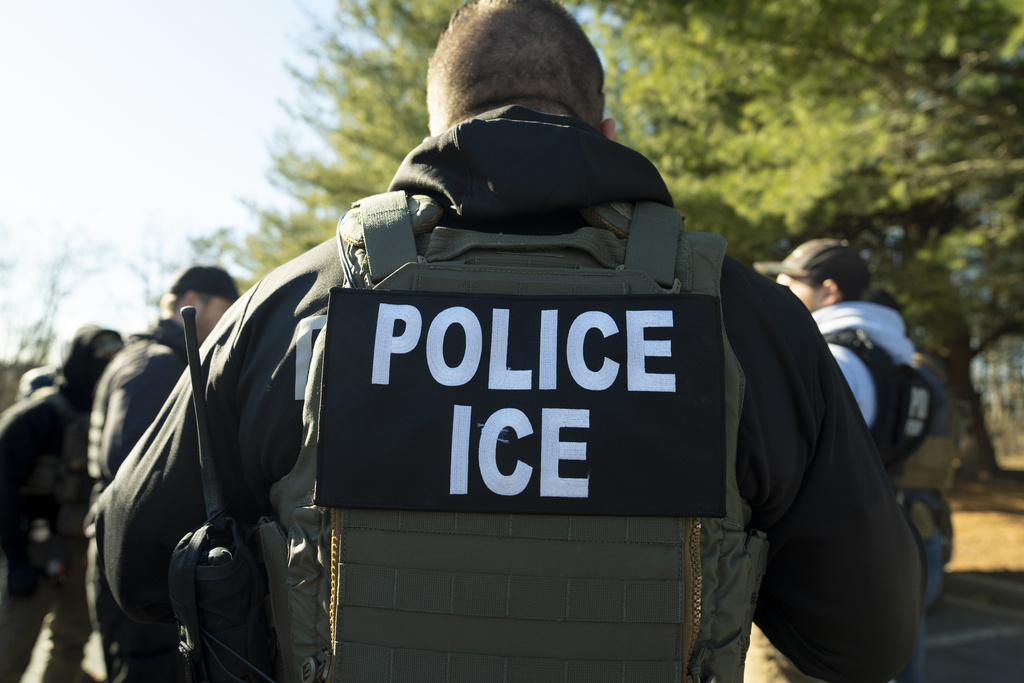
Protests across the Las Vegas Valley erupted after 37-year old Alex Pretti, a legal observer and an intensive care unit nurse in Minnesota, was shot and killed during an altercation with Immigration and Customs Enforcement (ICE) over the weekend.
But Southern Nevada municipalities have been quiet on the subject, and their elected leaders have been more restrained in their criticism than some of their counterparts elsewhere in the country. Many agencies in Clark County have working relationships with ICE, ranging from informal collaborations at jails to financial contracts to hold detainees. With 1 in 5 foreign born residents, the county is one of the most diverse in the United States but has not had the kind of public, large-scale ICE deployment seen in Minneapolis or Los Angeles.
Michael Kagan, director of the immigration clinic at UNLV Boyd School of Law, said each municipality in Clark County has a distinct collaboration with ICE and its parent agency, the Department of Homeland Security (DHS). But according to Kagan, the idea that ICE is not targeting Las Vegas and that the city is safer than cities and states that are led by Democrats is misguided.
"I think it's pretty reckless for anyone to be very confident about whether Las Vegas will or will not be targeted in a major way," Kagan said. "The prudent thing is to be prepared to be targeted and hope that we are not."
More than anything, he said he's been alarmed by "a level of carelessness and aggression by DHS that I have not seen before."
"The types of events we're seeing in Minneapolis are the kind that in many other countries around the world can spiral into civil war or low-level continuing violence," Kagan said.
Here is a breakdown of the agreements and relationships Southern Nevada municipalities have with ICE.
Clark County
Clark County does not have an explicit partnership with ICE, according to Jennifer Cooper, a spokesperson for Clark County.
"The County has no established relationship with Department of Homeland Security or ICE, and we follow all federal rules and regulations," Cooper wrote in an email.
However, the county pays for Clark County Detention Center, which is run by Las Vegas Metropolitan Police Department, that does partner with ICE through a federal program often referred to as 287(g). The center is largely funded by the Clark County General Fund, which is paid for by local property and sales taxes.
The 287(g) program was created under President Bill Clinton to allow local law enforcement agencies to conduct some immigration duties. The Las Vegas police department rejoined 287(g) this year after more than six years out of the program.
Clark County Commissioner Tick Segerblom, who represents District E, said in text messages that he was pleased that Metro's cooperation with ICE has been limited so far. Segerblom, whose district has a large Hispanic population, said the fear there was "palpable."
"As far as immigration goes, I'm trying to be as vigilant as I can, as helpful as I can, to fight back," Segerblom said in an interview. As a state senator in 2017, Segerblom was a primary sponsor of an unsuccessful bill that — in its original form — would have limited local government cooperation with ICE. He also protested the county's 287(g) agreement in 2019.
Justin Jones, representing District F, criticized Metro's 287(g) agreement in 2019 as well as President Donald Trump's immigration response, then at the end of his first term in office.
In a new statement to The Indy, Jones condemned Pretti's killing and said a federal immigration presence makes Clark County less safe as it "discourages people from reporting crimes, seeking care, or engaging with public service."
Commissioner April Becker, the sole Republican on the commission, has strongly opposed illegal immigration in the past. While running for a congressional seat in 2022, Becker criticized border security under President Joe Biden.
Becker declined to comment on the killing of Pretti, though she said immigrants are "important" to the Las Vegas community and that the city is "better" because of them. However, she added that there "must be consequences for illegal immigration."
Commissioners Jim Gibson, Marilyn Kirkpatrick, Michael Naft and William McCurdy did not respond to requests for comment, nor have they commented publicly on the situation.
Las Vegas Metropolitan Police Department
In June 2025, Metro police rejoined 287(g), agreeing to hold inmates for up to an extra 48 hours to give ICE time to take people into federal custody. It came after the federal government had placed Las Vegas on a "sanctuary city" list even though Vegas cooperates with ICE and DHS.
The agreement was previously dissolved when Gov. Joe Lombardo was sheriff, in part due to a court ruling against the "detainer" practice, which keeps people in jail longer than they would normally be held so that immigration agents can pick them up and transfer them to a detention center.
The current sheriff, Kevin McMahill, denied that the agency rejoined 287(g) because Vegas was added to the sanctuary city list, even though he signed it a day after the list came out. He said the department rejoined because he was "tired" of seeing criminals being rereleased on the street, according to a June interview with KSNV News 3. The policy will allow for Metro police to be trained in immigration practices and to serve immigration related warrants.
The American Civil Liberties Union of Nevada has sued Metro for rejoining, arguing that the issues that led the agency to end its partnership in 2019 persist.
As of May last year, the county had flagged 350 people for ICE in 2025. The department did not respond to a request for an updated number.
Metro police did not respond to a request for comment on the killing of Pretti or on the current state of national immigration enforcement in the country.
Henderson
Henderson Detention Center is one of two municipal ICE detention centers in Nevada, and the only one in Clark County. There is another public detention center in Washoe County, and a privately owned Nevada Southern Detention Center in Pahrump.
Last week, Henderson residents urged the city council to end its contract with ICE. The Henderson Detention Center has a memorandum of understanding with ICE and other federal agencies that allows the agency to use roughly 93 beds as of November last year, up from 78 beds in September.
The Henderson Detention Center is paid through the city's general fund and in part by ICE, which contracts with the city to use some of the detention center's bedspace.
The agreement with ICE started in 2010, and became a big source of revenue for the detention center. Henderson did not respond in time for publication with an updated figure on how much it receives from ICE.
Many pointed out that a large number of the people detained by ICE do not have a criminal history. Nationwide DHS data leaked to the Libertarian think tank the Cato Institute showed that only 5 percent of people booked into ICE custody from Oct. 1-Nov. 15, 2025, have been convicted of violent crimes — 73 percent have no conviction at all, and the rest have traffic, property, vice or immigration convictions.
Following the meeting, Councilman Jim Seebock told The Nevada Independent there needs to be a review of the city's agreement with ICE. None of the other councilmembers have commented publicly on the agreement, either during the meeting or on social media.
While Henderson Police Department is not a 287(g) partner, it does have a lengthy and detailed immigration policy that specifies the jail will inform ICE whenever it has a suspected or confirmed undocumented immigrant in its custody.
In a statement to The Indy, the police department said that it "does not perform immigration enforcement functions" nor does it "conduct stops based on immigration status."
Las Vegas
Similar to Clark County, Las Vegas does not partner with ICE, though it does fund the City of Las Vegas Detention Center, which is operated by the police department.
Referrals and releases to ICE have increased dramatically from 2024 to 2025. Jace Radke, a spokesperson for the City of Las Vegas, said there were 61 notifications and 15 people released to ICE in 2024 — in 2025, there were 1,099 notifications and 320 released to ICE.
Las Vegas Mayor Shelley Berkley, a Democrat, strongly opposed the state being labeled as a "sanctuary" jurisdiction and said she supported McMahill's decision for Metro to restart its 287(g) agreement last year.
Most recently, in an email statement to The Indy this week, Berkley called for an investigation into ICE's "deadly operations" in Minneapolis. She said the footage coming out of the city was shocking.
"What has been happening in Minnesota is extremely disturbing," Berkley wrote. "The American people were told these enforcement actions were about going after the worst of the worst criminals. No one has a problem with that, but what we have seen instead is something far different."
Aside from Berkley, no other members of the Las Vegas City Council have spoken out about the topic on their social media platforms.
North Las Vegas
The North Las Vegas Police Department follows the same policy as Las Vegas — it shares information about transnational organized crime and international terrorism and does not impede ICE involvement in a legal case.
North Las Vegas police notify ICE during the booking and release of undocumented people convicted of violent crimes.
However, North Las Vegas does not have a 287(g) agreement with federal immigration enforcement — though felony cases are transported to Clark County Detention Center where they can be flagged by ICE. And North Las Vegas police do not perform immigration enforcement activities in the field.
Following the closure of the Broadacres Marketplace, a Latino hub in North Las Vegas that hosted stalls with cultural foods and goods, Mayor Pamela Goynes-Brown spoke publicly about the importance of the market and residents "feeling safe," though she did not mention immigration specifically.
Nye County
The Nye County Sheriff's Office has previously been in an 287(g) agreement with ICE and worked to rejoin the program in May of this year. However, the county no longer houses detainees at the Nye County Detention Center.
Nye County's contract with ICE ended in November 2024 over funding concerns, as well as long-standing accusations of mistreatment and neglect for detainees. Previously, they had a contract of $2 million with ICE and were the second-largest ICE detention facility in Nevada, following Nevada Southern Detention Center.
Nevada Southern Detention Center, located in Nye County, is the largest federal detention center in Nevada and holds people for ICE as well as other federal agencies. According to reporting from The Nevada Independent, the center was holding about 200 more people than it was contracted to by ICE in August, making it one of the most over-capacity detention centers in the country. The center is owned and operated by the private company CoreCivic.
Nye County's detention contract came under fire after progressive groups had lobbied for its termination, according to reporting from The Nevada Independent. During a Nye County Commission meeting in 2024, then-Commissioner Donna Cox said the contract was no longer financially feasible.
Representatives from the Nye County Sheriff's Office did not respond to comment in time for publication about its immigration policies.
Isabella Aldrete contributed to this report.
The story was updated on 1/30/26 at 11:56 a.m. to include a statement from the Henderson Police Department.
Support Independent Elections Coverage and Journalism in Nevada
You’ve enjoyed unlimited access to our reporting because we’re committed to providing independent, accessible journalism for all Nevadans.
But sustaining this work — informing communities, holding leaders accountable, and strengthening civic life — depends on readers like you.
Nevada needs strong, independent journalism. Will you join us?
A gift of any amount helps keep our reporting free and accessible to everyone across our state and funds our elections coverage.
Choose an amount or learn more about membership