
Insurers are dropping Washoe County homeowners. Here's why.

Two years ago, Linda and John Miller received a startling notice.
Their insurance carrier was pulling out of Nevada, citing the risk from wildfires and other disasters. The couple needed to find another insurance carrier.
The Millers, who had lived in their southwest Reno home for several years, said they were in good standing and their neighborhood is a designated Firewise community. But because their property is in the Mount Rose Highway corridor, where more and more houses are springing up in or adjacent to forestland, their community is eyed suspiciously by insurance carriers.
That same year, about 2,700 other Nevadans' homeowners policies were canceled or not renewed because of wildfire concerns, the biggest yearly total the Nevada Division of Insurance is aware of.
"We were among the first batch to get that nonrenewal notice," Linda said. "Next thing you know, we're getting calls from neighbors and friends in the area asking, 'Did you get this sort of notice? Who are you working with?'"
The cancellations and nonrenewals only accounted for about one third of 1 percent of all homeowner policies in 2024, and there are still upward of 80 insurance carriers writing homeowners policies in the state.
But more than 60 percent of the 2024 insurance cancellations were in Washoe County, which houses 8 of the top 10 ZIP codes for cancellations and declinations.
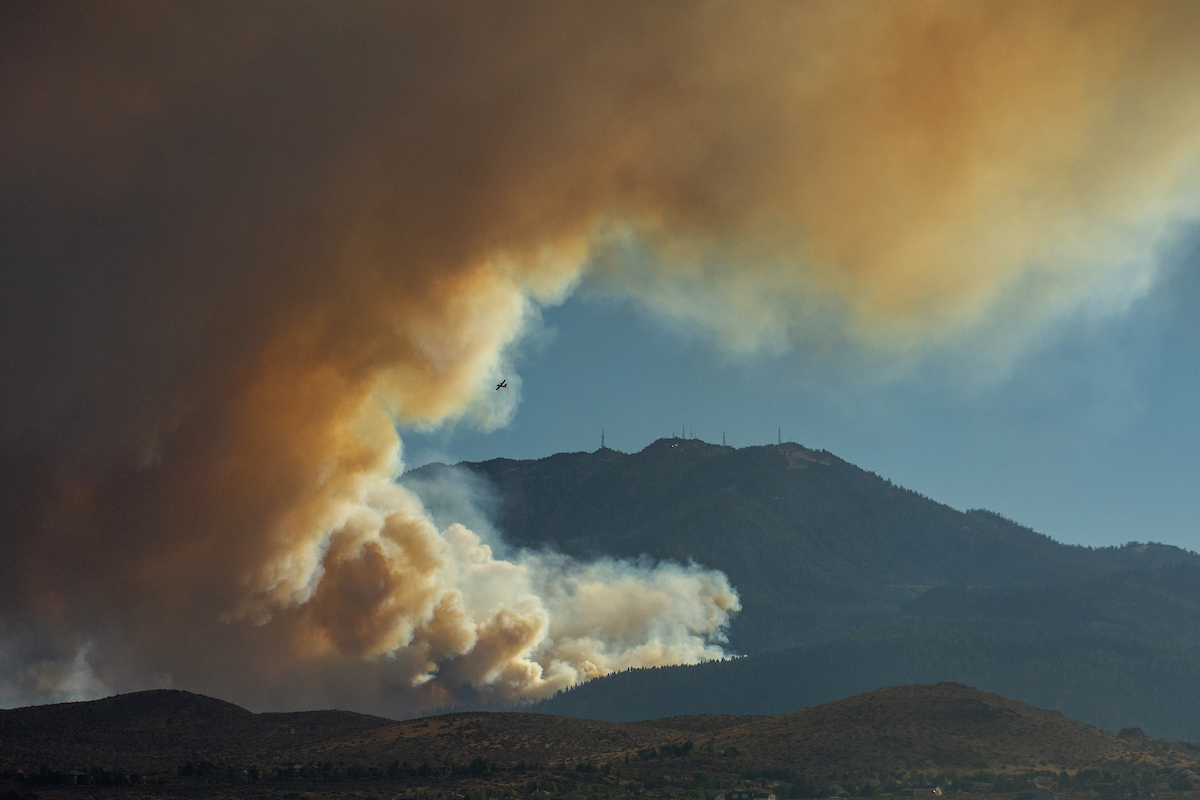
That fall, the Davis Fire burned from Washoe Valley up Mount Rose Highway, threatening houses throughout far south Reno. The Millers evacuated; they could see the fire burning from their back windows.
The fire ultimately scorched 5,800 acres and destroyed a dozen structures, and more homeowners saw their policies canceled or not renewed.
The Millers obtained new coverage about a month before their old policy ended, but it wasn't easy, John said.
"It got us a little nervous," he said.
During the 2025 legislative session, state lawmakers unanimously passed AB376, a bill that allowed insurance carriers to carve wildfire coverage out of their Nevada homeowner policies. The idea was to get in front of skittish carriers who might consider pulling out of Nevada. Instead, carriers would be able to offer wildfire coverage through a separate policy or propose other ideas.
It's been seven months since AB376 went into effect, but no insurance carriers have opted to carve out wildfire coverage, to the relief of critics who worried it would hollow out Nevadans' policies and make insurance problems even worse. But so far, no carriers have proposed innovative ideas that lawmakers had hoped to see by passing the first-of-its-kind legislation.
"They don't make quick decisions. In general, insurers are very deliberate," Nevada Insurance Commissioner Ned Gaines told The Nevada Independent. "It's been the same response every time — 'We don't want to be first.'"
Assm. PK O'Neill (R-Carson City), the bill's sponsor, said the lack of participation is "disappointing."
"Nobody seems to be utilizing it, but they still say it's an issue," he told The Indy in an interview. "Well, here's a solution."
Canceled
There's lingo around the wildfire insurance industry — "nonrenewals," "cancellations," "declinations" — many Nevadans are becoming all-too-familiar with.
Nonrenewals happen when an existing policy holder reaches the end of their coverage year and the carrier opts not to renew it.
Cancellations occur when a policy is terminated midway through the coverage year. In Nevada, companies are only allowed to cancel within the first 70 days of the policy.
Washoe County saw more than 1,600 homeowners' policies canceled or not renewed in 2024, the most recent year the division has data for. Nevada's remaining 16 counties had less than 1,100 cancellations that year — combined.
Of the 10 ZIP codes with the most cancellations, just two — 89703 in Carson City and 89801 in Elko County — were outside of Washoe County.
Declinations are when property owners seeking new policies are declined, and those have also sharply increased over the last three years, Gaines said.
In 2022, about 2,400 requests for new coverage were declined; in 2024, that number jumped to 13,600. Most of those declinations — more than 6,000 — were in Washoe County, particularly on the outskirts of Reno.
While most of the state's cancellations, nonrenewals and declinations are in Washoe County, they're spreading across the state.
Summerline, Elko, Spring Creek and Dayton also outpaced other parts of the state with their number of declined requests for new homeowners policies.
"It appears that with the recent wildfires that have taken place in California, we're getting lumped in with them," Gaines told state lawmakers in June. "And they're taking this approach that essentially the entirety of the West has the same type of risk. … Nevada is very, very different than California.
"We are very low risk and have been historically. That's why some of these things don't add up and don't make sense."
Some of those top ZIP codes, including in areas such as Las Vegas and Dayton, are in urban or non-forested areas. When the division asks insurers, they cite modeling indicating higher wildfire risk.
Calls to insurance industry groups and lobbyists were not returned before deadline.
"The only thing we can assume is that there's something within the model that's missing or inaccurate," Gaines told The Indy. "We're trying to get down to figure out what's driving it."
The most houses destroyed by a single Nevada wildfire in the last three decades was 37, he said.
"A small wildfire in California can take out more."
A lack of innovation
Although the division is still in the process of gathering data for 2025, Gaines said he expects those numbers to be higher.
AB376 was an attempt to address that.
Read more: Insurance carriers can now carve out wildfire coverage from Nevada homeowner policies
The bill, which lawmakers referred to as a "sandbox," was designed to spur innovation and start conversation among skittish carriers.
But, "They're not being very innovative," Gaines told lawmakers. "They're not coming to the table with any new ideas."
That could be, in part, because Nevada has a built-in guardrail. If an insurer wants to carve out wildfire risk from their homeowner's policy, they can't cancel individual policies — they have to cancel it for the entirety of the state.
Separately, the division has had some carriers — existing and new to Nevada — file to offer standalone wildfire insurance, similar to how earthquake insurance is offered as a standalone policy in Nevada.
"There's going to be some options available if and when insurers decide to start excluding wildfire," Gaines said. But, he added, offering standalone policies is standard practice, not the type of innovation lawmakers were looking for.
But while the legislation hasn't been embraced by insurers and more Nevadans are having a harder time finding homeowners insurance, most of Nevada's 1 million other homeowners policies are "doing OK," he said. "Overall, the market is healthy."
Support Independent Elections Coverage and Journalism in Nevada
You’ve enjoyed unlimited access to our reporting because we’re committed to providing independent, accessible journalism for all Nevadans.
But sustaining this work — informing communities, holding leaders accountable, and strengthening civic life — depends on readers like you.
Nevada needs strong, independent journalism. Will you join us?
A gift of any amount helps keep our reporting free and accessible to everyone across our state and funds our elections coverage.
Choose an amount or learn more about membership