
'It needs to be done now:' Nevada casinos, lawmakers eager to reverse gambling deduction change


Poker Hall of Famer Erik Seidel has won 10 World Series of Poker bracelets while earning tens of millions of dollars in tournaments. But like many less prominent players, he's now rethinking his career thanks to a federal tax change that will soon make gambling less profitable.
"Next year I am kind of forced into retirement," the longtime Las Vegas resident told The Nevada Independent. "Everyone who I've spoken to plans on either cutting back or stopping."
The reason Seidel might have to retire is a tax law change enacted through the One Big Beautiful Bill Act signed by President Donald Trump in July. Whereas players could previously deduct 100 percent of their gambling losses from their winnings for tax purposes, starting in 2026, they will only be able to deduct 90 percent of their losses.
That means a player who wins $100,000 and loses $100,000 will only be able to deduct $90,000 from their winnings, forcing them to pay taxes on $10,000 of essentially phantom income.
Nevada lawmakers have been fighting to reverse the change since it was passed. Although they have not yet managed to do so, they believe they can achieve a fix early in the new year.
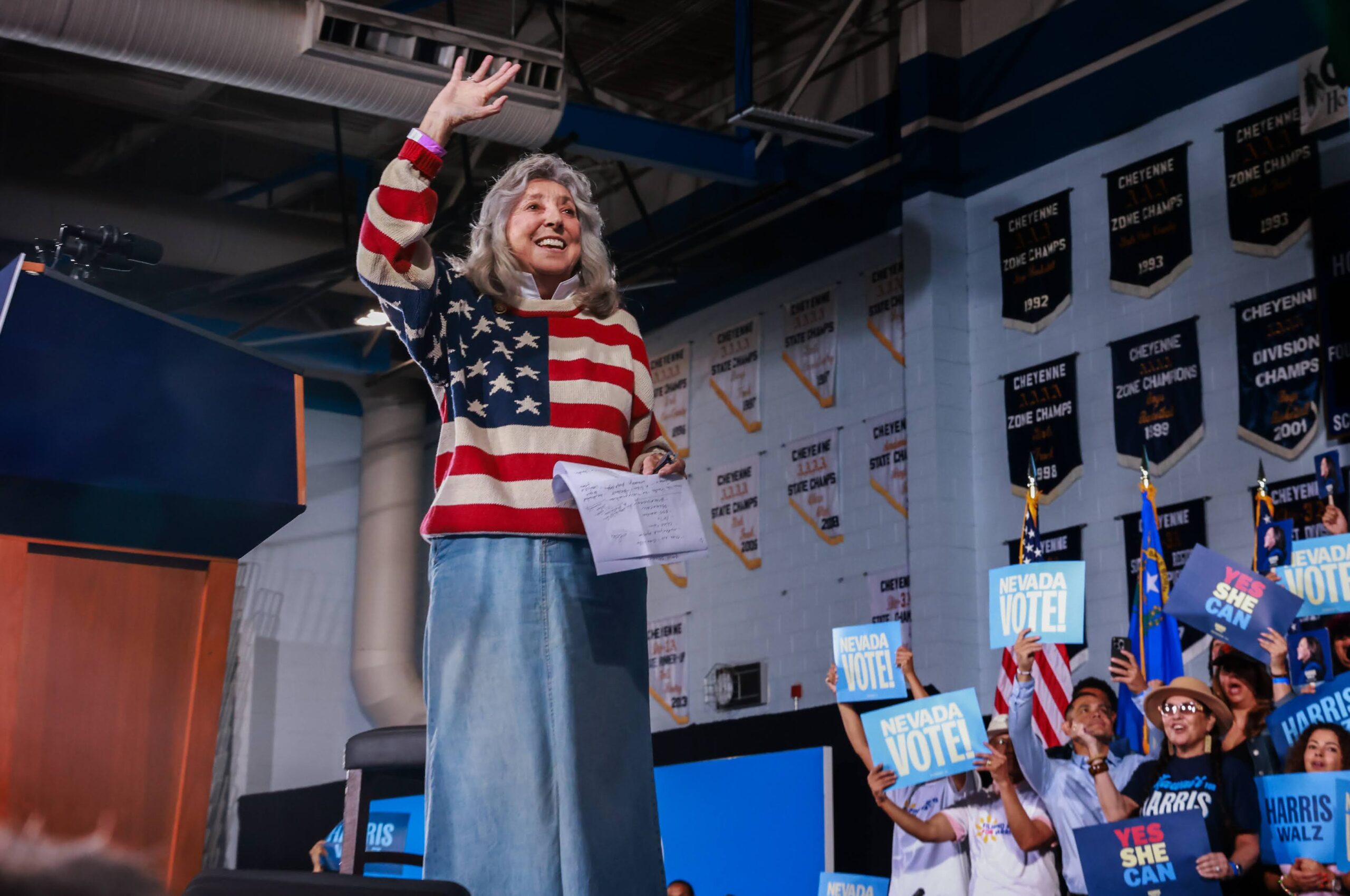
On the House side, Rep. Dina Titus (D-NV) has led the effort to restore the 100 percent loss deduction through her FAIR BET bill. She's been struck by the response.
"Turns out, we got a million responses to our tweet when we put it out there, more than I've ever gotten for anything," she told The Indy in a recent interview, adding that it isn't just high-rolling poker pros who will be hurt by the tax change — it's also regular guys who bet on weekend football.
In the upper chamber, Sens. Catherine Cortez Masto (D-NV) and Jacky Rosen (D-NV) have introduced the bipartisan FULL HOUSE bill, which would accomplish the same thing as Titus' bill.
"The Republicans' tax on gamblers is ridiculous and will be bad for Nevada's economy," Cortez Masto spokesperson Lea Hohenlohe wrote in a statement to The Nevada Independent. She added that the senator is trying to get the FULL HOUSE bill included in the appropriations package Congress aims to pass in January.

Fix could come next month
Nevada's sole Republican in Congress, Rep. Mark Amodei (R-NV), has valuable influence in a GOP-controlled House and said he'd been working alongside Titus to restore the gambling loss deduction.
"We have been assured that when we wrap up this stuff in '26 appropriations, that fix will be in there," he told The Nevada Independent.
Amodei — who chairs an appropriations subcommittee — has talked to House Ways and Means Committee Chair Jason Smith (R-MO). After meeting with gaming CEOs in Las Vegas this summer, Smith pledged to reverse the tax by the end of the year.
"Jason said that, and that's great," Amodei told The Indy this month. "I saw him in the gym today, and I said, 'So, when?' So I'm gonna follow up."
Afterwards, Smith provided an optimistic statement to The Indy ("I believe there is a bipartisan path forward to restoring full deductibility of gambling losses.") though he did not share a specific timeline.
Asked what she'd heard about Amodei's efforts and GOP assurances, Titus said, "We're talking to all of them all the time, but you can't trust those people. We'll believe it when it's signed. So, hopefully that's true. And he's on the committee, he ought to be helping us, helping Nevada, so let's hope he's got an inside with the chairman."
Does she feel like Amodei has been helpful?
"Well, not yet. But he hasn't tried to hurt us, let's put it that way," she said.
American Gaming Association CEO Bill Miller said he believes the deduction will be restored to 100 percent sometime early in 2026. During a Dec. 12 appearance on the Business of Betting podcast, Miller said he hasn't met a member of Congress who is opposed to reversing the change.
"The question is, 'What are the vehicles to fix this?'" Miller said. "Trying to get this put back in and fixed is not the easiest trick. But I believe that we're going to get it done."
Miller was in Las Vegas in early December to meet with resort industry leaders about the ongoing efforts.
"There's a fundamental fairness issue here. People shouldn't pay taxes on phantom income, and that's what this does," he said of Titus' bill.

Bracing for impact
One gaming source with knowledge of the effort said the timing of the change is uncertain, but it needs to happen no later than April 2027 for tax purposes. The deduction change takes effect on Jan. 1 and covers a gambler's 2026 wins and losses. But even if Congress manages to change the law, Nevada's gambling ecosystem is likely to start feeling its effects as soon as the new year begins.
"In January, there's some tournaments here in the U.S., and I think people are not going to be competing in them, so I think there will be dealers and more people that will lose jobs," Seidel said.
Circa Casino Resorts CEO Derek Stevens, who operates three downtown Las Vegas properties and a sports betting business, said he and other gaming companies are already being hurt by the legislation. Gamblers, he said, plan their trips far in advance and are already cutting back on their 2026 budgets because of the potential tax implications.
Stevens — whom Titus called the effort's "champion" — said there is a "sense of urgency" within the gaming industry.
"This could be fixed next year. The reality is that it needs to be done now," Stevens said. "It's already impacting wagering that goes into 2026."
Stevens said the tax implications could slow Super Bowl betting and the March Madness NCAA Basketball Tournament, two of the most heavily wagered annual sports events.
It's also impacting slot players.
Stevens explained that a Circa slot player might hold back on wagering because of the lower tax deduction rate. He also worried that U.S. casino customers in northern states such as New York, Michigan and Washington might travel to Canadian casinos or gamble with illegal offshore betting sites to avoid the tax hit.
Stevens explained the situation to Smith earlier this month in Las Vegas during a meeting arranged by MGM Resorts International CEO Bill Hornbuckle and attended by top executives at Caesars Entertainment and Wynn Resorts.
He hoped Smith got the message.
"This is not good for the country, and it's not good for the industry," Stevens said. "It's not good for tourism, it's not good for hospitality, it's not good for jobs. We know this is an inadvertent issue that is simply going to hurt everyone in the United States. It needs to get fixed and corrected soon."
Why Congress hasn't nixxed the tax change
Nearly six months after the tax change became law, few politicians have publicly defended the policy, which appeared in the Senate version of the bill at the eleventh hour.
"Nobody has come out of the weeds and even claimed putting it in, so my unsolicited speculation is some staff member in the Senate got pissed about something and slipped it in there," Amodei said.
The Indy and other outlets previously reported that Finance Committee Chairman Sen. Mike Crapo (R-ID) was responsible for slipping the provision into the bill. The Idaho lawmaker is no stranger to the Nevada delegation — he along with Nevada's senators are co-sponsors of the Senate version of Amodei's Mining Regulatory Clarity Act. Crapo's office did not respond to a request for comment.
According to Titus, Republicans are hesitant to change the president's signature policy achievement, especially if doing so means handing a win to the opposition.
"They are reluctant to open up the Big Bad Beautiful Bill because they don't want to challenge the president, and also, they know if they open it up, other people are gonna have other fixes, too," Titus said. "They'll probably want to help a Republican as opposed to a bill with my name on it, but we put our stamp on this issue, so it doesn't really matter."
Will Trump do anything about it?
When a reporter asked Trump about scrapping taxes on gambling this month, the president flirted with the idea.
"We have no tax on tips, we have no tax on Social Security, and we have no tax on overtime," Trump replied, smiling to himself. "No tax on gambling winnings, I don't know about that, I'm gonna have to think about that."
The White House press office did not respond to a request for comment about any plans to eliminate gambling taxes.
"I know you're going to be shocked by this, but he didn't call our office," Amodei said. "So who knows?"
Titus suggested gamblers shouldn't get their hopes up about the president's comments.
"I think when they asked him the question, they were referring to our bill," Titus said. "But he is not knowledgeable about what goes on in Congress, and he didn't know about our bill, so he just popped off, 'Yeah, no taxes on gaming.' … The chances of that passing are zero. And by then, he may have changed his mind anyway."
To Seidel, it's not such a crazy idea. He pointed out that many countries do not consider gambling winnings taxable income — which is why it's notable that many of the most talented poker players in the world are American.
"If you look at the top performers, most of them are from the U.S., and that's just going to go away," Seidel said. "If suddenly chess players couldn't play us, chess players couldn't play in tournaments, or runners or swimmers or anything — it's so un-American to not be able to compete."
Seidel said Titus reached out to talk about the new law and the pair are scheduled to meet at the beginning of 2026. From his vantage point, the policy just doesn't make sense.
"There's no real benefit to anybody in this tax," Seidel said. "I guess politics can be irrational sometimes."
Support Independent Elections Coverage and Journalism in Nevada
You’ve enjoyed unlimited access to our reporting because we’re committed to providing independent, accessible journalism for all Nevadans.
But sustaining this work — informing communities, holding leaders accountable, and strengthening civic life — depends on readers like you.
Nevada needs strong, independent journalism. Will you join us?
A gift of any amount helps keep our reporting free and accessible to everyone across our state and funds our elections coverage.
Choose an amount or learn more about membership