
Nevada agrees to pay out $1 million to settle three lawsuits from inmates

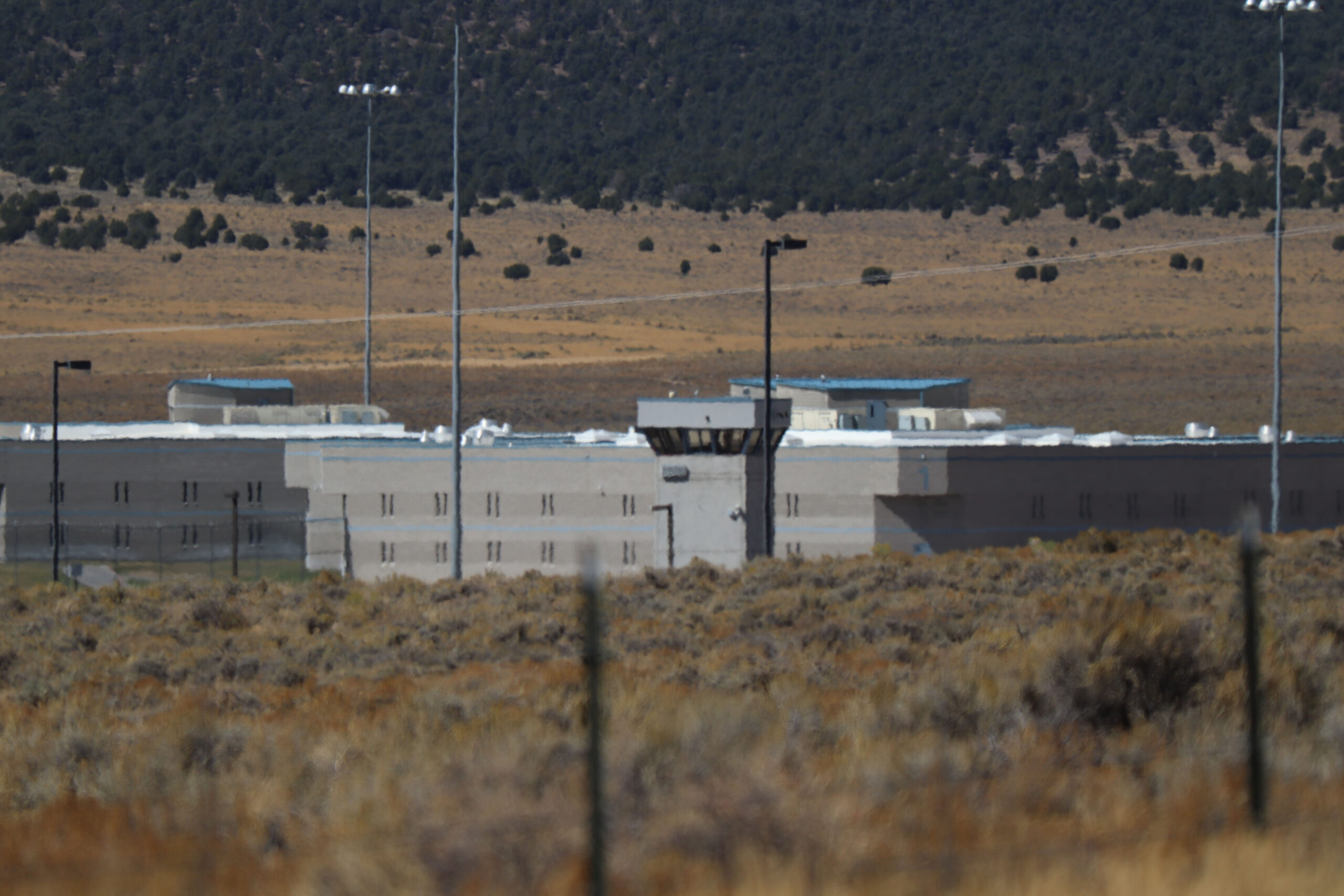
The state of Nevada has agreed to pay out nearly $1 million to settle three lawsuits brought by current and former people in state prisons, with two related to negligent medical treatment.
The Nevada Board of Examiners, which consists of the governor, secretary of state and attorney general, unanimously approved settlements brought against the Nevada Department of Corrections (NDOC) without discussion on Tuesday.
NDOC representatives declined a request for comment on the settlements.
Nevada has regularly paid out six-to-seven figure settlements in cases involving the state prison system in the past few years, including a $4.6 million settlement last year in the wrongful death case of a person who died after allegedly being severely beaten by correctional officers and then denied medical care.
Other recent settlements include nearly $1 million to a now-wheelchair-bound man who was denied back pain care for years, and $2.25 million to a man blinded by birdshot rounds fired by a correctional officer.
The largest settlement ($597,500) approved Tuesday went to Steven Scott, who agreed to drop his federal lawsuit claiming he did not get adequate medical treatment after being diagnosed with cancer. According to the settlement agreement, Scott will receive $390,325 and his attorneys will receive $198,175 in fees and costs.
Scott, who was charged with being a habitual offender and granted parole in 2021, said in his federal lawsuit that he had a history of hemorrhoids and constipation and was treated for those ailments, but after his condition worsened in 2019, it took the state two years to get him a diagnosis of colon cancer.
Scott, who was incarcerated at High Desert State Prison, claimed a diagnosis could have come much sooner, and he experienced pain and bleeding due to his condition.
"I can not sit, walk without pain. Its horrible now," Scott said, according to a written medical staff exam in September 2020. The exam also noted, "Inmate crying during assessment."
It was only after he collapsed in pain in December 2021 that Scott was given an MRI and diagnosed with cancer, according to the complaint. According to documents included in the Board of Examiners' meeting agenda, the state prison system wrote it agreed to a settlement after a summary judgement motion to quash the case was denied by a federal judge and appealed to the 9th Circuit, where the case was settled to avoid a "possibly adverse judgement by a jury."
"They were just blowing him off," said Travis Barrick, a lawyer representing Scott, in an interview.
"You have no choice, as a captive," Barrick said about medical care in prisons. He said Scott's cancer progressed during the period he was undiagnosed and that similar medical neglect cases come up all the time in their practice.
To avoid large settlements for the state in the future, Nathan Lawrence, another attorney who represented Scott, suggested that additional funding for preventive inmate medical care would be cheaper for Nevada than paying legal fees. Oftentimes, he said, medical conditions for inmates become more expensive the longer they are left untreated.
"There is a disregard to inmates' complaints," Lawrence said."There is an obligation to provide the best medical care. They are still human. They are incarcerated already, that is punishment in itself."
Gregory Wolf, a 74-year old inmate at Lovelock Correctional Center Facility, received a $200,000 settlement after suing the state, claiming he is blind in one eye because he was not provided necessary cataract surgery. The settlement agreement states $66,000 in attorney's fees will be paid to Wolf's attorney, and that NDOC will schedule corneal transplant surgery for Wolf.
Wolf's complaint stated that his cataract surgery, which would have taken 15 minutes, was unnecessarily delayed. He was originally supposed to have the surgery in March 2020, though the surgery was delayed until October of the same year due to the COVID-19 pandemic. The complaint alleged that the delay caused long-term eye issues, including blindness in one eye.
In 1997, he was changed with several counts of sexual assault with a victim under the age of 16, as well as the posession of child sex abuse material. In 2020, his niece advocated for Wolf's compassionate release, and said he was "no longer a threat to society" due to his age and was having difficulty navigating the prison.
In a tort claim recommendation document included in the Board of Examiners' meeting agenda, the case was in the middle of discovery when a settlement was reached to "avoid the cost of continued litigation, the probable denial of dispositive motions and a possible large judgement against the defendants."
Wolf's attorney, Maggie McLetchie, said NDOC previously had a "one eye is enough" policy for prisoners where treating blindness was only deemed necessary if there was a threat of blindness to both eyes. If there was still one good eye, McLetchie said, it was NDOC's policy that they would not prioritize eye care for as inmates as long as they could still see out of one eye. According to McLetchie, this policy wasn't fixed until 2023 until after her firm had challenged it.
Delbert Greene, incarcerated at Ely State Prison, agreed to a $200,000 settlement to drop a lawsuit claiming he had been held at least 1,000 days past his release date. The settlement agreement states no attorney's fees are to be awarded to Greene's legal counsel.
In a handwritten federal complaint, Greene claimed he served his robbery conviction twice, amounting to 2,555 days instead of 1,460. A jury found Greene guilty of battery with the use of a deadly weapon, conspiracy to commit robbery, eight counts of burglary while in possession of a deadly weapon, and 16 counts of robbery with the use of a deadly weapon. In his lawsuit, Greene said that he was granted parole in 2006 after being sentenced to four to 15 years in 2002 on the robbery charge.
He also claims that he was denied a parole hearing in 2010 and that members of the Nevada Board of Parole Commissioners knew he was serving his sentence for a second time.
Currently, Greene is serving life with parole and was charged with being a "habitual criminal" according to the NDOC offender database.
In documents included in the Board of Examiners agenda, the state admitted that "through discovery, it appears the inmate's sentences were miscalculated."
Greene's attorney declined to comment on the case.
Support Independent Elections Coverage and Journalism in Nevada
You’ve enjoyed unlimited access to our reporting because we’re committed to providing independent, accessible journalism for all Nevadans.
But sustaining this work — informing communities, holding leaders accountable, and strengthening civic life — depends on readers like you.
Nevada needs strong, independent journalism. Will you join us?
A gift of any amount helps keep our reporting free and accessible to everyone across our state and funds our elections coverage.
Choose an amount or learn more about membership