
Is Nevada in for a wet and wild winter?

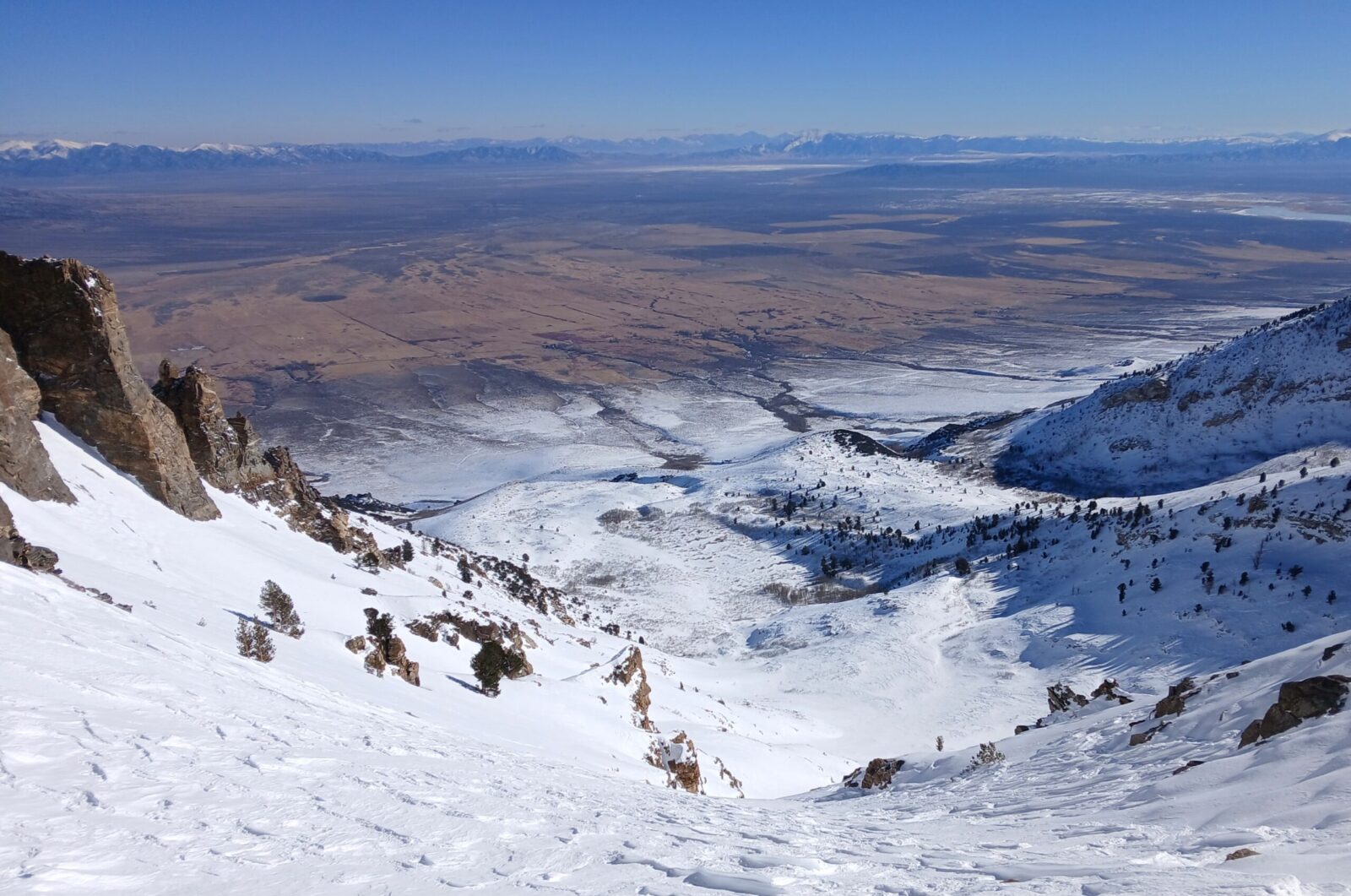
Skiers and snowboarders barely had time to recover from last year's abysmal season when ski resorts started touting this winter's "super El Niño."
"With a super El Niño in the forecast for this winter … now is the time to save on your Power Pass and a season of park laps, powder turns and perfect corduroy," Lee Canyon, the Las Vegas-area's ski resort, posted on social media in June.
By mid-August, industry ski giant Vail Resorts announced mid-November opening dates for many of its resorts, including around Lake Tahoe, "in hopes that the upcoming Super El Niño will deliver."
What is the "super El Niño" ski resorts are pinning their hopes on?
In short, abnormally warm conditions in the Pacific Ocean will shift low-pressure systems and precipitation across parts of the U.S. These conditions, known as an El Niño, occur when the Pacific Ocean's temperature is 0.5 degrees Celsius warmer than usual.
The National Oceanic and Atmospheric Administration categorizes El Niños as "weak," "moderate," "strong" or "very strong." This winter, forecasters expect the Pacific Ocean to heat up so much — possibly more than 2.5 degrees Celsius above normal — that it will create a very strong, or "super," El Niño.
The event is shaping up to be the strongest since 1950, according to Dan McEvoy, regional climatologist at the Western Regional Climate Center. There have only been a handful of very strong El Niños over the last 75 years.
Historically, very strong El Niños can lead to portions of the country receiving outsize levels of precipitation.
"This is not your typical El Niño," said Nevada State Climatologist Baker Perry, with models suggesting it will "quite likely end up being the strongest El Niño in the modern era."
Historical records, however, show that even very strong El Niños have variable effects on Nevada, with some portions of the state receiving above-normal precipitation and other portions receiving below-normal precipitation.
"The El Niño might be super, but the impacts aren't guaranteed to be super," McEvoy said.

Uncharted territory
El Niños shift the paths of certain jet streams, redirecting storms from over the Pacific Ocean to across the U.S. In almost any image depicting El Niño events, swooping, colorful depictions of the jet streams — fast-moving rivers of air — are overlaid on the map, with pockets of warm, cool, wet or dry air outlined around them.
Between those pockets, however, is usually a large, white stripe — the area where forecasters just aren't quite sure what to expect. And Nevada sits smack in the middle of that.
"We're kind of in that zone that's in the middle," McEvoy said. "There's not a one-to-one there, where a strong El Niño means stronger impacts. There's just not a clear relationship there."
Since 1950, two of the three strongest El Niño events –1982-83 and 1997-98 — have led to extremely wet conditions in Nevada. During the other strong event, in 2015-2016, precipitation was near normal, according to the National Oceanic and Atmospheric Association.
"We don't know where those [high- and low-pressure areas] are going to set up, and those determine where the storms come in," McEvoy said. "What we know from the past is not every El Niño is the same."
Despite the uncertainty, everyone from water managers to skiers are crossing their fingers for a big winter. That hope comes on the heels of the warmest — and one of the driest — winters on record for Nevada and much of the Western United States.
Last year, snowpack accumulation across the West peaked in March, about a month earlier than usual, and much of it melted off early in the abnormally warm temperatures.
Now, nearly 95 percent of the Intermountain West is experiencing drought conditions, including most of Nevada, according to the U.S. Drought Monitor.
With the upcoming warm temperatures brought about by the very strong El Niño, winter is again likely to be warmer than normal across much of the West, according to forecasters at Open Snow, which could lead to variable snow levels in the mountains.
The effects of the very strong El Niño will also have uncertain effects on the Colorado River Basin. Historically, strong El Niños favor the southern United States, which could help the states on the receiving end of the Colorado River. But for Upper Basin states at the headwaters of the river, such as Colorado, the super El Niño is a wild card.
Either way, one very wet winter in the Colorado River Basin won't do much to help the slow-moving crisis unfolding on the river.
"They need as many big winters in a row as they can get," McEvoy said.
Both climatologists agree that the forecast calls for unpredictability.
"We are kind of in uncharted territory," Perry said. "What's happened in the past may not be a good analogue."
Support Independent Elections Coverage and Journalism in Nevada
You’ve enjoyed unlimited access to our reporting because we’re committed to providing independent, accessible journalism for all Nevadans.
But sustaining this work — informing communities, holding leaders accountable, and strengthening civic life — depends on readers like you.
Nevada needs strong, independent journalism. Will you join us?
A gift of any amount helps keep our reporting free and accessible to everyone across our state and funds our elections coverage.
Choose an amount or learn more about membership