
Nevada has lots of water in a Lake Mead "bank." What happens if water levels keep dropping?

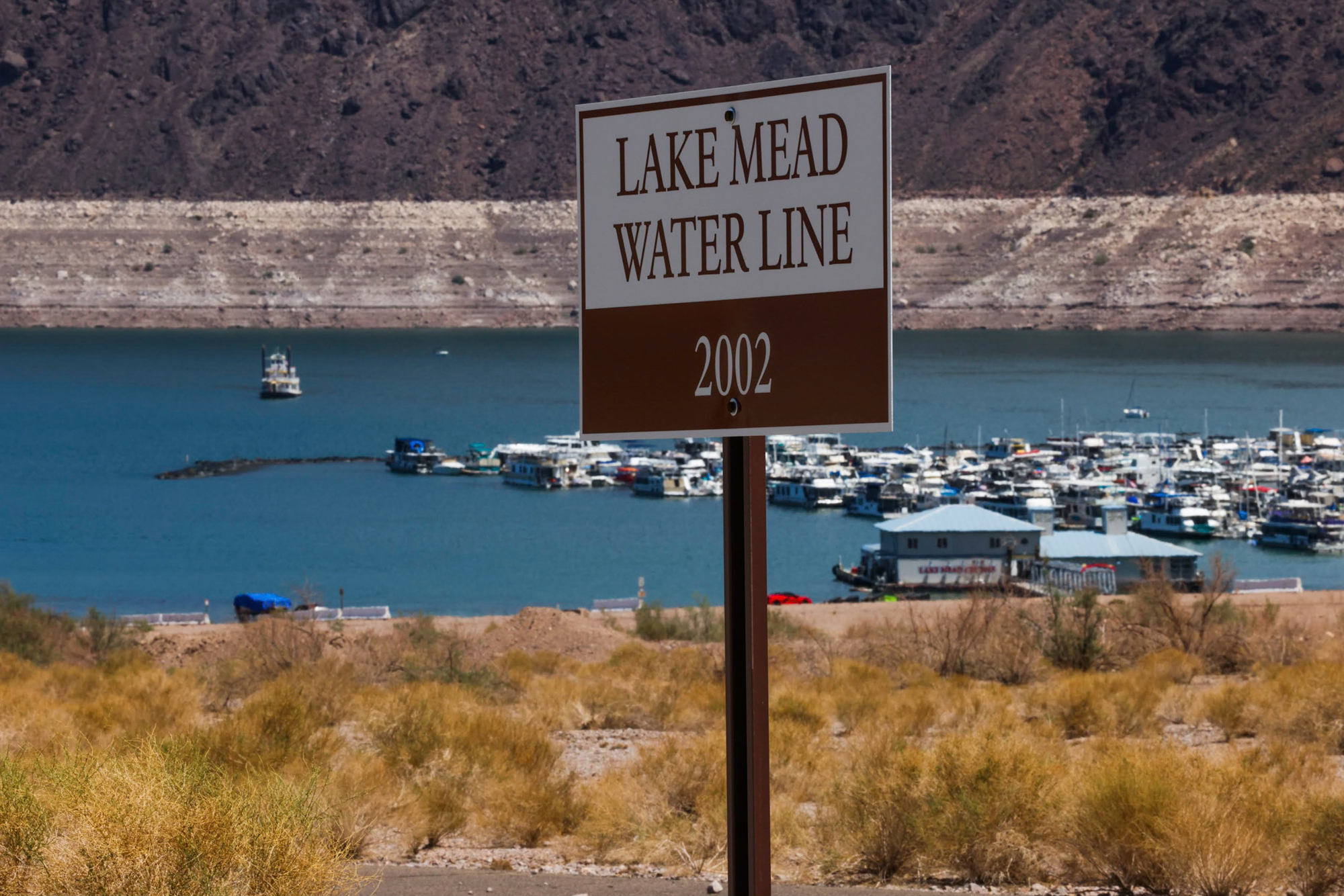
Much like a household puts money into a savings account, Southern Nevada has been setting aside part of its allocated Colorado River water in Lake Mead for the last two decades.
At the end of 2025, the state had approximately 890,000 acre-feet of that water in the proverbial bank, according to the Bureau of Reclamation's annual water accounting report.
Nevada's bank holds nearly three years' worth of the water the state can take from the river, which is capped at 300,000 acre-feet a year. To picture an acre-foot, imagine a football field covered in water about a foot deep, or roughly 326,000 gallons. That's enough to supply about two Southern Nevada homes for a year.
The official name for these credits, Intentionally Created Surplus, makes them sound like a rainy-day fund.
But under federal rules for the river, most of the water can't be taken out once Lake Mead drops below 1,000 feet above sea level. Water levels at the lake sat at 1,037 feet on Oct. 18, according to the Bureau of Reclamation. Because the banked water is, obviously, intermingled with the rest of the lake water, it also makes the lake look fuller than it otherwise would be, and federal rules count it when deciding whether deeper cuts are needed for the Lower Basin states of Arizona, California and Nevada.
Pat Mulroy, who led the Southern Nevada Water Authority when the banking rules were written, sees that higher water levels in the lake are the bank's main benefit. Southern Nevadans should understand that "banked water is keeping water in their taps because it allows the lake to stay up," she said.
The bank may also stop growing. Under Reclamation's river operating rules, no new water can be added to the bank after Dec. 31 unless the Lower Basin reaches an agreement, said a Reclamation spokesperson who declined to give their name. The states have not announced one.
Reclamation's October minimum probable projection, which models a dry future rather than forecasting one, has Lake Mead dropping below 1,000 feet in March 2028 and falling to about 982 feet by July 2028. In fact, Reclamation's own analysis found that under critically dry conditions, Lake Mead fell below 1,000 feet in more than 10 percent of the years studied. Under near-average conditions, it never did, a Reclamation spokesperson said.
If the lake stays that low, the bank is "potentially not reliable," said Kathryn Sorensen, director of research at Arizona State University's Kyl Center for Water Policy and a former director of Phoenix's water department.
"The bigger safety net for Southern Nevada is that Lake Mead doesn't crash," Mulroy said.
How the bank works
Nevada's push to save Colorado River water took off in earnest after the 2002 drought, when runoff in the river's upper basin fell to about a quarter of normal, according to Mulroy, who was Nevada's lead river negotiator. She said the dry year forced the states to talk about shortages and "was really the root for all the banking discussions."
Southern Nevada was already paying residents to tear out grass through its Cash for Grass program — known officially as the Water Smart Landscapes rebate program — which began in 1999. After the drought, the water authority poured more money into the program and set water budgets for golf courses. Mulroy said the Las Vegas Valley went from being seen as "the poster child for water waste" to a place that could point to its conservation record in negotiations with other states.
Banking became part of the river's rules in 2007, when the seven basin states and the federal government adopted interim guidelines for shortages. The credits were meant to reward agencies for conserving instead of pushing them to use their full share or lose it, said Colby Pellegrino, the Southern Nevada Water Authority's deputy general manager of resources.
When Nevada banks water, it leaves that water in Lake Mead, where it mixes with everything else, and receives a credit it can draw on later. Agreements among the states and the federal government protect that credit for the agency that created it, Pellegrino said.
Lake Mead isn't Southern Nevada's only "bank." As of the end of 2025, the water authority also had about 614,000 acre-feet stored in Arizona's underground banks, about 342,000 acre-feet in groundwater beneath the Las Vegas Valley and about 330,000 acre-feet with the Metropolitan Water District of Southern California. Those banks are separate from the Lake Mead credits Nevada holds and follow their own rules.
Nevada earns credits in four main ways, Pellegrino said. The most common across the Lower Basin is conserved water, meaning water an agency could have used but left in Lake Mead instead. Southern Nevada has banked about 267,000 acre-feet that way since 2019. The community has saved far more, but there is a cap on how much can be banked, and that account is full until the Lower Basin states reach a new agreement, Pellegrino said.
The biggest piece of Nevada's balance, 400,000 acre-feet, comes from helping pay for the Brock Reservoir in Southern California, which catches water that downstream users ordered from Lake Mead but ended up not needing. Nevada also earns credits for water from the Muddy and Virgin rivers, which flow into the lake, and for funding conservation projects in Mexico in exchange for a share of the water saved.

Most banked water falls under the same set of Lake Mead rules, which cover the efficiency projects, the deals with Mexico and water conserved and left in the lake. Water from the Muddy and Virgin rivers and water banked under the 2019 drought plan are the exceptions and follow their own rules.
Banking water also costs some of it. Reclamation takes 10 percent off most new credits when they are created, then charges 3 percent a year for evaporation, though some efficiency projects are exempt.
The limits
The biggest threat to Nevada's banked water is the height of Lake Mead. When the lake is between 1,025 and 1,000 feet above sea level, there are constraints on how much banked water can be delivered. Below 1,000 feet, delivery is "effectively suspended," the Reclamation spokesperson said.
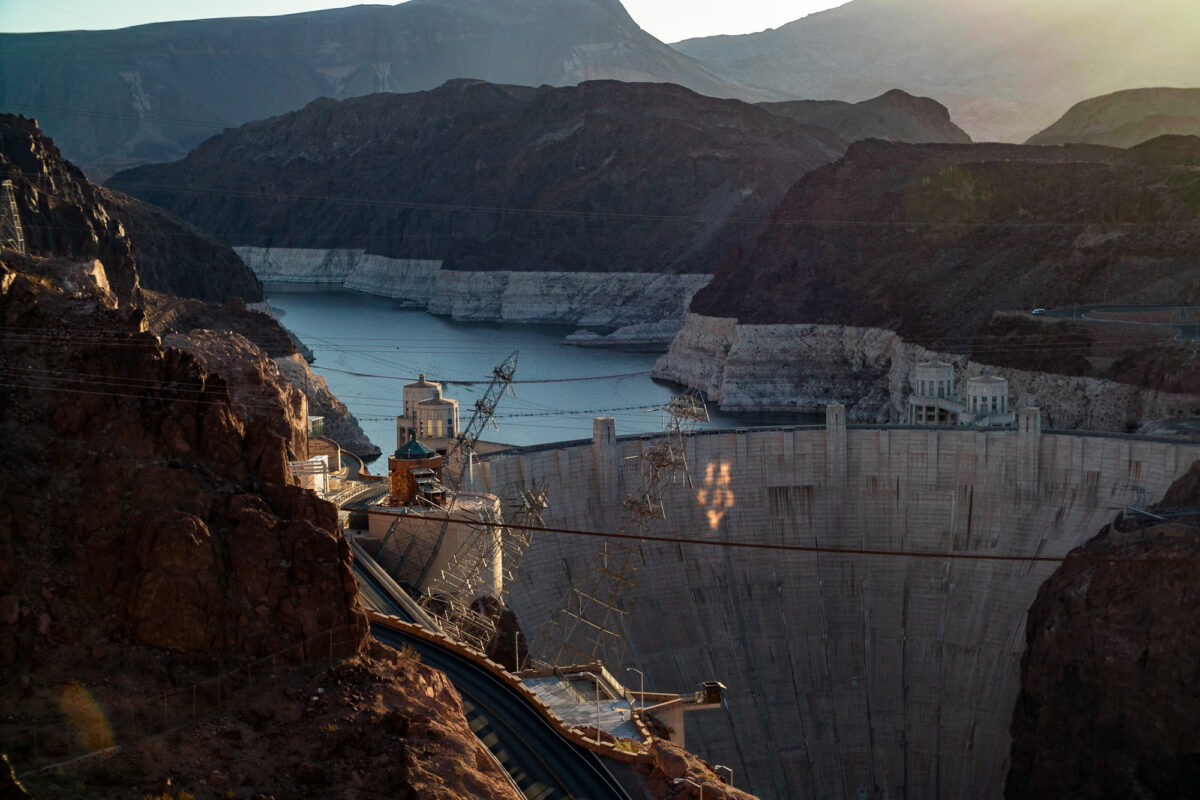
The limit is there to protect the lake. Banked water comes out of the same lake everyone else depends on, so taking it out when Lake Mead is low pulls the lake down further and closer to critical levels. Below 950 feet, Hoover Dam can no longer produce hydropower and its ability to release water is severely limited, according to the new 2027-28 river rules, which also let Reclamation cut or deny a request that would push the lake below 1,000 feet that year. Deliveries could resume if the lake recovers.
Water Nevada banks from the Muddy and Virgin rivers is the exception. During a shortage, that water counts as a separate supply Nevada can take at any lake level, Pellegrino confirmed. It remains available through 2057.
Tom Buschatzke, director of the Arizona Department of Water Resources and Arizona's lead negotiator for the river, said the limits were added "to protect Lake Mead from falling to unhealthy levels." He still calls banked water an emergency reserve, but "because of the restrictions, it's a limited emergency reserve."
Whether the lake reaches that critical threshold depends on how wet the next few years are.
Banking props up lake levels. Is that a good thing?
Mulroy argues the bank's main value is the water it keeps in Lake Mead now, more than the water Nevada might take out later. She said the banking system has propped up the lake, and that without it the lake "would be gone by now."
That same effect is what critics focus on. Under the 2007 guidelines — the same rules that created the bank — cuts for Nevada and Arizona kicked in based on how high Lake Mead was. Banked water, making the lake look fuller, meant those cuts started later than they otherwise would have.
A January 2026 paper co-written by Sorensen argues that this dynamic delays shortages without reducing how much water is used. Because the banked water is eventually taken out, the paper says, the effect works like a loan against the reservoir — the cuts that come later can be deeper. It also argues that delaying shortages helps some water users at the expense of others who hold more senior rights.
Sorensen said that in its current form, banking gives a "somewhat misleading" picture of how much water is in Lake Mead. The water is physically there and helps with hydropower and recreation, she said, but it isn't available to everyone through the river's normal system. "It's sort of a mirage," she said.
Arizona's Department of Water Resources disputes that critique. In a 2024 response to an earlier Kyl Center paper, the agency said banking gave water users a reason to accept voluntary cuts early, which helped bring California into the 2019 drought plan, and that no senior users were losing water.
Buschatzke still rejects the paper's argument outright. Without banking, he said, agencies would have used that water or stored it underground, and "Lake Mead would be in much worse shape than it already is."

Bill Hasencamp, manager of Colorado River resources for the Metropolitan Water District of Southern California, the largest holder of banked water, supports banking but agrees it has delayed cuts. Hasencamp, who helped design the banking program 20 years ago, said the effect bothered California too: When his district left water in Lake Mead, it eased shortages for Arizona and Nevada, so less of that water actually stayed in the system.
That debate now plays out under different rules. For 2027 and 2028, the three Lower Basin states have already agreed to fixed cuts: 760,000 acre-feet a year for Arizona, 440,000 for California and 50,000 for Nevada, under their May 1 proposal. Reclamation adopted that split in its final rules for 2027 and 2028, which call for talks on further action if Lake Mead is projected to drop below 1,010 feet. Banked water still counts toward that lake level.
One proposed fix would make banked water "operationally neutral," meaning it would no longer count toward the lake levels that trigger cuts. Sorensen said that change would solve a lot of problems for water banked in the future, but there is no way to make existing banked water neutral without imposing a shortage on someone.
Pellegrino said the states put off redesigning the program, including that change, as the deadline for new river rules approached without a seven-state agreement. The states' May 1 proposal names operational neutrality as a goal and says they will consult on when and how to make the change at higher lake levels.
Support for the change is broad. Buschatzke said Arizona wants new water banked from 2027 on to be operationally neutral, and existing credits converted gradually, because doing it all at once would "crash Lake Mead." Neutrality was negotiated as part of the May 1 plan, which calls it the goal, said Doug MacEachern, a spokesperson for the Arizona Department of Water Resources.
Hasencamp said that with Lower Basin cuts set at fixed amounts for the next two years, banked water no longer affects how deep they go, so the change matters most for whatever long-term deal comes next.
What's next?
The question over banked water is playing out alongside a bigger fight over who takes cuts. Nevada sued the Interior Department in August, three days after the new rules were released, arguing they put the burden of a shrinking river on Arizona, California and Nevada while the four Upper Basin states face no mandatory cuts. Arizona moved to join the suit in October.
Where the states will land on new banking is still unclear. Southern Nevada wants it to continue, because banked water gives the agency a bridge to cover short-term gaps between supply and demand and to offset shortage cuts, Pellegrino said.
The Central Arizona Project (CAP), which delivers Colorado River water to central and southern Arizona and joined Nevada's lawsuit on Oct. 27, also supports continuing to let agencies bank new water. CAP plans to use its own banked water to soften deeper cuts for its customers and "to support elevations at Lake Mead," Vineetha Kartha, CAP's water policy director, said in a written response.
Metropolitan also wants new banking to continue, Hasencamp said, but he expects little new water to be added soon because the deeper cuts leave less to spare. Buschatzke said banking is one of the issues still being negotiated in the Lower Basin agreement, and that Arizona supports continuing it, in part because it matters to California and Nevada. He said the lawsuit has complicated those talks.
Mulroy doubts the states will settle the question soon. "I don't think they're going to agree to anything right now," she said.
A pause on new banking would not change Southern Nevada's access to the water it has already banked, the water authority said. Only creating new credits depends on a deal. Existing credits stay on the books even while deliveries are suspended, and most remain available through the mid-2030s. They are still subject to the limits in the new rules, including the 1,000-foot cutoff.
Ending new banking could also backfire. In a 2025 paper, Metropolitan found that the program incentivized the Lower Basin states to conserve, with yearly use falling from about 7.5 million acre-feet to an average of about 6.6 million. Without a place to store savings on the river, agencies could go back to using their full shares and store water elsewhere.
Keeping that water on the river "makes sense for all users," the authors wrote, because it also boosts hydropower, recreation and the water available to everyone. The same paper recommends that newly banked water stop counting toward the lake levels that trigger cuts.

If banking does continue, what counts as banked water is getting stricter. Under the new river rules, most new credits can only come from water that would otherwise have been used. In an August presentation on the new rules, Arizona's Department of Water Resources and Reclamation said proposals based on water an agency simply didn't use will be rejected, and savings must cut actual use below a historical baseline and be verifiable.
Sorensen said banking can be part of the solution or part of the problem, depending on how it is designed. As it works now, she said, it gives agencies a reason to invest in water they control instead of dealing with the root problem: The river has more claims on it than water to meet them.
For Southern Nevadans who tore out lawns and cut back on watering, the bank is less a stash for emergencies than a way their savings help keep the lake from dropping further. Mulroy said conservation alone won't be enough to balance the river.
"You're not going to conserve your way out of this," she said.
Support Independent Elections Coverage and Journalism in Nevada
You’ve enjoyed unlimited access to our reporting because we’re committed to providing independent, accessible journalism for all Nevadans.
But sustaining this work — informing communities, holding leaders accountable, and strengthening civic life — depends on readers like you.
Nevada needs strong, independent journalism. Will you join us?
A gift of any amount helps keep our reporting free and accessible to everyone across our state and funds our elections coverage.
Choose an amount or learn more about membership