
Nevada just had its warmest winter ever. What does it mean for summer?

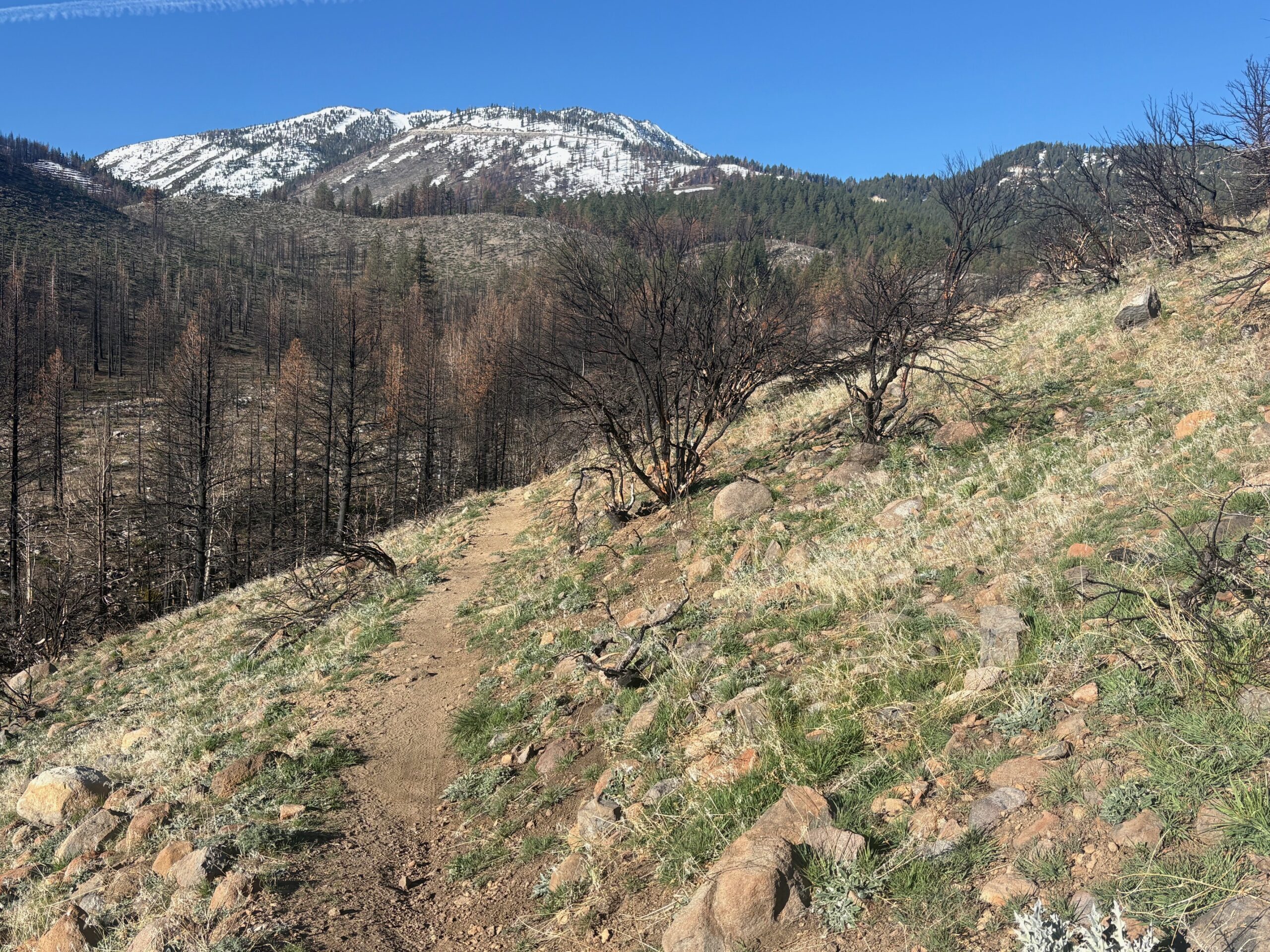
It seems whatever state I've lived in, there's been a variation of the same joke about the seasons:
- Winter
- Fool's spring
- Second winter
- Spring of deception
- Third winter
- Mud season
- Actual spring
- Summer
- False fall
- Second summer
- Actual fall
Most of the joke hinges around when spring actually starts. But this year, at least in Nevada, it feels like we skipped false spring, spring of deception and actual spring and went right from winter to summer, with high temperatures blowing past records to bits.
Meteorological winter (December through February and usually the coldest months of the year) wrapped up Feb. 28. But Nevada experienced its warmest winter ever this year, with a statewide average temperature 5.5 degrees above normal.
Now that it's March, temperatures in Reno are in the mid-80s — breaking the city's previously monthly record of 83 degrees, set in 1966. Prior to this year, only 11 days in Reno had ever reached 80 degrees or above in March since 1893 — this year, multiple, consecutive days have topped 80 degrees.
And Las Vegas also broke its own March temperature records as the city approached triple digits, prompting the city to open cooling centers for people seeking relief from the heat.
The unseasonably warm temperatures are compounding what has been a record dry winter across the Western United States. I'll be writing more about the drought conditions soon, but it was hard to craft this newsletter without looking at how the warm temps and the lack of water are interwoven.
When I reported on potential staggering power needs from data centers looking to operate in the state, I did not touch on the water needs of data centers, which can also be massive. Intrepid readers noticed and emailed me questions about how much water data centers use for cooling and what the top water users are in Southern Nevada.
Read more: Nevada likely to fall short of clean energy goals because of data centers
I reached out to the Southern Nevada Water Authority (SNWA) for details.
Water needs for data centers vary across the state, according to SNWA spokesperson Bronson Mack. While some older data centers, particularly in Northern Nevada, are water intensive, newer data centers use closed-loop systems that recycle the water. But, that water savings comes with a cost — higher energy use.
The data centers also aren't the highest water users in Southern Nevada — golf courses and resorts historically use more water, he said.
But not everyone is as concerned about water usage as the readers who emailed me.
My parents recently visited extended family who live near St. George, Utah, a couple hours outside Las Vegas. Part of the Upper Colorado River Basin, Utah is experiencing its lowest snowpack in history, with state officials urging local water providers to review drought contingency plans. That didn't faze my extended family, who denied any water shortages as a man-made surf facility with multiple lakes is being built not far from them.
This is alarming as the Upper and Lower Colorado River basins are reporting record-low amounts of water in this year's meager snowpack.
Projections for the Upper Colorado River Basin — the headwaters of the Colorado River, which supplies water to 40 million people, major agricultural producers and communities across the Southwest, including the Las Vegas Valley — is that the snowpack contains only about one third of normal water levels.
In Nevada, which sits in the Lower Colorado River Basin, 81 percent of snow-measuring stations in the state were experiencing a snow drought as of mid-March.
The Humboldt River Basin in Northern Nevada has just 40 percent of its usual snow-water content; other Northern Nevada basins such as the Snake and Owyhee are also faring poorly.
Eastern Nevada is already in a drought, with those drought conditions expanding toward the West, Ryan Shane, the state's new forester and fire warden, said when I met with him earlier this month.
"The trend is concerning," he said.
Read more: Love of working outdoors sparked career for Nevada's new state forester

In the weeds:
Pipeline authorization moves forward — Legislation authorizing construction of a water pipeline beneath the Sloan Canyon National Conservation Area is waiting for President Donald Trump's signature. The Sloan Canyon Conservation and Lateral Water Pipeline Act would authorize the building of a water pipeline beneath the conservation area instead of routing it through the city of Henderson. It also expands the more than 48,000-acre conservation area by nearly 9,300 acres, increasing its size by nearly 20 percent.
About 1 million people and 40 percent of businesses in the Las Vegas Valley are served by the South Valley Lateral pipeline. The line lacks a backup and is vulnerable to outages; it is also expected to reach capacity by 2034.
The legislation has the support of Gov. Joe Lombardo (R).
Leadership changes — Nevada Department of Conservation and Natural Resources Director James Settelmeyer is stepping down from his position to run for Nevada's 2nd Congressional District after Rep. Mark Amodei (R-NV) announced he would not seek another term.
Vinson Guthreau, currently the executive director of the Nevada Association of Counties, will replace him following a March 20 appointment by Lombardo.
And, former Nevada Cannabis Compliance Board Executive Director James Humm has been appointed by Lombardo to lead the state's office of energy. Prior to leading the cannabis board, Humm served as the director of public policy and government affairs for the Governor's Office of Economic Development. He assumes his new position March 30, replacing Dwayne McClinton, who stepped down in February to take a position as senior vice president of energy and infrastructure development for Red Post Energy Futures.
Lesser protections a decision for the birds — A slew of conservation groups are suing the Bureau of Land Management (BLM) over its newest management plan for the greater sage-grouse in nine Western states, including Nevada. Scientists with the federal U.S. Geological Survey have previously predicted sage-grouse breeding sites could disappear over the next 60 years.
The BLM finalized its plan in December, stripping protections approved in 2015 designed to keep the birds off the endangered species list. It is the second time President Donald Trump's administration has made moves to weaken protections for the birds; management plans were weakened in his first administration, requiring a federal judge to weigh in.
Water woes — The BLM has given the green light to the Cedar City Pipeline near Great Basin National Park, giving the public just a few hours to weigh in on the environmental impact statement before giving the final thumbs up in early March.
The pipeline will tap into the headwaters of the Great Salt Lake Desert Flow System, a mix of groundwater and mountain runoff that flows toward the Great Salt Lake. Conservationists and others monitoring the pipeline caution it is likely to affect groundwater in areas such as the Snake Valley in eastern Nevada.
Endangered or extinct? — The Center for Biological Diversity is petitioning the U.S. Fish and Wildlife Service to protect the Barren Valley collomia, a vanishing Great Basin flower, under the Endangered Species Act.
The small annual plants that produce tiny blue-white flowers are only known to exist in a few sites in southeastern Oregon and two locations in northeastern Nevada. Barren Valley collomia hasn't been sighted in Nevada since 2008 and in Oregon since 2014 and haven't been photographed since 1983, but scientists believe they still exist and can be found with further surveys.
Park visitation changes — Great Basin National Park recorded its highest visitation in the last five years, with more than 161,000 people visiting last year. In the south, more than 6.1 million people visited Lake Mead National Recreation Area in 2025, down from 6.4 million people the year prior. Nationally, the National Park Service reported 323 million visits across all its park units in 2025, a nearly 3 percent decrease from 2024.
Ouch! What bit me? — With unseasonably warm temperatures continuing, the Southern Nevada Health District is starting routine mosquito surveillance a month early.
Environmental health staff have set mosquito traps throughout parks, wash channels, wetlands, residential neighborhoods and other potential breeding sites. Trapped mosquitos are sent to a lab to test for viruses including West Nile before peak mosquito season. In 2024, 26 cases of West Nile were reported in Clark County; no human cases were reported last year.
Does this water taste salty to you? — The San Diego Water Authority is exploring the possibility of an interstate water transfer and pilot program with the U.S. Bureau of Reclamation, Metropolitan Water District of Southern California, SNWA and various Arizona water agencies.
The authority's board of directors drafted a memorandum of understanding, not yet signed by the other agencies, that would allow the authority to move water from the nation's largest seawater desalination plant in Carlsbad to areas in the Colorado River Basin that need more water. Desalination is known for being costly; however, the Carlsbad plant produces up to 54 million gallons of water per day.
Here's what else I'm reading (and listening to) this month:
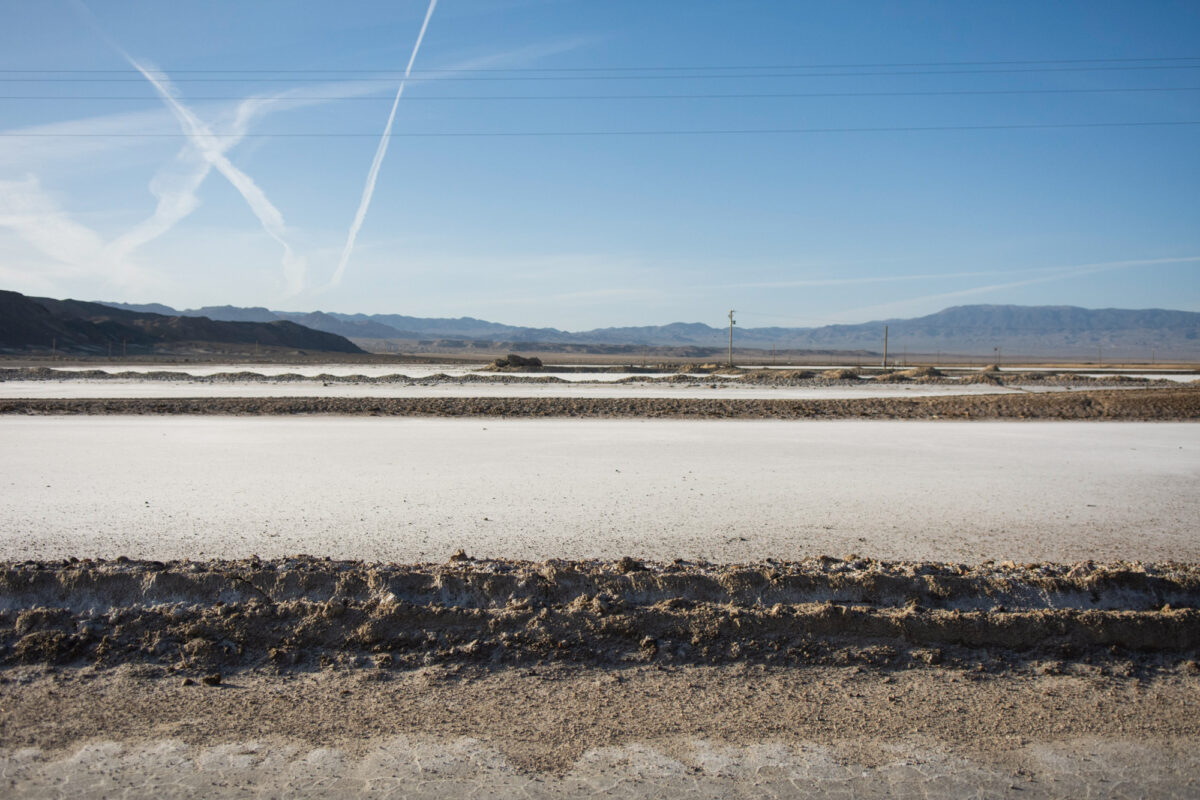
Nevada's sole producing lithium mine was given BLM approval to expand, the Las Vegas Review-Journal reports.
From Wildfire Today: 'Unprecedented' snow drought sets up extreme wildfires for Western U.S.
From the Nevada Current: The Las Vegas Valley Water District says a proposal to build a hydroelectric power plant near Red Rock Canyon National Conservation Area is out of step with Nevada conservation goals after it won preliminary approval from federal regulators.
News4 reports that a Pershing county commissioner and a guiding outfitter were sentenced for illegally bear hunting.
This is Reno explains how a massive subdivision bordering Washoe Lake is moving forward despite the Washoe County Planning Commission opposing it.
The Denver Post breaks down how the Colorado River could deliver just one-third of "normal" water this year.
From Utility Dive: Arizona has repealed its renewable portfolio standard.
A closer look:

Support Independent Elections Coverage and Journalism in Nevada
You’ve enjoyed unlimited access to our reporting because we’re committed to providing independent, accessible journalism for all Nevadans.
But sustaining this work — informing communities, holding leaders accountable, and strengthening civic life — depends on readers like you.
Nevada needs strong, independent journalism. Will you join us?
A gift of any amount helps keep our reporting free and accessible to everyone across our state and funds our elections coverage.
Choose an amount or learn more about membership