


Nevada schools must resist ineffective knee-jerk reactions to Texas school shooting

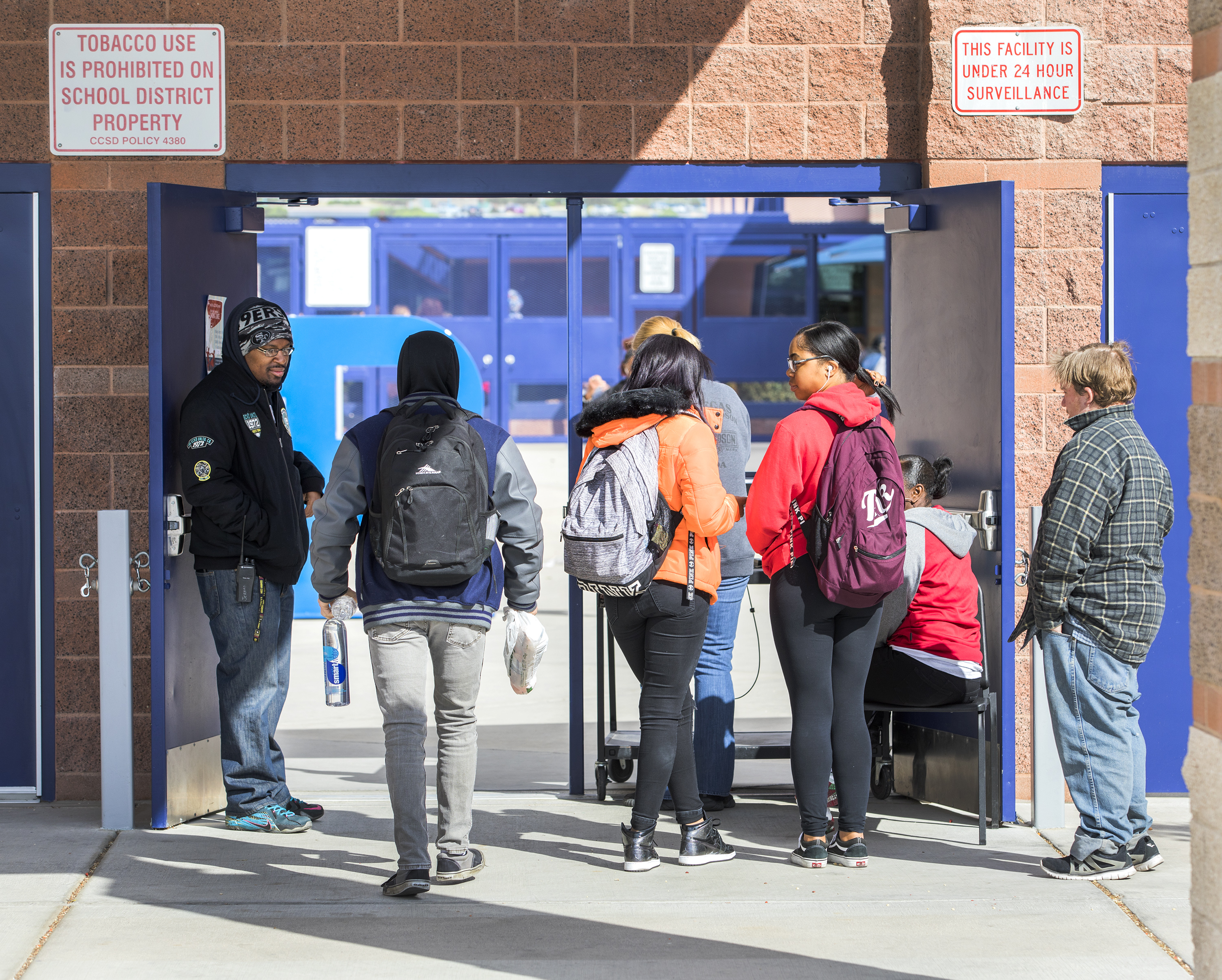
While school shootings are horrific, school officials must resist reflexive spending amid public pressure to increase common but ineffective security measures such as holding more active shooter drills and installing metal detectors. Such measures, while appeasing parents and the public in the short term, do little to actually prevent shootings and often have a lasting negative impact on students.
As I write this, one day after the murder of 19 children and two adults at Robb Elementary School in Texas, there are the expected calls to beef up unproven and potentially harmful security measures in schools, including the above-mentioned changes and arming more school security guards.
In 2018, after the mass shooting at Marjory Stoneman Douglas High School in Florida, schools in Clark County spent thousands of dollars on security gates and reinforced doors. A year later, a school district in Michigan spent almost a million dollars on more security officers, door locks, cameras, alarms, and even six-figure gunshot sensors. The number of active shooter drills was increased, as well. One district official stated, "We spend more time on active shooter drills than what we used to do on fire and tornado drills."
Despite this, in November of 2021, three students were killed and eight people were injured in a shooting at a high school in the same district, making some school leaders rethink their security strategy. (Meanwhile, the school security goods and services market had already grown to a 2.7 billion dollar industry.)
Decisions made in haste can even result in the purchase of products that actually make students less safe, such as a Denver school's $600,000 bulletproof window coverings that could, it was later observed, prevent students from escaping through windows during an emergency.
Metal detectors are becoming increasingly common in schools across the country, but as noted already, they do little to prevent violence, even among students.There also is evidence, thanks to observations by Johns Hopkins-Bloomberg Distinguished Professor Odis Johnson, that the over-policing of schools is more likely to occur in cash-strapped poorer districts where cuts in funding in other areas lead to larger class sizes and less academic and mental health support. As schools reduce student support and increase investments in expensive surveillance systems, it can come at a high social cost: increasing suspensions, lowering student morale and achievement, and decreasing the likelihood of students going to college.
At times, school security measures have been adopted so quickly that districts failed to adequately work with and learn from local police departments. Just this week, after the shooting in Texas, a South Carolina school district hired 16 full-time security guards to monitor its metal detectors while failing to properly consult with local police officials, who could guide and advise them. Districts must practice better due diligence before spending money on complex machinery like metal detectors — and even then, many school safety professionals say metal detectors give a false sense of security.
As for active shooter drills, in 2018, the Federal Commission on School Safety found that substantially more active shooter drill policies were enacted in years immediately following major school shooting events, while laws focused on more preventative strategies, including mental health support, were less likely to occur directly after school shootings. Such drills do little to prevent gun violence — and dramatically affect the mental health of students. A report released in 2020 concluded that shooter drills led to a 42 percent increase in anxiety and a 39 percent increase in depression among students. At a time when adolescents are already suffering from crisis levels of anxiety and depression, now is not the time to increase these types of security measures.
Though some physical school safety measures must of course be integrated, there are ways to do it without turning the school into a building that looks more like a prison than an educational environment for children. (In fact, some security measures in public schools are disturbingly comparable to those in prisons.) Schools that are welcoming as well as safe are essential for student achievement and mental health. A Rutgers University professor studying violence in schools put this succinctly:
"When we think that all we've got to do is get cameras, armed guards, metal detectors, and arm teachers, we are putting efforts into hardening the school instead of making it a better place with less violence and fewer problems. It becomes easier for administration to check off a box that they have done something than to change a school's culture. These simplistic solutions are part of the problem."
To add to all this, what does work in schools is often not fully implemented or funded. This includes such preventative measures as establishing enough trust in and among students that they can be relied upon to quickly report suspected trouble or incidents of concern, coupled with monitoring measures that can help detect potential violence before it occurs. Threat assessment programs in schools can effectively identify those who may commit violence and get them the help they need. Schools that implement them tend to see fewer expulsions, suspensions and arrests, and an improved school climate.
As noted, an essential part of effective threat assessment programs is access to school mental health professionals. Counselors, social workers, and school psychologists are specifically trained to be able to help students with emotional concerns and to find local community resources to support the student and their families. In the U.S., the average is one counselor to every 442 students. In Nevada, there is only one counselor available for every 1,004 students. Although there are laws that require counselors to be hired, recommended ratios are non-binding and are not funded. And while the nation's schools received $122 billion dollars through the American Rescue Plan, only 1.6 percent of that will be spent on hiring more mental health professionals.
Through research-based security practices that include the necessary mental health support staff, Nevada schools can resist the urge to invest precious educational dollars on systems that don't work and that can potentially harm students. Parents and political leaders must support school districts' efforts while refusing to let rising fears overshadow informed actions. Most importantly, we must all remember that schools can only do so much to resolve the violence in our communities. It is up to all of us to ensure — through better gun laws, effective monitoring and policing, and adequate mental health support systems — that horrible events like the shooting in Texas don't occur again.
Shelley Buchanan has a master's degree in Education from UNR, and during her career taught in three different Nevada school districts. She writes on education issues at The Culture of Learning, and is a regular contributor to The Human Restoration Project and Teachers on Fire Magazine.
Support Independent Elections Coverage and Journalism in Nevada
You’ve enjoyed unlimited access to our reporting because we’re committed to providing independent, accessible journalism for all Nevadans.
But sustaining this work — informing communities, holding leaders accountable, and strengthening civic life — depends on readers like you.
Nevada needs strong, independent journalism. Will you join us?
A gift of any amount helps keep our reporting free and accessible to everyone across our state and funds our elections coverage.
Choose an amount or learn more about membership